Now Lexus has launched the IS300, powered by a 3-litre 24-valve straight six, good for 211bhp at 5800rpm. That's usefully up on the 153bhp IS200, but 20bhp down on its most feared rival, the BMW 330i. The Lexus also loses out on torque: 212lb ft at 3800rpm, against 221lb ft at 3500rpm for the Bee-Em.
As well as a stronger engine, the latest Lexus boasts an alternative bodystyle called the SportCross. Lexus says it's 'a spectacular new concept in luxury and performance car design'. Cynics will more likely ask why Lexus has bothered with a clumsy-looking hatchback version. Mechanically and performance-wise, the saloon and hatch are practically identical, but it's the new model we focus on here.
This 'crossover concept' is plainly aimed at the lifestyle estate market epitomised by the BMW 3-series Touring and Audi A4 Avant. But if that pair are stylised hold-alls then the SportCross is a mere handbag. With its load cover pulled out, the SportCross has less boot space than the saloon and, even with the seats down, you won't be carrying any wardrobes around. The SportCross makes no concessions to estate-car practicality with its rear suspension design, so the strut towers intrude into the loadbay. The tailgate is lightweight aluminium, to preserve the saloon's handling balance, says Lexus.
Other than badging, there are no external clues to point to the bigger engine, unless you can spot a 15mm reduction in rear ride height. No probs telling the difference on the road, however. Right across the rev range the IS300 has an energy missing from its smaller-engined sibling; 0-62mph takes 8.4sec (saloon: 8.2), compared with 9.5sec for the IS200 saloon. Thanks to its variable valve timing, the 3-litre has low-rev lustiness, too, although it really comes alive above 3500rpm.
And yet for all its extra impetus, the IS300 seems a tad relaxed next to the BMW 330i. It's not slow, but the Lexus can't give you a BMW-style kick in the kidneys when you stamp the throttle.
The engine's refinement and Lexus's attention to noise suppression quell the sensation of speed, as does the five-speed auto that's standard on European models. Curiously, the Americans have a five-speed manual option.
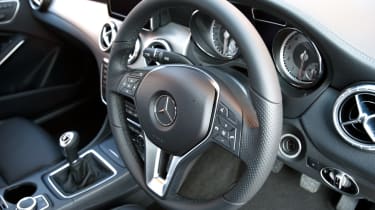
As it happens, the slushbox suits the car, especially with its 'E-shift' manual mode. Move the lever to 'M' and you can change gear using buttons on the steering wheel spokes - the two on the front of the spokes shift down, the pair on the back do the upshifts. The changes are generally quick and painless ί¿½ except on light-throttle upshifts - but a manual would be better.
Even with the extra oomph, the IS's chassis doesn't feel stretched. Ruffled roads fail to fluster the suspension and this composure continues round corners with the balanced chassis and precise steering giving an elegant, flowing motion through bends. Switch off the traction control and, when the high level of grip expires, the nose runs gently wide. The tail can be twitched, but then the apparently dormant traction control steps in to spoil things just before it all gets truly interesting.
If the IS300 isn't ultimately as bewitching as a BMW to drive, it offers other enticements. It's less common than a 3-series and comes loaded with equipment - Lexus says speccing a 330i Sport to match the £26,700 IS300 saloon would cost you £34,800.
The IS300 SportCross costs £28,450 but, though it's barely different to drive and scarcely any slower, we'd stick with the saloon. The Lexus IS300 may not be the driver's choice in the compact exec segment, but the more powerful engine is a definite improvement. And an all-new IS series is on the way. BMW is right not to be complacent.


More CAR REVIEWS


Bookmark this post with: