Here’s a gallery of 911s from the model’s early years through the 1960s and 1970s:
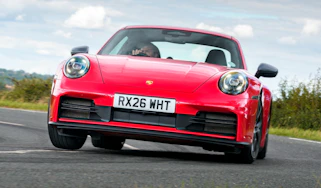
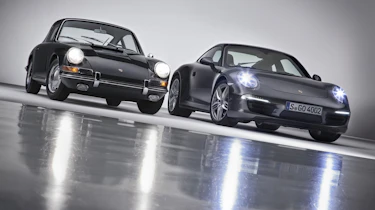
Early 911 looks worlds apart from the 2013 model, but the car's major features have remained almost unchanged from the beginning.
Shown at the 1963 Frankfurt show as the 901, Peugeot blocked the use of a three-digit name with a 'zero' in the middle.
When launched the 911 came with the same 2.0-litre aircooled flat-six engine as the 356, effectively replacing the earlier model...
In 1965 Porsche built a 'bargain' 911 with a four-cylinder engine to over sales from the 1600 356 models.
Porsche introduced the semi-convertible 911 in 1967, with a stainless steel roll-bar to aid rigidity.
From 1969, the 911 got a slightly longer wheelbase to settle the handling, and fuel injection for the 911S and 911E models.
Thanks to the weight distribution and good pace, the 911 won the Monte Carlo Rally three times from 1968-1970.
Engine capacity rose to 2.2-litres in 1970, and again to 2.4 in 1972 throughout the range.
Carrera RS legend was born in 1973 with this homologation special. It came with a larger engine and many weight-saving measures.
3.0 RS model came in 1974. Costing almost twice as much as the 2.7, weight was down to 900kg and power was up to 230bhp.
1974 saw the introduction of the new integrated 'impact' bumpers, and the engine was increased in size to 2.7-litres.
This cutaway drawing shows why early 911s got such a reputation for being hard to catch - all the weight sits behind the rear axle-line.
Huge rear wheel arches, rear wing and forced induction turned the 911 into a true '70s supercar.
The 3.0-litre version of the Carrera came in 1976 - packing Bosch fuel injection and 200bhp.
3.0-litre SC model came in 1978, carrying the 911 into the 1980s. The 911 was now considerably heavier due to safety and equipment.
More NEWS