How to go racing: 2
In our second look at how to go racing we're concentrating on your track performance

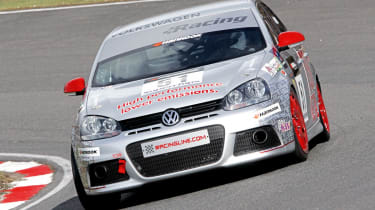
Do I have to buy a car?No, there are a large number of hire drives available. Some championships, such as Formula Palmer Audi are run entirely on a hire drive basis, none of the competitors actually own the cars. Most championships will have hire drives available, even if these drives are not organised by the championships themselves. Often a team will have available and some drivers will hire out their cars if they are able to attend every round.
Hiring a car is a good way of getting a feel for a championship without making the commitment of buying a car. With these cars generally being run by team they can also teach you how to prepare the car for racing and set it up. They’ll also guide you through your first meeting.
Can I insure my race car?Yes. There are specialist companies who will insure the car for racing and/or insure the car when it is being stored or transported. It is different to road car insurance in that you don’t have to insure the whole car but can set a limit on the exact amount of cover you require. The excess is likely to be higher than you are used to on your road car, but it does mean that you can budget for the season more accurately and have he assurance that if the car does get damaged the money will be there for repairs. Personal insurance is also available.
How do I enter a race?Once you have decided on a championship and bought or hired a car you will need to contact the championship co-ordinator. They will send you a race entry form and may also require a one-off championship registration fee too.
As well as that you will also need to contact the club who will be running the race meetings and join the club as a racing member. The organising clubs in the UK are the British Racing and Sportscar Club (BRSCC), British Automobile Racing Club (BARC), the 750 Motor Club (750MC) British Racing Drivers Club (BRDC) and Motorsport Vision Racing (MSVR). All of these clubs charge a fee to join except MSVR, which is free if you register online here
Going testingSome racers would have you believe that you need to go testing before each race meeting. It’s always useful especially if you’ve never been to the circuit before and if you are driving a particular car for the first time. But it’s not compulsory and it’s not always essential, particularly if you’re competing on a tight budget. Generally there will be a test day on the Friday before a race weekend but not always so contact the circuit for more details.
Once you have booked your place arrive at the circuit in plenty of time, especially if you are preparing the car yourself. Generally you will be able to sign on from 8am (details will be given to you when booking). To sign on you will need to produce your new race licence and complete an indemnity form. This normally happens in the race control office and they will explain the timetable and fit you with a wristband. This is checked by a marshal at the end of the pitlane to ensure only those who have signed on can go out on track.
You're now ready to venture out on the track for the first time. Although there is no official timing and no competition, these sessions run in similar way to qualifying. Within your session you can come in and out of the pitlane when ever you want, timing is allowed (unlike trackdays) and you can overtake when and where you please (also unlike trackdays). It’s therefore a good way of getting used to having cars around you and to get comfortable with your surroundings.
You will have plenty of track time through the day so there’s no point in trying to set a new lap record at ten past nine. Take your time, don’t rush things and just concentrate on the racing line and being smooth and consistent. That way you’ll soon find your lap times will begin to fall and you minimise the risk of going off.
Your first race day This is it then, it’s the moment you’ve been waiting for. No longer are you an armchair motorsport fan, you’re now a racer and about to compete. Today you will be lining up on the same grid as many of your heroes have in the past waiting for those red lights to disappear and for the race to start. Today you are going achieve a lifetime ambition and gain that first signature on your race licence.
Don’t be surprised if you find yourself both nervous and very excited before your first race. You probably won’t sleep much the night before either, but don’t worry, this is normal, every race driver from Michael Schumacher down has felt nerves before their first race and every experienced professional racer remembers their first meeting.
You probably won’t have a large appetite, but you should have a good breakfast to set you up for the day. Try to eat regularly and it’s important to keep drinking through the day especially if it’s hot because it gets very warm inside your protective clothing.
You will have received your final instructions through the post in the week leading up to the event. Read them carefully for they will explain specific regulations for the meeting and the timetable. They will also contain a paddock plan which will tell you where to park and set up.
Signing-on is usually held early in the morning, the instructions will say when, ensure you are there in good time as you don’t want to be running around trying to sort everything at the last minute. You also may have been given a commentators sheet to fill in and now is the time to hand those over too.
If you have any problems or questions contact the championship organiser for advice, they will have helped many first timers in their championship and if it’s the first meeting of the season there may well be a few of you starting your first race together.
When you sign on (which is often held in the scrutineering bay) you will leave your licence at the desk to be signed later by the Clerk of the Course. You will also be given a scrutineering slip and a raceday programme. It’s always exciting to find your name in there for the first time, particularly if you have spent many years watching racing from the other side of the fence.
The scrutineering slip is part of your second job. Your car and your overalls need to be checked for compliance to the championship regulations and the safety requirements of the MSA. If you are racing with a team they will do this for you, just give them your kit and the slip and they will take it all off to the scrutineering bay and the time listed in the instructions. You don’t need to go with them but it is worthwhile to see how it all happens.
If you are running the car yourself you will of course have to take it there yourself and join the queue to get everything checked. If there is a problem they will give an opportunity to sort it out, if you have any doubts in advance or any specific questions your championship organiser will be able to help. Once you have passed you will receive a stamped ticket which you must attach to the car in a place that a pitlane marshal can see. Usually inside the cockpit on a single-seater or inside a rear passenger window of a tin-top.
At some events first timers will be required to attend a special briefing. This will again be detailed in your final instructions and it is likely to be compulsory and you may be fined if you miss it. However these briefings are a good idea as the Clerk will detail all the specifics for that circuit including where the collecting area is and the timings for the day. You will also be able to ask any questions you may have.
QualifyingYour final instructions will have the timings, but you will probably be called over the tannoy to the collecting area twenty minutes before this, so be ready well in advance. On the way to the collecting area you may well be stopped by a marshal who will check your car doesn’t exceed the noise limit. You will form a queue in the collecting area and the butterflies will now be fluttering. When the time comes you will be waved out on the circuit.
You will have as set period of time (usually 15 or 20 minutes) in which you need to complete a minimum of three complete laps to qualify for the race. Your fastest lap within the session will set your qualifying position with the fastest driver given the reward of pole position. At the end of the session a chequered flag will be waved at the finish line. Complete a slow down lap giving your brakes, engine and transmission the chance to cool and enter the pit lane at the end of the lap. Follow directions from the marshals because they may want to weigh the car before sending you back to the paddock.
Qualifying will be over much quicker than you realise and once out on the circuit you’ll notice the butterflies will stop as you focus on the job in hand. The excitement of having completed your first qualifying session is just the first huge thrill of the day the highlight is yet to come. Shortly after the session is complete the qualifying times will posted up in race control and usually distributed by the championship coordinator. It will show all fastest laps in order and on the reverse side will be the layout for the grid so that you will exactly where you will be starting your first race from.
The Race With qualifying under your belt the anticipation of your first race start will be electric and adrenaline will be pulsing through your veins harder than you’ve ever felt before. Just like qualifying you will be called up over the tannoy system around twenty minutes or so before your race is due off. This time you will be placed in order inside the collecting area so that you to the grid in order.
You will find some drivers sit in their cars with their helmets on preparing for the race, while others will be more relaxed, parking up the car and walking around until the previous race finishes. Do whatever feel best for you, but try to remain relaxed. This may be difficult because of the nerves but remember that everyone gets them and as they will vanish as soon as the raced gets under way.
When the circuit is ready you will be sent onto the grid where marshals will line you up in your correct position. Once everyone is in place you will see the countdown boards shown from the starting gantry. The specific boards are set down in the championship regs but you can expect to see a 2 minute and a 30 second board at the very least. Then the green flagged is waved and you are able to move off on your warm up lap. It’s worth trying a practice start to get a feel for how much grip is available.
On the warm up lap make a little space to get some heat into the brakes and tyres. You are allowed to weave but use no more than half the width of the track some tyres need more heat than others. Getting the brakes up to temperature is all important on the run down to the first turn.
If your race begins with a standing start you will form back up on the grid with your heart pumping. When everyone is in place the 5 second board is shown before the red lights come on, build up the revs. Right now your adrenaline levels are up to the max, excitement doesn’t get more intense than this. The lights will go out a few seconds later and the race is on!
If it’s a rolling start the pace car will slow and turn off its lights as it heads for the pits. At this point all the cars should form up in two-by-two formation with the pace dictated by the pole-position driver. If the race starter is happy with the formation he will switch out the lights and the race begins.
Race distances are either set as a number of laps or a set period of time and once the leader completes the race distance the chequered flag is waved and it’s all over. As you cross the finish line for the first time it will be difficult to contain your emotion, such will be the exhilaration of the moment. You’ve joined the elite and experienced the same sensations as every Formula One driver. You will also want to do it again.
After completing the cooling down lap you will be directed into Parc Ferme. Your mechanics and friends are not allowed to join you here as the cars may be selected for weighing or further scrutineering. You will however be able to climb from your car and chat to your fellow competitors who will also be buzzing irrespective of how many races they have competed in. Often the top three and class winners will be sent down the pit lane to collect their trophies and be interviewed by the commentator.
The results will be issued thirty minutes after the race finished and there may well be a further prize giving ceremony hosted by the championship coordinator and it’s not uncommon for those to be competing in their first event to be recognized and presented with an award. At most race meetings there will be photographers around the track who will find you after the event and offer you the chance to buy some images from your first race. After that you need to remember to collect your licence from race control, complete with its first signature. Then it’s time to pack up, say your goodbyes and head home but it doesn’t end there, the high will last for weeks.
How can I learn to go faster?Two things are almost guaranteed to happen after your first race. The first is that you will want to do it again and the second is that you will want to go faster. Experience is the key to this, like anything the more time you spend doing it the better you will be. There are some shortcuts you can take and they all involve hiring the services of a professional instructor.
Some instructors work on a freelance basis and can be booked for the day to be with you on a test day and typically charge between £200 and £400 for the day.
How do I upgrade my licence?As already mentioned you are able to upgrade your licence to a National A after you have successfully completed six races and have either the results sheets or signatures to prove it. You can upgrade at any time during the year by filling in form found in the MSA blue book and sending it off to the MSA. The National A licence opens up more races for you to compete and often if a championship has an overseas event this is the licence you will to take part. The next step on the ladder is International C and it is usually the highest grade of licence that club racers apply for.