The truth about speed limiters
Like it or not, speed limiters are coming. So what are the implications?
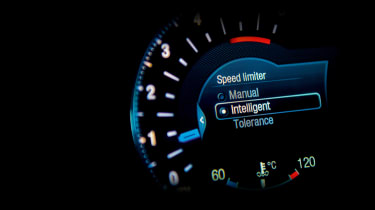
In March 2019 a group of MEPs in Strasbourg approved a set of road safety recommendations from the European Transport Safety Council (ETSC). So far so dull, but those recommendations included the compulsory fitting of speed limiters to new car models from 2022 (or they won’t get type approval) and to existing model lines from 2024. Elzbieta Bienkowska, an EU Commissioner, boldly claimed that limiters and the other planned restrictions ‘can have the same kind of impact as when seatbelts were first introduced’.
Predictably, the story went up like a firework but fizzled out by the time the next Brexit twist had hit the front pages. ‘Pfft, don’t worry,’ seemed to be the view. ‘It’ll never happen – or you’ll be able to override them or turn ’em off anyway.’ The reality is rather different.
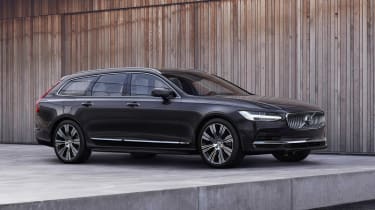
> Volvo commences fitment of 112mph speed limiter on 2020 models
Sure, the ETSC has said it ‘supports a full on/off switch for the system’ but only ‘to aid public acceptance at introduction’. For now, when the system is in its default enabled state, the plan is for it to behave like your seat belt warning buzzer if you don’t buckle up: ‘If the driver continues to drive above the speed limit for several seconds, the system should sound a warning for a few seconds and display a visual warning until the vehicle is operating at or below the speed limit again.’
There’s nothing in the reports to explain what the ETSC plans once drivers have ‘accepted’ limiters, but it’s not an unreasonable guess that there’ll be no way to turn them off – at least not without consequences. And those consequences aren’t hard to work out, because the ETSC is also insisting on your new car being fitted with a black box, similar to the GPS recorders used by the insurance industry, that constantly tracks and stores data on your car’s ‘status’ – the way you drive. It will monitor location, speed, acceleration, deceleration and cornering force, so if you stuff it, you can bet your last parking fine that exceeding a limit – no matter how low and for whatever reason – will leave you with a lot of explaining to do. It’ll be a brave driver who keeps their foot down after 2022.
Despite hitting the headlines, this is all nothing new. So-called Intelligent Speed Adaptation or ISA has been bubbling quietly in the background for years. Leeds University – which is a member of the ETSC – was running trials back in the early 2000s. It fitted a fleet of 20 Skoda Fabia 1.4 estates with GPS-controlled speed limiters, recruited volunteer drivers from local councils and businesses and measured what happened.
As far as possible, the Skodas were designed to drive as standard Fabias, with the exception of two buttons on the steering wheel that turned ISA on and off and an extra LCD display that carried the status of the system and the speed limit. And if the driver exceeded the limit by more than 2 per cent, the accelerator pedal would vibrate to warn them or the brakes would cut in automatically, overriding the driver and slowing the car to the limit.
As well as the Leeds trial there have been studies in the Netherlands, Spain and Sweden that might give us a sense of the new world under ISA control. Interestingly, the trials all reported pretty similar behaviour from drivers. Unsurprisingly, under ISA frustration and anxiety levels rise, particularly on motorways and in 20mph limits. This frustration expresses itself in several ways. Perhaps the most dangerous are an increase in running amber lights, perhaps to make up for lost time, an increase in tailgating when overtaking and a tendency to ‘cut in more aggressively when driving with an active mandatory ISA system’ – the sort the ETSC favours.
> New info reveals UK speed camera tolerances
ISA drivers also took longer to overtake slower cars (when they didn’t simply opt out and sit behind in procession) and had to abandon overtaking manoeuvres halfway through, ‘presumably due to running out of road’ as the trial’s summary casually reports.
Over time, that frustration disappeared to be replaced with a sort of dumb acceptance as drivers dissociated from the task of driving, simply tuning out and driving on the limiter. In short, drivers were compliant but a very long way from safe.
Perhaps simplifying the complexity of safe driving this far and forcing drivers to stick to a limit has the potential to be far more dangerous than letting them choose their own safe speed.