Confirmed: EU petrol car sales ban to be axed. Will the UK follow suit?
The EU has officially opted against an outright ban on the sale of petrol and diesel cars with more flexible emissions targets coming instead
The EU has officially announced that it will scrap its planned ban on the sale of new petrol and diesel cars completely, clarifying details of a new roadmap in the process. Rumours had been circulating that a delay from the proposed 2035 cutoff to 2040 was being considered, then followed confirmation from the leader of the largest party in the European Parliament that the ban will go completely. Now, we have a statement from the European Commissioner for Climate, Net Zero and Clean Growth, Wopke Hoekstra.
‘We want our industries to be the leaders of the transition to a low-carbon economy because that is what is best for our climate, competitiveness and independence.’
‘Today, we are stepping in to ensure a successful clean future for the automotive sector,’ they continued. ‘We are introducing flexibilities for manufacturers, and in turn this will have to be compensated with low-carbon steel and the use of sustainable fuels to drive down emissions.’
The details are as follows: the fleet emissions for manufacturers selling cars in Europe need to be reduced by 90 per cent after 2035, with no specific technology ban. That means cars will be allowed to be petrol or diesel-powered, as well as mild- full- or plug-in hybrid, as long as the emissions reduction reaches that quota.
> evo Podcast: Listen to our discussion on the combustion-ban here
Manufacturers will also be allowed to offset emissions. This will be possible by dramatically reducing the carbon footprint of the steel they use in manufacturing, also specifying its being sourced from the European Union. They will also be able to offset carbon by powering their cars with e-fuels and biofuels.This gives more options to car manufacturers, especially on low volume models that may not impact total fleet emissions too much.
A new class of small electric car (under 4.3 metres in length) will also count towards ‘super credits’, meaning each one sold will have greater weighting in their quotas. Counting as 1.3 cars, 76 of these small EVs will have the same weighting when the quotas are totted up as 100 larger EVs.
Manfred Weber of the European People’s Party first spilled the beans on the ban being lifted ahead of time, speaking to German newspaper, Bild: ‘There will also be no 100 per cent target from 2040 onwards… The technology ban on combustion engines is off the table. All engines currently manufactured in Germany can therefore continue to be produced and sold.’
How did we get here? The tale of the ICE ban
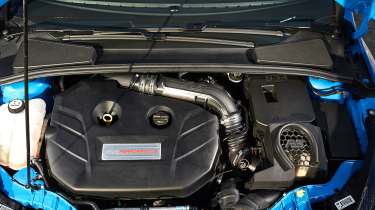
All the way back in 2020, the UK's then Prime Minister Boris Johnson confirmed his Government's commitment to the ban on the sale of new petrol and diesel cars, announcing a 2030 target, with Prime Minister Rishi Sunak shortly delaying the ban until 2035. The current Labour government then reverted to the initial 2030 deadline.
It’s clear that the UK can’t quite decide what’s best, but then it seems not many leaders can. A delay on the EU’s 2035 ban to 2040 was rumoured recently but now it seems that car manufacturers will get their wish - more freedom to produce the cars that are right for their businesses, within a less severe regulatory framework that will still lower emissions and move towards electrification.
> 2030 petrol ban cancelled for low-volume car manufacturers like Ferrari
Pressure from European manufacturers could well have been the catalyst for this change. This news comes not long after Porsche announced a bold change to its powertrain development roadmap, extending support for combustion-powered models and delaying the launch of some pure electric vehicles. While Stuttgart has been one of the first, it’s expected to lead the way for similar moves from other manufacturers that may have to change tack to remain competitive, even if it costs them in the short term.
Even as early as 2022 some OEMs were starting to push back at the holes in the UK and Europe’s policies, not arguing the case for reducing emissions, rather highlighting the fact that most cars on the road in 2030 will still use internal combustion engines. In 2022 Oliver Zipse, chairman of the board of management at BMW, urged Europe and the United Kingdom not to ‘put a policy in place that ends the combustion engine’. He went on to urge the UK government to review its strategy for the sale of combustion engines from 2030.
What does it mean for the UK ICE ban?

In the UK, the proposed 2030 combustion ban won’t make combustion-powered vehicles themselves illegal, but will outlaw the sale of them from new – as a result, all new cars sold would be required to be fully electric by 2035, should the revised policy come into effect. Britain’s current stance grants lenience to plug-in hybrid models, which won’t be banned until five years after the present 2030 ban of pure ICE models. We could expect to see a further policy adjustment to close the gap between the UK’s and the EU’s positions.
The UK’s original combustion-ban announcement in 2020 coincided with a £4bn investment in the UK’s charging infrastructure and battery production to support an increase in electric vehicle sales, along with more than £500million made available to incentivise people to switch to electric and hydrogen powered vehicles. Five years on, the current Labour government announced a pay-per-mile tax for EVs due in 2028, a move that would make them considerably more expensive to run and potentially reduce EV sales in the process, albeit after reintroducing purchase grant incentives. Whether the UK will stick to its guns and enforce the ICE ban now the EU has relented, remains to be seen.