Land Rover hybrid
Land Rover showed this ERAD – Electric Rear Axle Drive – Freelander at the London Motor Show
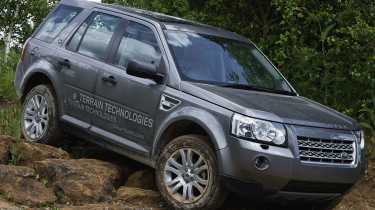
Is this the future of the roadgoing 4x4? Land Rover has more reason than most companies to worry about the EU imposition of 130g/km CO2 averages across its product range. While it's hardly conceivable that Land Rover can meet that target for all its vehicles, the closer it can get, the lower the financial penalties will be. To show the way it has to go, Land Rover showed this ERAD – Electric Rear Axle Drive – Freelander at the London Motor Show as a pointer to its so-called 'e_Terrain Technologies'. A system such as this would be offered in the car previewed by the LRX concept when it reaches production. One of an electric motor's useful characteristics is that it produces its highest torque at its lowest speed. This is very useful for off-roading, so the ERAD system is rather different from the hybrid arrangement of, say, a Lexus RX 400h. That car uses the electric motor for the raer wheels only, with the front powertrain of engine and further electric motor entirely separate. Here, there's a conventional propeller shaft and Haldex clutch between front and rear axles. This means the rear electric motor, which produces up to 35kW (or 47bhp) can drive all four wheels when needed, either for adding low-end torque or for providing low-speed, all-electric drive in cities. The plan is to have enough power in the lithium-ion battery pack to propel the eventual production car for 12 miles before the engine has to kick in. And there's another 20kw, or 27bhp, from the system's other main component, a CISG or Crank-Integrated Starter Generator. This takes the place of a normal starter motor and alternator, and like the rear motor both charges the battery pack (partly through energy recovered during slowing-down or braking) and provides extra torque when needed. In the present state of development the ERAD Freelander is showing a 24 per cent reduction in diesel fuel consumption and CO2 output, even though the hybrid system adds 100kg. In a smaller, lighter car it could achieve great things on- and off-road. Production is still a couple of years away, whether for Freelander, LRX or something larger, but at the end of this year the Freelander will show the first steps towards a hybrid future with a stop-start system.