BMW M reveals quad-motor i4 prototype
This all-electric frankenstein mule based on the existing i4 M50 offers a first look at what’s to come from BMW M
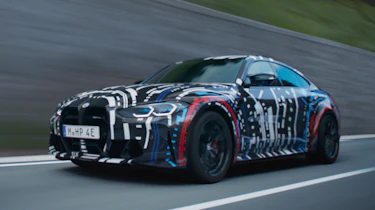
Fifty years since its inception, BMW M has begun on-road development of its first all-electric powertrain it will fit to its first EV. The project is still in its early stages, yet the announcement offers some insight into the direction BMW M is heading in its electric future, and first details are promising.
The continual development of electric powertrains has led to a variety of layouts being introduced in different applications, but the vast majority of high performance EVs in 2022 utilise a pair of motors, one for each axle – as is currently used in the i4 M50. Some, like Audi and Tesla with the Model S Plaid have moved to three motors, but BMW M is going one better, fitting four motors in total to its EV prototype as is found in both electric hypercars like the Rimac Nevera, and an increasing number of American trucks like the new Hummer EV and Rivian R1T.
> BMW i4 M50 2022 review – has BMW picked off the Tesla Model 3 first time around?
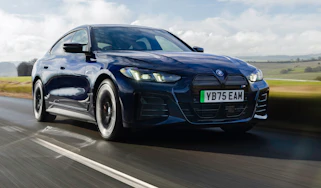
BMW hasn’t released a timeline for its development of the quad-motor powertrain, but has revealed that it is actively testing it in a mule based on the existing i4 M50. Modified with BMW M’s aggressive M3/4 kidney grilles, a new radiator configuration, increased torsional rigidity and wide arches to allow for the new axle designs – each of these elements should ensure a future electric M drives as well as its combustion-powered cousins.
The powertrain’s layout places a motor at each wheel, with torque able to be distributed to each corner instantaneously. BMW M says that in this system, inputs are transmitted to the motors via differentials and a multi-plate clutch, allowing for a significant improvement in traction and overall driving dynamics. A quad-motor setup can also allow for unique features such as ‘tank turn’, previewed in a teaser video for the model.
A byproduct of a quad-motor setup is a drastic increase in regenerative braking strength. This should allow for longer stints of hard driving without brake fade, by reducing the load on the car’s friction brakes. But, creating consistent pedal feel with a blend of strong regen and friction brakes is a notoriously difficult task..
Dirk Häcker, Head of Development at BMW M GmbH, said: ‘Electrification opens up completely new degrees of freedom for us to create M-typical dynamics. We can already see that we can exploit this potential to the maximum, so that our high-performance sports cars will continue to offer the M-typical and incomparable combination of dynamics, agility and precision in the locally emission-free future.’