New Touring Car regulations
BTCC announces plans for Next-Gen Touring Car to cut costs but sustain performance
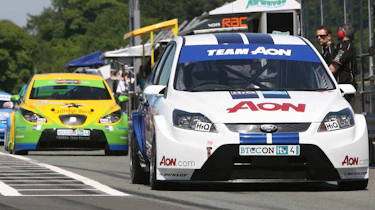
BTCC is the latest motorsport championship to announce new cost-cutting regulations. The NGTC – Next Generation Touring Car – will be introduced in 2011, and should cut car and engine budgets by around 50 per cent.
The host of changes has been voted through unanimously by the BTCC teams, barring any protests or controversy seen in Formula 1 after recent proposals for budget caps and regulation changes.
The new cars will be front-wheel driven, with 2-litre turbocharged engines (which must last the whole season) and use some shared components, as well as having a minimum length that will rule out current hatchback entries such as the Honda Civic and SEAT Leon.
Current Super 2000-spec cars can compete with equal performance until 2013, at which point the NGTCs will gain a performance advantage, effectively ruling out the chance of success with pricier to run, older technology.
‘The broad concept for our ‘Next-Gen’ cars was that they should be larger than some current ones, be more exciting, faster, safer and also much cheaper to build, buy and maintain as well as provide a more ‘level playing field’, meaning even better, closer racing’, said BTCC Series Director Alan Gow.
‘These new cars tick all those boxes and more. Of course the best driver and team will still achieve the greatest success in our championship. But, as these new regulations will be much more restrictive on major expenditure, then a team’s greater bank balance will not necessarily equate to greater success. And, in my view, that is exactly how it should be.’
Here’s a brief rundown of the new NGTC specifications –
• Front-wheel drive• 2-litre turbocharged production-based 4-cylinder petrol engine, producing approx. 300bhp with a 7000 rev limit, 0.8 bar of boost and inlet-restrictor.• Six-speed sequential semi-automatic gearbox• Increased minimum length of 4.4m• Standardised width of 1875mm• 2, 3, 4 or 5-door – providing they share the same basic silhouette and dimensions as the 4/5-door saloon version• Fully adjustable subframe-mounted front & rear suspension• Larger wheels/tyres• Common major components to be utilised; such as ECU, gearbox, brakes, hubs, steering rack, fuel tank and etc.• Integrated front aerodynamics to incorporate radiators, cooling ducts and partial flat-floor to a given design parameter/dimension. Specified rear wing profile and size. Each car to be wind-tunnel tested to achieve similar aero equality• Increased driver safety• Stronger and more robust major components with full at-event parts supply service and support• Lower C02 emissions output than current carsClick here to reminisce on some of the classics (and some of the oddballs) from BTCC’s history in our Touring Car gallery.
You can also read Tim Harvey's overview of the current season and our report from the latest BTCC round at Oulton Park.