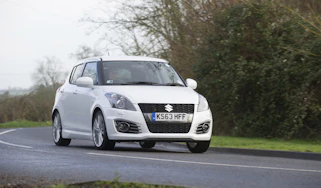
Suzuki Swift Sport (Mk3, 2018 - 2024) review – a warm hatch that aged with grace
Though the third-generation Swift Sport erred on the tepid side of warm, rather than hot, its charms matured over the years as its main rivals vanished
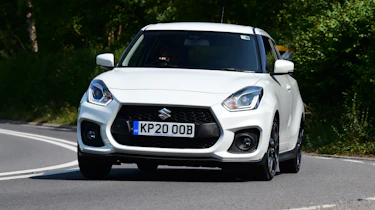
In the case of the Suzuki Swift Sport, absence makes the heart grow fonder. On its introduction we found it to be a little staid and expensive compared to its predecessors and rivals. At the end of its production run in 2024, with the market rid of the VW Up GTI, Ford Fiesta ST and Peugeot 208 GTi that once showed it up on price and performance, the Swift Sport was quite literally in a class of one on our hot hatch mega test as the only sub-1.1 tonne hot hatch left standing.
The Suzuki Swift Sport has always been held in high regard by evo. Ever since the original burst onto the scene in 2006, the pint-sized hatch has become a byword for affordable driving fun. It bows out with its third generation, which stuck firmly to its lightweight roots, if not its bargain basement pricing from its introduction in 2018 all the way through to the end.
> Best hot hatchbacks 2026 – fast, fun and family friendly cars
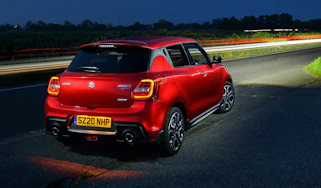
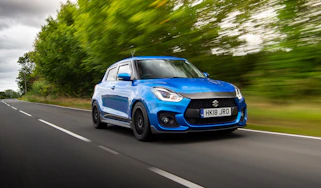
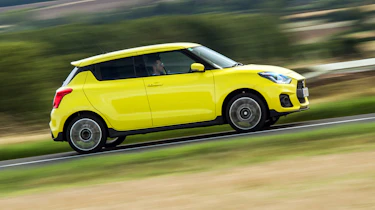
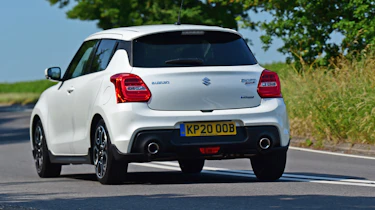
Externally, the Swift Sport was a little more visually aggressive while not being as menacing as some. The front bumper and grille, side skirts and rear diffuser with dual exit exhausts add just enough sporting intent, while the 17-inch alloys help deliver a more muscular stance. While looks are subjective, its four-square stance gives the Sport Hybrid a small dose of personality to lift it from the regular models.
More reviews
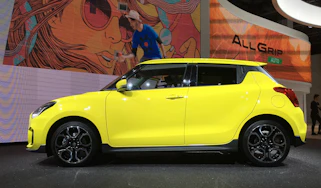
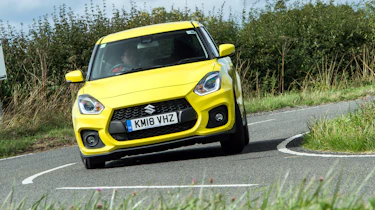
If you want to attract even more attention, the Championship Yellow paint job should do the trick – although its inclusion on the palette was a little odd considering Suzuki’s last title success at the time was the Junior World Rally Championship way back in 2010.
Engine, gearbox and technical highlights
- Turbo engine boosted power, reduced weight
- Hybrid system lowered emissions, docked power
- Heartect platform kept kerbweight impressively low
The 2018 original’s 1.4-litre turbocharged engine came from the Vitara S of the time and promised a reasonably significant boost in performance. It featured a new intercooler and turbo wastegate, making it good for 138bhp at 5500rpm and 162lb ft at 2500rpm. As well as more potent than the second gen, it was also lighter, with an 80kg weight reduction. Drive is to the front wheels through a six-speed manual gearbox, which is essentially the same unit as the old car’s – although there have been some minor tweaks to improve both precision and shift quality.
For 2020, the Swift Sport got a 48-volt mild hybrid system with a 10kW motor to handle engine startup, allow coasting and torque fill below 2000rpm. It did lower the emissions of course – Suzuki’s main goal – but you couldn’t help but think Suzuki has missed a trick by not going that extra mile to allow some form of electric propulsion, not only to reduce the CO2 further still, but give the Swift Sport Hybrid a performance boost rather than its on-paper potency being docked by 11bhp.
Like all third-generation Swift models, the Sport was based on the brand’s HEARTECT scalable platform, which is both light and strong. Using high strength steels, spot welds and a simpler construction, it plays a big part in the Swift Sport’s impressive low kerb weights of 970kg in pre-hybrid form and 1025kg in hybrid form – both lighter than the second-gen Swift Sport.
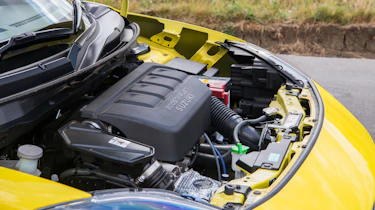
The 1.6-litre naturally-aspirated engines in Swift Sports of old were thirsty unless babied and a bit dusty at the tailpipe. The third-generation car’s 1.4-litre turbocharged unit addressed that (albeit at the expense of some personality as above). A 135g/km figure isn’t too shabby, though the 2020 hybrid upgrade was necessary to drop that to 127g/km. Not a huge drop but Suzuki pointed out that over a year this amounts to 129kg of CO2 saving.
The hybrid is not all that much cheaper to tax than the original, at £180 per year vs £190. On paper it is a tad more efficient, however, averaging 50.4mpg vs the 2018-2020 car’s 47mpg. Being as lightweight as they are, with brakes and tyres as diminutive as they are (by comparison to some performance cars), these consumables shouldn’t cost the Earth, nor servicing.
Performance, ride and handling
- Effortless acceleration, but it lacks a sporty sound
- Well calibrated chassis makes for calm, intuitive handling
- Raw charm of the original swapped for usability
As you’d expect from a lightweight car with a torquey motor, the pre-hybrid Swift Sport accelerates with a glorious lack of inertia. There’s almost no lag and the car responds well, gathering speed with an impressive effortlessness. It feels fast too, pulling strongly and uncomplainingly from as little as 1500rpm.
Yet while the four-pot is smooth enough, it doesn’t really sound all that sporty. At start-up and low revs the Swift Sport's Boosterjet is muted and anodyne, while revving it harder elicits nothing more than a muted growl. It’s not unpleasant, but it’s not that inspiring either. Those familiar with the naturally-aspirated second-gen car will also miss its top end vivacity. There’s more performance everywhere in the new model, but like many forced induction motors there’s no real incentive to wring its neck, especially as the rev-limiter kicks in abruptly at just over 6000rpm. The upshot is that the Suzuki is more hushed at a cruise and more efficient, making it a far more grown-up and useful proposition as a daily driver than its predecessor.
The mild hybrid dropped power from 138bhp on launch to 127bhp, and the 0-62mph time to 9.1 seconds from 8.1sec, taking the on paper pace from lukewarm to the wrong side of tepid. But while 9.1 seconds to 62mph doesn’t sound quick, it feels faster than that, perhaps because peak torque increased to 173lb ft (up from 162) but then also, it’s that the 1.4-litre engine is augmented very slightly below 2000rpm with torque fill to add a little sense of urgency. That torque fill from the electric motor doesn’t offer a performance boost over the older Sport, but it does get the Swift off the line with an encouraging shove.
It’s not sluggish but it has lost the spark you’d want from one so small with a decent slug of power and torque at its disposal. The short gearing helps present a sporting appetite and constantly throwing gears at it gives the illusion that you’re whipping along nicely, but in reality you’re merely making progress.
The suspension set-up is a fairly familiar combination of struts at the front and torsion beam at the rear. However, the Sport benefits from a 15mm lower (compared to the standard Swift) ride height, plus the adoption of Monroe gas dampers. At the front are heavier duty anti-roll bar mounts, while the wheel hub and bearings have been combined into a single unit, with a greater width between the bearings for a 15 percent increase in camber rigidity. At the rear there are bespoke trailing arms, but the rest of the set-up is carried over unchanged.
On introduction to it in 2018, we found the Swift Sport had ‘lost some of its raw charm and appeal’ and that ‘the fun factor has been diminished.’
‘Where the old car revelled in being taken by the scruff of the neck, the new version is a more measured machine, favouring a less energetic and engaging approach. It’s technically more accomplished, but it raises fewer smiles per mile.’
In the slightly heavier (by 55kg) mild hybrid, we found the accompanying chassis refinements worked to the car’s benefit, with a calmer ride and more intuitive steering.
Today? Being a bit of a novelty, it’s unsurprising the little Swift got a warmer reception. Its diminutive dimensions allowed you to exploit its appetite for a flowing progression. The bump to over 1000kg once hybridised might have made it the heaviest Swift yet but in its final days, it was an outlier featherweight. The suspension – with UK-tuned, Europe specific tuning – is well judged and the steering nicely resolved.
It does run out of grip on its soft-sidewall Continental tyres quicker than you were possibly expecting, but fling it around and its supermini objectives gently bubble to the service, although there’s never an explosion of fizz to keep you on your toes.
Interior and tech
- Seats are well-bolstered, but sit high
- Red cabin accents don’t hide its cheap plastics
- Spacious, well-equipped and refined
Equal effort was expended on the interior, which benefits from well bolstered front seats and a flat-bottomed steering wheel, though the seating position is more ‘sitting on a bar stool’ than in a bucket seat.
There’s a generous helping of red trim accents – there are red inserts in the doors, dashboard and centre console, plus the same colour is used for stitching in the seat and wheels. Not even the dials (improved by the addition of boost gauges and an oil temperature indicator) escape the paintbrush.
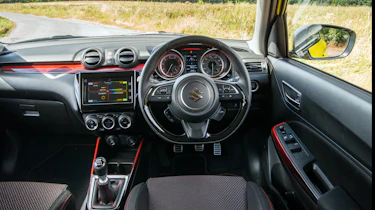
The cabin looks good and is well equipped and laid out, but some of the plastics used lower down look a little cheap and cheerful. It’s also disappointing to find the gear knob is a plain plastic item – you’d expect leather at this level.
Still, the Swift is very well equipped and decently spacious. Factor in the improved refinement and you have a car that’s a much more mature proposition for daily driving duties than either of its predecessors.
Price and rivals
When this generation of Swift Sport launched in 2018 at £18k, its pricing felt a little too punchy for the UK: back then you could spend a thousand more and get a Ford Fiesta ST or Peugeot 208 GTi by Peugeot Sport, or a few thousand less and get a VW Up GTI, which left a few scratching their heads. That price gulf increased yet further to over £21,000 – a full £5k up on the equivalent Up! GTI – when the Sport became a mild hybrid in 2020, a necessary step to trim its emissions to keep it on sale.
In its final year of production in 2024 it retailed from £24,270: not small money by any means but a more palatable figure in a world where the Up GTI was long gone, a base Volkswagen Golf GTI cost nearly £40k, Peugeot’s 208 GT started at £28k and the Mini JCW was a £33k car. But to drive, too, the unassuming (in all but colour) Suzuki is a real palette cleanser. A bit of a delight, in fact.
A few years since it went off sale, you can now find examples for much less than they were when new. The very cheapest non-cat third-generation Swift Sports can be had from £9000, but you will be looking at leggy cars should you take the plunge at this price point. Stump up £12,000 and you can find tidy cars with in the region of 30,000 miles.
Suzuki Swift Sport Mk3 (mild hybrid) specs
| Engine | 1.4-litre turbocharged four-cylinder & hybrid assist |
| Power | 127bhp |
| Torque | 173lb ft |
| Weight | 1025kg |
| 0-62mph | 9.1sec |
| Top speed | 130mph |