Your children are paying more attention to your driving than you think
From road rage to risk-taking, your bad habits will influence the next generation of drivers from an early age
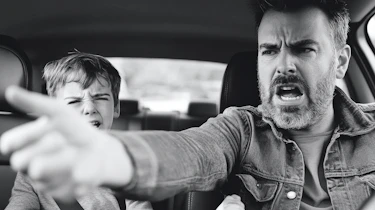
Have you ever thought about how your driving habits set an example for your children to copy, and the potential consequences of their driving style being influenced by any dangerous behaviours that you exhibit?
Without question, your kids will be affected by the way you drive. If a turbulent mindset, poor attitude to risk and the odd emotional outburst are part of how you drive, this will automatically have a detrimental effect on how your children will eventually drive – it will be seen by them as normal behaviour.
Taking risks may be part of your driving DNA, but just after your children pass their driving tests they might start using your precarious tactics with such limited experience that they become a disaster waiting to happen.
> The unexpected road hazards most drivers completely ignore
Here’s the thing: drivers aged between 17 and 24 years old are four times more likely to crash than more experienced drivers. Primarily this is because young drivers don’t get taught to drive in real-world conditions – they get taught to pass a test. But the last thing we should be doing is giving them a false impression of what that real-world driving should look like.
Make no mistake, your kids are watching you – what you do and how you do it. When you speed, will this lack of discipline become normal practice for them too, because you’ve implied that speeding is acceptable? And each time you remonstrate at another driver’s antics, will this contempt be something your kids will later mirror? Could this be taken by them as ‘normal’ social driving behaviour, because that’s what you’ve taught them to do? And those high-risk situations, where you say it was safe because you’ve been driving for years and have the experience to deal with it, but in reality that judgement was based on an overconfidence in your capabilities: will your children be overconfident in such situations too?
Whenever you drive your children, you’re educating them. Taking risks ‘head wires’ them into your unsafe routines. You’re teaching them that your potentially dangerous attitudes and occasional emotional instability are acceptable and appropriate. They are not.
Your children may not get behind the wheel until they’re 17, and while their L-plates are on they may not show any signs of the behaviours they’ve absorbed, because initially they’re driving to impress you, their driving instructor and ultimately a driving examiner. But when they’ve passed their test and are free to drive by themselves or with friends, those learned behaviours will start bubbling to the surface. This should be a real worry for any parent, because as we know, a car is a lethal machine, capable of killing its driver, any passengers and other innocent road users. This is the reason why how you act and react on every drive matters deeply – starting many, many years before your children reach driving age.
I therefore urge you to evaluate how you drive when your kids are in the car – and even when they are not, so that good driving habits become second-nature for you (after all, if it’s good for your kids, it should be good for you too). In any given driving scenario, always ask yourself: would you be happy for your child to drive exactly as you are driving now? It needs a constant check from you when you have your children in the car, because the risks you take don’t just involve them at that point in time – they could have implications long into the future.
This story was first featured in evo issue 341.