Ford’s F1 comeback: marketing fluff or a genuine partnership?
Ford’s F1 comeback has got the cynics raising eyebrows. We went to Detroit to decipher the Blue Oval’s true role in Red Bull’s in-house F1 powertrain

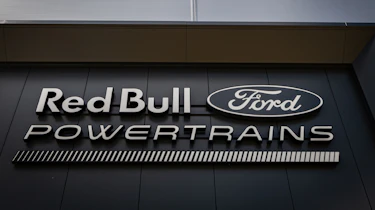
Speculation and noise concerning the nature of Ford’s return to Formula 1, in partnership with Red Bull to create Red Bull Ford Powertrains, has been rife. Indeed there’s been a wider feeling of cynicism, perfectly summarised and expressed by Cadillac F1’s team CEO Dan Towriss, claiming it’s ‘a marketing deal with very limited impact’. Nonetheless Ford were incensed by the jab, with CEO Jim Farley calling it ‘laughable’. A fair when you consider Cadillac is paying Ferrari for engines.
To find out Ford’s real role and why it’s getting back into F1, I headed to Detroit for the Ford Racing season launch, stealing time with Ford’s big bosses, CEO Farley as well as Executive Chairman Bill Ford, in addition to the minds working on the technical side, from both Red Bull and Ford Racing.
What’s Ford actually contributing?
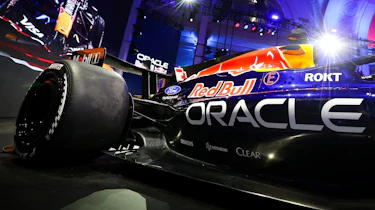
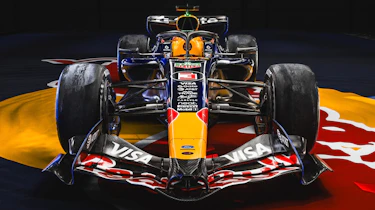
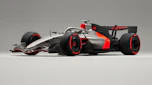
Right off the bat, the liveries of the new cars from Red Bull and Racing Bulls seem to reinforce the perception that Ford’s is a diminutive role and, in light of what I learned, might actually do a disservice to the Blue Oval. In fact, Ford and Red Bull’s frankness demonstrated the exact technical role Ford has played, was admirable. My summary? It’s not much but it’s certainly not nothing. Ford’s CEO Jim Farley reckons it’s ‘one of the hardest things’ the company has ever undertaken.
Firstly, the parts. Ford’s leveraging its high-tech Direct Metal Laser Sintering (DMLS) 3D-printing tech to create 12 components across the power unit, including exhaust-side turbine housing on the turbocharger, parts for the exhaust and water pipes. This is tech Red Bull did not have, that would have incurred an enormous cost to buy in itself, which of course would have cost cap ramifications. Now it doesn’t need to, instead using Ford almost as a parts supplier. The tech means quick turnaround too, Ford claiming it can shorten wait times for certain parts to five days, down from over two weeks.
‘It’s a lot of engineering to know how to use the 3D printing tech,’ Christian Hertrich, Ford Racing’s powertrains manager explained.

‘There are so many parameters that go into it. Change one, you then have to tune over ten others. Layer thicknesses, laser power, what speed do you use. It’s so many things, you need a specialist to look at it and understand it. We’ve been applying it for 20-plus years, we have that know-how.
‘We have the equipment and it’s something that they (Red Bull) don't have to spend their time and resources learning, right? They’ve got their cost cap for both their equipment and personnel. They can utilise Ford and they buy parts from us. We’re a supplier into Red Bull. They send me a purchase order for a part, I can sell them that part.’
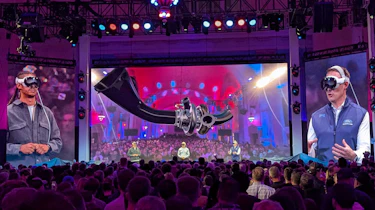
Then there’s development, of which the virtual world has become an enormous part. Ford Racing’s simulation capabilities include being able to work 1000-times faster than real-time. That’s endlessly useful when it comes to calibration of the new 50-per cent electric, 50-per cent combustion powertrains, in terms of how they feel for the drivers and how energy is deployed.
‘It’s fair to say that we have a very open and collaborative partnership,’ Phil Prew, Red Bull Ford Powertrains’ technical ops director, expressed to me during the RB22's livery reveal at the Detriot Motor Show.
‘Surprisingly it’s not been difficult to get these two very different organisations to work together. Ford Racing has a very can-do attitude and it’s been an absolute delight to be honest. They do want to push forward, learn and accept crazy demand and pace. I still think there’s opportunity to grow and expand it.
‘Everything we do has to be compliant with the financial regulations, obviously. All the people that come in from Ford are wrapped up in our cost cap regulations, so it’s not a kind of open door. But they are responsive so if you want to go and recruit people, there’s a whole process. I’ve got Jim Farley on speed dial.’
Nonetheless, Prew makes no secret of the fact that this is a Red Bull engine, that’s been in the works for four years, at the hands of its own 600-strong team based in Milton Keynes.
‘It’s important to remember that the power unit was all designed back in Milton Keynes and was a massive investment and these guys are sorting things with that. We have a team of 600 people back in Milton Keynes and we have a few Ford guys. The reality is Red Bull is responsible for all of it and we defined the program but we’re able to tap into the capabilities and resource of Ford.’
Hertrich reiterated: ‘We’ve got a lot of people working within Ford to make this successful. By no means are we an engine or a PU manufacturer, but we are integral partners to Red Bull.’
Why is Ford back in F1?
There are a few reasons Ford wants to be involved in motorsort at the highest level. The most obvious is lifting the brand’s general perception: if people see a badge on the race track, they’ll be compelled to buy road cars from that same manufacturer, after all it was Ford who said "Win on Sunday, sell on Monday". Other motives are taking learnings from the process of developing and racing cars in F1 and applying them to road cars.
While Prew told us that ‘we’ve not explored that just yet’, he did concede that ‘if we can contribute back and forth, everyone’s a winner’. CEO Jim Farley himself had plenty to say, explaining that Ford’s in F1 to learn and develop how it builds all cars, rather than to try and market and sell cars.
‘I wouldn’t think about it as selling. We don’t really think of F1 as that kind of sales and marketing thing like it used to be. Maybe it could improve sales but that’s not how we’re looking at it.
‘I think more about tech transfer but unlike the mechanical tech transfer of the ‘70s and ‘80s, today it’s software to predict component failure, it’s high-discharge batteries. What they’re getting is additive manufacturing, quick cycle times on new PU components, things we didn’t know we can do better than F1. But it’s a two-way tech transfer.
‘F1 has the best component failure prediction software in the world. They can predict most of the failure in those components before they fail. Do you know how valuable that would be for a Transit operator – a plumber or an electrician?’
Indeed just being involved and working with Red Bull’s engineers has taught Ford’s people a lot, as Hertrich reaffirmed: ‘I think the thing I’ve learned is just the speed. It’s never ending. You deliver a part and you’re like, do I get a break for the weekend? Nope, the next one’s in your inbox. They also push us. If we say we can’t do something, Phil will say ‘yes you can’. They don’t accept no. It’s changed our team’s mindset. It’s pushed us in a lot of areas which has been painful but actually really good.’
The increased value of F1 in the post-‘Drive to Survive’ era
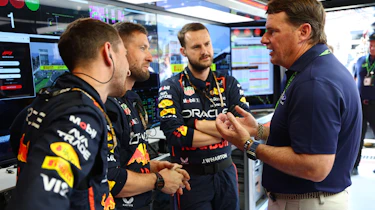
The other side of the F1 coin is of course that it’s a very different beast to when Ford were last involved, first as Stewart-Ford before the ill-fated switch to Jaguar, the team Ford sold to Red Bull for $1. First, it’s got an ever-increasing American presence, both in terms of teams and where the races are held and indeed, the nature of the public’s interest in it.
The F1 circus travels to Las Vegas, Miami and Austin in 2026, with Ford joining the new Cadillac team, and Haas, ready to reach the influential new generation of younger fans all over the globe flocking to watch, that first learned of F1’s existence via Netflix’s Drive to Survive. This alone meant Ford simply had to find a way onto the grid.
Ford executive chair Bill Ford confirmed: ‘F1 has a much younger audience now and so I think it was really important for us to stay relevant with a much younger cohort and a very different cohort than we would have traditionally reached through racing.
‘I think we’re coming in in the right way, with Red Bull, with the best driver in the world.’ That's a serious piece of marketing to back up a genuine partnership.