Mercedes AMG GT (2014-2022) review – ride and handling
Adjustable, interactive and satisfying, if not quite as delicate as some rivals
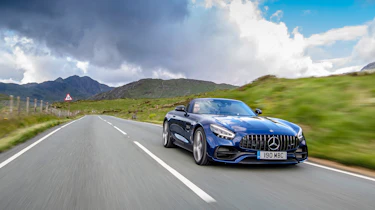
Open the bonnet of the GT and you will see what looks like an engine cover, but it’s no such thing. Look behind the big piece of black plastic, up towards the windscreen, and you will see the actual location of the engine. This is one of the most extreme examples of a mid-front-engined layout ever to grace a road car and you can feel it in the handling. The front end response is incredibly quick, the nose darting into corners at the slightest provocation.
With the dampers in the most comfortable of their three settings there is a nice bit of roll, but ramp them up further and the AMG GT corners incredibly flat and very fast. It is perhaps the direction changes that are the most impressive aspect, the whole car slicing one way then the other with no need for any pause in the middle. This lateral stiffness can initially make the car feel quite aggressive at the limit, really fighting not to lose grip, but actually the electronically controlled LSD smoothes the transition into slip well.
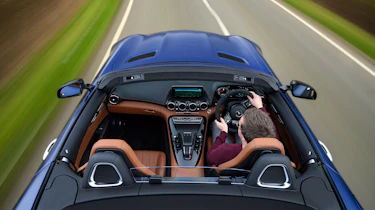
The one note of caution in the AMG GT is the steering. It is extremely quick, which you get used to, but it is also extremely light and at times this can leave you feeling a bit removed from whatever the grip levels are at the front wheels. The sensations improve once you have some lock on, but heading down a straight towards a corner you can be a little nervous about that initial input. This feeling is exacerbated by the feeling that you’re essentially sat over the rear axle, placing you behind the car’s natural axis of rotation which exaggerates cornering forces, even if cornering speeds aren’t actually that high. Of course this isn’t a problem on track and if you have an inclination towards oversteer, then the AMG GT will indulge you for as long as it has tyres and fuel.
The GT R takes things to another level, with more power and features such as rear-wheel steering to refine the experience. In both models, the feature provides the driver with the impression that the car has a shorter wheelbase, with the front wheels being closer than they actually are. At speeds up to 62mph the rear wheels turn in the opposite direction to the front wheels, and above 62mph they turn in the same direction as the fronts, making the car more stable.