The new Jaguar GT is lovely to drive, but that’s not enough for people to buy it
The Jaguar GT has the hallmarks of a deeply impressive luxury saloon. Whether it can turn the tide on slow demand for premium EVs is another matter

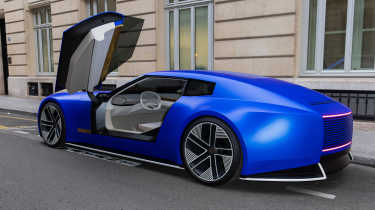
Now that Jaguar’s rebrand has had time to sink in, I think it’s time to move past the controversy around its new design language and marketing to discuss the important stuff. Jaguar’s new era is going ahead at full steam regardless of the outcry on forums and social media. The next and most important question is whether this bold reinvention and move upmarket will actually succeed, making the company profitable and a genuine Bentley rival. It’s a tall order, and I have my doubts.
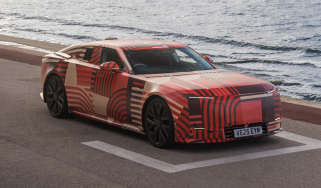
Not because of the quality of the cars themselves. I’ve driven a prototype of the new GT, and it’s on track to be a really compelling big luxury saloon. It feels like a proper Jaguar in that it’s not chasing the absolute sharpness of a Porsche, rather the comfort, isolation and opulence of a true grand tourer, with impressive dynamic ability in its DNA, if not central to its character. Having seen images of the final car I can also say it’s a striking looking thing – not traditional in a way an old XJ owner would appreciate, but a bold statement and to me, quite desirable. Just the fact that it’s a new shape and not an amorphous blob, as so many new cars are these days, is a good thing.

Instead, Jaguar’s biggest obstacle is that it at once wants to move upmarket but also become an electric-only brand, and right now, that’s not a winning combination in terms of demand and sales. As demonstrated by Lamborghini, Aston Martin, Bentley, Porsche and Lotus – all of which have recently made u-turns on EV plans – the demand for high-end electric cars is nowhere near where it needs to be at the moment, and that spells trouble for Jag.
Speed and capability alone aren’t enough to cut it in the £100k+ bracket, and customers spending that much money want something distinctive and characterful – not to mention free from the constraints of the UK’s public charging network. ICE is still king in this space, and as Porsche’s slow-selling Taycan has proved, even an objectively brilliant EV built by the world’s best engineers with billions of euros behind it can’t change that.
That leaves the £120k GT in a tricky spot. Development of the new car began after Covid, when the move towards electric - pushed heavily by government regulations - looked like a sensible decision. But the way the market has played out since should worry Jaguar, and it can’t change tack now. Everything about the GT is integral to the fact that it’s an EV, from its bespoke electric-only platform to its low-slung design, which has no room to accommodate a combustion engine. Pressed on whether the platform could be adapted for ICE, Jaguar’s Architecture Chief Engineer Jon Darlington told me that too much would need to change for it to be feasible.
Jaguar admits that the GT isn’t the product it’s banking on to generate cash, with that task being given to less expensive, more mainstream products - including an SUV - later down the line. Instead, the GT is a halo car to ring in Jaguar’s new era, loud and proud, and for that purpose it plays to the strengths of EVs as well as it could. People don’t buy EVs for a vivid, engaging driving experience, and the GT doesn’t aim to deliver that, instead using the silence and effortless power delivery of electric motors to support its comfort and refinement. In this respect it’s more a cut-price Rolls-Royce Spectre than a Porsche Taycan rival.
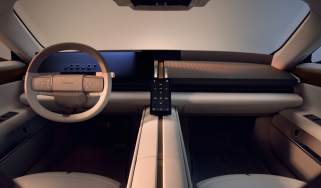
It’ll be a special thing to sit in too. I’ve only sampled a heavily disguised prototype, but its low, laid back seating position and long bonnet gave classic GT vibes. From images I’ve seen of the finished interior, it’ll be a really distinctive and sumptuous cabin in terms of its design and materials too. Time will tell whether that’s enough to entice customers at this level, and whether Jag’s big gamble will pay off.