Lexus GS review - the alternative executive car choice - Ride and Handling
Japanese executive saloons offer a different take on the Germanic norm, with mixed success
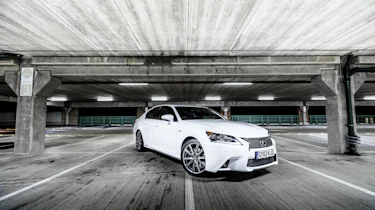
The GS has traditionally been the most engaging model to drive in the Lexus line-up (excluding the focused F models of course) and that remains true of the current car. It’s rear-wheel drive like its key rivals and that does give it some poise lacking elsewhere in the Lexus range. The way the transmission works dominates the drive, though, and thanks to regeneration on the brakes there's a rather muted response from the middle pedal, but get beyond that and there’s a moderately talented chassis there.
That does, of course, depend on what model you’ve chosen. F Sport brings suspension that’s more sporting in its intent. It and the Premier model benefit from Adaptive Variable Suspension, which allows a choice of Normal to Sport Plus settings. It monitors each damper, reducing body roll, while pressing that Sport Plus button also has the effect of reducing the steering ratio by 10 per cent and weighting up the electronic power steering. The result isn’t hugely noticeable, but there’s a reasonable amount of feel through the F Sport’s perforated leather-rimmed steering wheel.
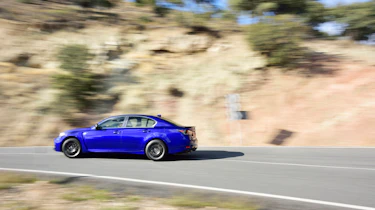
The ride is a marked improvement over other Lexus models too, the GS exhibiting some composure over poor surfaces, even on the F Sport’s larger standard 19-inch alloy wheels. Body control is decent, as well. The F Sport in 450h guise also comes with Lexus Dynamic Handling, a system that incorporates dynamic rear-wheel steering. In most situations at speeds up to 50mph the rear wheels steer turn in the opposite direction to the fronts to improve agility and turn in response, while at speeds above that the rear wheels turn in the same direction. It works too, improving the GS 450h to a point where, dynamically at least, it’s credible against the best of its rivals.
The GS F lacks the ultimate precision and feedback of some of the best German rivals, but it's still a lot of fun. There's no rear-wheel steering here; instead, the GS F's torque-vectoring differential aids precision while Sport S and Sport S+ modes adjust steering weight, throttle response and gearchange speed to the driver's tastes.
Body control is good, grip is strong at both axles and with the differential set to 'Slalom' mode, it's agile too. It lacks the mighty punch out of corners that modern turbocharged rivals offer, but throttle response is quicker and power delivery linear, so it's a satisfying drive all the same.