Alpine A710 – dead on arrival
It didn’t get to succeed the A610, but instead transformed into one of the ’90s most extreme sports cars
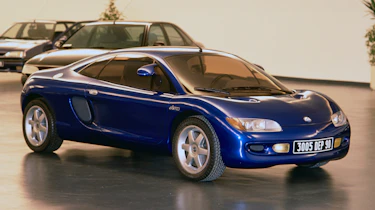
From the death of the A610 in 1995 until the arrival of the new A110 in 2017 things were quiet on the Alpine front, but it wasn’t for want of trying. Even before the sales-phobic A610 was killed off without replacement, parent company Renault was confecting schemes and styling proposals for new Alpines and did so for years until, finally, the A110 made it over the line.
These ill-fated plans included project Z11 of 1999, a curiously art deco coupe scheduled to be shown off as a concept before Renault management had a change of heart and kept it locked in the design studio. Then there was project W16 of 2005, a mid-engined 2+2 based around the design of the Renault Wind (the 2004 concept car, not the bathtub-like production car of 2010). Most surprisingly, in 2007 there was project W19 that hoped to make a front-engined Alpine coupé from the chassis of the Nissan 370Z.
> Alpine builds one-off A110 GT4 Evo to tackle Pikes Peak
The most promising missing link between A610 and new A110 predated these cars, however, starting life in 1989 under the codename W71. Responsibility for this project was given to Alpine’s Dieppe-based design and engineering offshoot, Berex, the unsung heroes of fast French cars. These were the wizards who created the original Renault 5 Turbo and would later anonymously confect the brilliant Renault Clio Williams, leaving the glory to the companies with their badges on the bodywork.
In fact, it was the heart of this latter car, the 2-litre, 150-horsepower F7R engine, that would provide the starting point for W71. Around it there would be a lightweight aluminium chassis and these fundamentals would be dressed in a modern, cab-forward shell taking its cue from the Renault Laguna (the radical 1990 concept car, not the rep‑tacular production car of the same name). Target weight was around 900 kilos and, going by reports from former Berex engineers who drove the early prototypes, performance was impressively lively as a result. W71 was all set to sit alongside the ageing A610, badged as the Alpine A710.
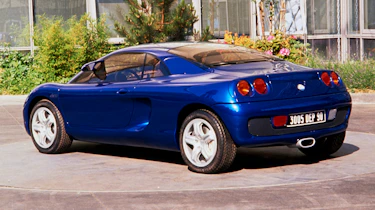
Unfortunately, the project then hit a snag. In their quest to make this car as lightweight as possible its creators had left out fripperies like air-conditioning and electric windows. Their commitment to purity also excluded power steering from the menu. Renault’s marketing people were not convinced. To have a chance of selling this thing we’ll need it to have some luxuries, they said. Trouble was, adding extra features would have forced the A710 to get bigger, sending it into a vicious circle of lardiness and lethargy. Like a lot of well-meaning sports car projects, this one suffered an inconvenient mission creep that killed it stone dead.
Except, actually, project W71 didn’t die off altogether, because its promising pairing of bespoke aluminium chassis and lusty F7R engine was salvaged from the abandoned Alpine project and used for a model that did make it to the showroom: the Renault Sport Spider. Doubling down on the A710’s minimalism by lopping off the roof and windscreen turned out to be the unlikely solution to getting it past product planners. When the Spider entered production in 1996 it was even built in Alpine’s Dieppe factory, it just didn’t have an Alpine badge on the front. Despite Renault’s best intentions since the era of the A610, we would have to wait another 21 years to see that again.
This story was first featured in evo issue 290.