Alpine’s plan to stop its electric A110 being killed by its own battery
Battery longevity is a big worry but Alpine will take steps to reassure buyers of its new A110 EV

The question of longevity looms large over electric (and electrified) cars. The cost of battery reconditioning or replacement on a 15-year-old daily driver EV is feared by many to dwarf the maintenance costs used car buyers are currently accustomed to.
What about in sports and supercars – cars that aren’t a white good but a cherished possession, owned by successive generations of enthusiasts? Will the batteries in the looming next generation of electric sports cars render them obsolete and depreciated or even inoperable and worthless, decades down the line? Faced with either eventuality, buyer apprehension is quite understandable. Well, Alpine is thinking about this problem as development continues on the next-generation Alpine A110 sports car. The message: it’s got your back.
The answer, as explained to evo by Alpine CEO Philippe Krief at the 2026 Paris Motor Show, is in how the car is future-proofed now, to be upgradable (hardware and software-wise) and not prohibitively expensive or complicated to work on when the time comes for a heart transplant.
‘When you buy a car like that, it's for life. So we are actually thinking exactly how to do that. We are working on what will happen in 10-15 years' time, where the battery will be – because of aging, because of a lot of things – decreasing in performance and the residual values will drop. We cannot afford that. We want to offer our customers something so they can be sure of their car during its lifetime, that the car will always keep at least the same performance and energy.’
Battery replacement and upgrades
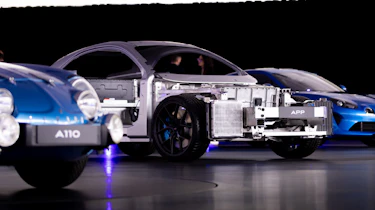
Alpine will offer a battery replacement and upgrade program of some form – details to be determined in terms of pricing, periods, warranties and so on – not unlike that of Ferrari. Krief’s old employer offers full battery replacements every eight years (or at a certain drop in performance or reliability) with its extended warranty programs.
There’s also the fact that owners of these cars may have no choice but to upgrade their batteries. As Krief points out, it would be unreasonable to expect suppliers to continue manufacturing generations-old battery tech at such low volumes. Batteries aren’t like a carburetor that is easy to remanufacture in a period-correct way. The cars therefore need to be able to evolve with the times.

‘It’s a completely new problem, because with mechanics it was quite easy to reproduce and rebuild some parts. Here with this kind of car, we’re lower volume. Ten years after we go into production, we will have parts, but there’s a certain point of time where you won’t have that part anymore because you cannot constrain your supplier to keep parts for 11 years, 15 years, 20 years or 100 years. At a certain point of time there will be no solutions. Here we need to offer something to our customers.’
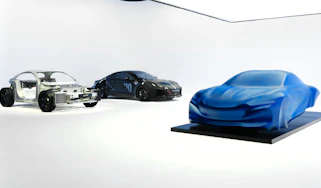
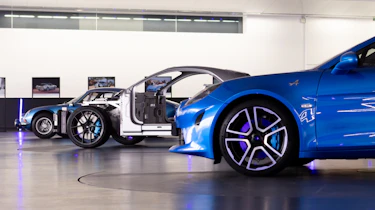
That’s not to say that Alpine has made it easy for itself in this sense. The 2027 A110, on top of eschewing a skateboard design in favour of stacked separate battery packs, uses a cell-to-pack configuration rather than modules. The latter would have been much easier to swap with new tech when the time came but, knowing a solution could be worked out for the chosen design anyway, the lighter solution was chosen.
‘It would be a lot easier if we had chosen the module strategy but we didn't want to do that because it would have been too expensive in terms of weight. And so we decided consciously to have the cell to pack. So we are working on what will happen in 10-15 years time.’
Advancing battery tech
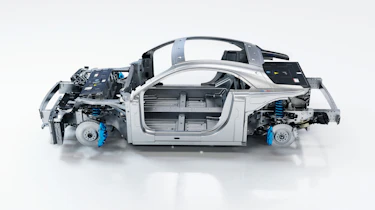
The process of developing the A110, over the course of these last three years, has made evident just how quickly battery technologies move on, as Krief explains.
‘When we started, we did so knowing that we are not going to use the cells that were available at the time. We are already working on new generation cells – the cells we are working on are not in the market. After that we are working on solid-state: Anything that can increase energy density and take up less space. As we want to keep the car for a certain amount of time, we have already forecasted to have one or two updates. Otherwise, you’re dead.’
Yes, two battery upgrades are already a part of the next A110’s life cycle and Alpine engineers are looking seriously at solid-state tech. That we now know all A110s, from the first cars delivered in 2028, will be upgradable to next-gen technology and will be offered with some form of long-term battery programme, should be a welcome comfort to prospective buyers.