Ill-conceived government legislation will kill the UK car industry
The car industry and legislators cant meet in the middle and find a compromise soon enough

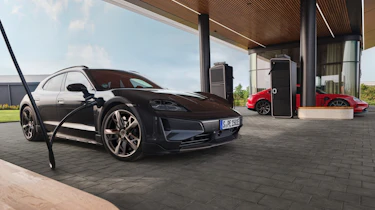
The car industry finds itself between a rock and a hard place, as it surely hopes big fines and waning customer interest don’t define the second half of this decade; the real countdown to the UK’s 2030 ban on internal combustion vehicles.

On the one hand, they have the government instructing them to sell as many zero-emission cars – electric for the most part – as possible, on pain of financial penalisation should quotas not be met. For each car any brand under the 22 per cent threshold sold, that contributed to it being under that threshold, a fine of £15,000 should be handed out. Unless revised following government consultation, that rises to 28 per cent in 2025. On the other, they have a car-buying public that doesn’t want to buy what they’re being forced to sell.
evo Editor-at-large Dickie Meaden’s exasperation with the issue was notable, in episode 12 of the evo podcast: ‘If you’re a car company, what are you supposed to do? You’re being fined for building cars people don't want to buy and selling them cars they do want to buy.’
Fines have since been evaded, but the numbers had to be pumped to reach compliance in 2024. The eventual 19.6 per cent EV market share was boosted by the carbon credits underperforming manufacturers could ‘borrow’ from their future figures, effectively kicking the can down the road. Add to that the rumours that the number of EVs sold versus ICE had to be fudged by some carmakers in the final month of 2025, in order to boost the ratio further in favour of BEV. The overall 19.6 per cent share for 2025 factors in a significant December boost, which had a staggering 31 per cent share. Meanwhile, petrol sales were down that month by circa 15,000 units.
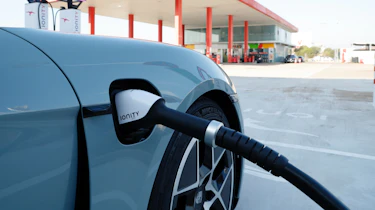
Evidently, the electric car market appears to not yet fully cater to enough budgets, use cases and tastes to keep the UK’s new car industry in the clear on sales volumes alone. Why? Well, EVs are still dismissed as prohibitively expensive (and depreciative) by many, untrustworthy, undesirable and ill-suited to their lives. How the excellent, keenly-priced new Renault 5 performs will be very interesting to observe in 2025 but even it still won’t fit into the lives of those without driveways and wall boxes, the infrastructure as it stands still being relatively thinly spread and expensive to use.
The volume sellers have felt the most pain so far. They have the uphill struggle of developing and building en masse EVs that are cheap and useful enough to appeal to an increasingly cash-strapped public. They also, in theory, would be hit hardest by the fines on cars with such slim margins.
A £15k hit that can be absorbed into the £400k (with options) OTR price of the average Aston Martin Vanquish, makes a £26k Ford Puma nonsensical to sell. Hence Ford’s enormous carbon credit count, to avoid £100million in fines. And that was only last year. If the figures aren’t revised amid ongoing consultations between the UK government and the car industry, the mandate rises to 28 per cent for this year. That’s just the next step on the way to 100 per cent for 2030 – something that even carmakers who didn’t have so much of a struggle last year, have been vocal in their anxiety about.
Carmaking is a long-tail industry, so manufacturers have been fully invested for some time, with today’s models the result of billions of pounds and years of research, development and production gear-up. Models that now, aren’t selling in the numbers required to keep factories running, let alone to sustain a healthy business.
evo Editor-in-Chief Stuart Gallagher, summarised how we got into quite such a mess: ‘The UK Government have said that 2030 is definitely happening, before actually talking about how it’s going to happen, which feels like the wrong way round, doesn’t it?’
A market where car buyers don’t want to buy the cars the carmakers have invested billions to develop and build, and do want to buy the cars the carmakers can’t sell for fear of fines, won’t have carmakers in it for long. Whether it be through legislative relaxation or government-backed incentives, it’s time for our leaders to meet our industry in the middle. Find the full discussion of the issue between our senior editorial team in episode 12 of the evo Podcast.