Mercedes-Benz C-class updated – retains strong engine lineup to face the next BMW 3-series
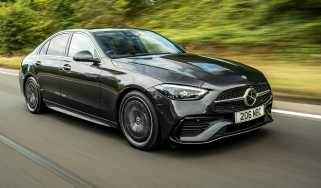
Mercedes has updated the C-class with revised styling (star DRLs) and tweaked engineering

Institutions are at risk in 2026 and 2027, as car brands contemplate how long-standing nameplates are to proceed into an uncertain future. Mercedes-Benz, like BMW, is hedging its bets. Having already launched an extraordinarily innovative all-electric C-class, now it’s introducing a facelift for its combustion model. Merc’s own tagline sums it up best: ‘trusted continuity’. This is the C-class we know, nipped, tucked and readied for the second half of its life.
Both the saloon and estate return, with a strong variety of powertrains retained, spanning petrol, PHEV and even diesel options. Between these and the new C-class electric, there’ll be a small Mercedes executive option to suit all use cases.
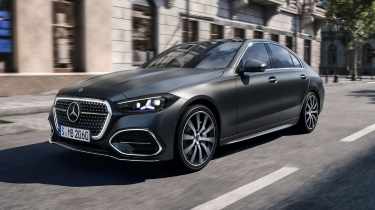
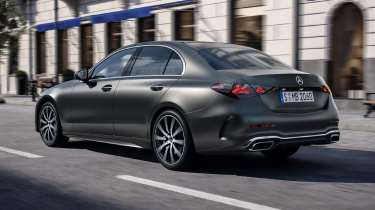
The most recognisable change to the new C-class is at the front, with new a new S-class-esque grille and headlights complete with three-pointed star DRLs first seen in the new CLA and S-class. Like the S-class, the new larger grille, with its larger central star, can also be had with a light-up surround. At the rear, star accents in the lights carry over to the saloon similar to those first seen in the E-class, however the estate retains the lights of the pre-facelift variant. All told, the visual upgrades suit its target audience: they’re conservative and careful to not dispense with what we’re used to.
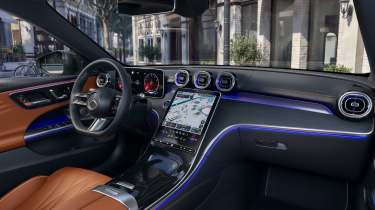
The same goes on the inside, where reassuring familiarity prevails – no ‘hyper screen’ to be seen here, the 11.9-inch vertical screen remaining, alongside the 12.3-inch instrument cluster. Instead, Mercedes has upgraded the user interface, increasing the amount of AI support in the MBUX virtual assistant, that you can now ask about stock prices and prevailing weather conditions, in addition to making climate control adjustment requests. The navigation system has received upgrades too, with Google Maps integration and the ability to ask MBUX about things like parking spot availability.
There are some choice physical tweaks in here too: praise be, there are some physical controls back on the wheel in place of haptics. The same rolling wheel for the volume control and rocker for the cruise control that we’ve seen appear on the CLA of late is making its way to the C-class.
Like the engine lineup, which has been tweaked to meet Euro 7 emissions. The most powerful C400e plug-in hybrid gets a bump to 385bhp thanks to upgrades to both the petrol engine and electric motor. It offers a (more realistic, thanks to updated testing procedures) 62-mile electric range thanks to a 19.5kWh battery.
The diesel plug-in hybrid C300de, something of an economy hero is dead, however Mercedes has developed its MHEV diesel offering. The new 197bhp C250d has been revised for greater longevity and increased service intervals.
As for petrol models, the C200 entry-level model will remain, albeit with its power docked somewhat, as we’ve seen with a few Euro 7-motivated ‘upgrades’ of late. It’s down from 200bhp to 174bhp. The most powerful petrol before the flagship AMG C53 is introduced will be the C300, which gets a bump to 301bhp. All non plug-in C-class models get Mercedes’ second-generation mild hybrid tech, which replaces the starter motor with an integrated starter generator and contributes 17bhp to total system outputs.
Prices for the new Mercedes-Benz C-class are still to be announced, but we can expect modest changes to the current £46,195-£61,520 sub-AMG C-classes cost, excluding the C300de that's now being discontinued. At the time of writing, the C63 E Performance estate remained on the configurator starting from £102,805 in estate form. The C53 that's set to replace it for the time being is set for a reveal before the end of the year.