Mini Cooper review – design
It's a Mini – which means it looks like a car from the 1950s inflated to 2023 proportions, with limited levels of success. And those tail lights…


Like the interior, which appears to take all of the 20-year-old motifs of the original Mini and reprocesses them into a retro-pastiche plastic salad, the exterior does exactly the same thing. The underlying issue with the F55-generation Mini is its proportions, defined by the tall beltline and big front overhang – fundamentally undermining the entire design.
The original R50/R53 – penned by none other than Frank Stephenson – took the unique proportions and made a whole new generation of retro design elements work to them precisely. Its upright headlights and clamshell bonnet worked with the tiny front overhang. In fact, it defined it. But by moving components to the wrong side of the axle line (new crash-safety regulations, can’t ignore those), Mini’s designers inadvertently created something that looked more like a Chinese rip-off.
To try to offset this dramatic change in proportion, they applied a large amount of curve at the front of the car, pulling the ends of the headlights and front intakes as far back as possible to try to hide the bulky front end. Most of these design details have also been applied on a much larger scale, making it look gawky. Meanwhile, the rear lights have grown in size compared to those of previous models, and still include the cringeworthy Union Jack graphics introduced in 2019.
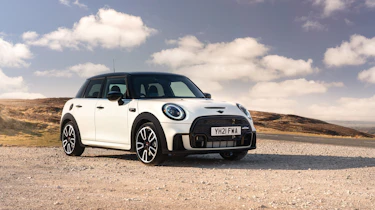
Recent changes have, to some eyes, improved the overall design, with a smoother and more contemporary look that does a little bit to clean things up, only to then backtrack on models with the JCW bodykit, which swap these for a blocky, messy collection of real and fake plastic mesh openings.
Made much worse is the five-door model, as Mini’s designers have not only given it a further rake on the rear screen to try to distinguish it from the Clubman estate, but also fitted framed doors in contrast to the three-door’s frameless units. This changes yet another key element of the Mini’s design – that clean glass-on-glass profiling along the glass house, and replaces it with a combination of plastics that are ill-fitting, overlapping and just broadly horrible.
Love it or loathe it, the new Mini definitely makes a statement, but with the Honda e and Fiat 500 Electric treading new paths by reimagining retro design with a very successful contemporary flair, the Mini just looks old, clumsy and generally outclassed.