Hyundai N developing rear-driven petrol-hybrid performance model
Hyundai’s doubling down on its high-performance N division, with new models using a variety of powertrains

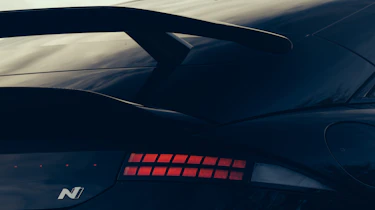
At the head of Hyundai’s enormous aspirations for its N Division will be a new rear-wheel drive performance model with a combustion engine. The model was confirmed to be in the works during Hyundai’s 2026 CEO investor day presentation.
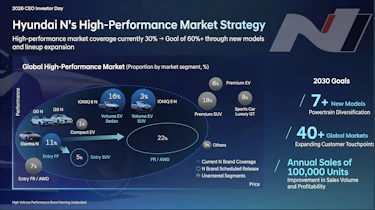
An increase in volume to 100,000 units and an increase of market coverage from 30 per cent to 60 per cent by 2030 for N division across 40 global markets is the goal. To that end, a further 6 new models, using a variety of powertrains, will also join.
The rear-driven model will, unlike its last two products, the Ioniq 5 N and Ioniq 6 N, utilise a combustion engine in a hybrid powertrain, though whether mild, full or plug-in is as yet unconfirmed. Also unconfirmed is the car’s form factor, with only the front-mounted engine and that drive will go to the rear confirmed, with an all-wheel drive variant or sister model too.
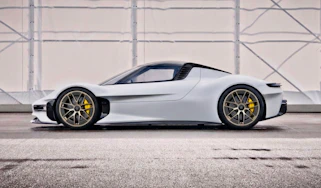
It’s unlikely, but not impossible, that the rear-driven model will be a coupe akin to the Vision N 74 Concept, though it’s been confirmed that a direct production version of that concept is not moving forward. The new rear- and all-wheel-drive models will cater to what Hyundai says represents 22 per cent of the global high-performance market.
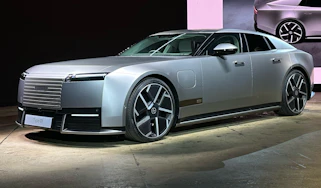
Though the electric Ioniq 5 N and Ioniq 6 N are expected to remain N division’s most powerful models, this is still expected to be a semi-premium offering closer to the likes of BMW’s M3 than say, a Toyota GR86. There’s a strong possibility it will share more than a little DNA with future Genesis products.
Front-driven front-engined performance models represent, according to Hyundai’s data, an 11 per cent share of the global high performance market. Where once the i20 N and i30 N did good work for Hyundai N, this is a segment that can’t be ignored given its lofty aspirations. A new i20 N is inbound, as will be an N-branded entry-level SUV.
Hyundai will also make the N brand work harder in terms of volume by diversifying its performance offering, with what it calls ‘High-Volume Performance’. These models will be something between the full-fat N models and the design and trim N-Line models – think what the M340i is next to the full fat M3, or the Audi S5 is to the RS5.
Hyundai has no plans to enter the sports car, luxury GT, premium SUV and premium EV markets, which together represent 32 per cent of the high-performance and premium market. This makes sense when you consider that Genesis, the premium sister brand to Hyundai, has plans to enter all of these segments, including an all-new Genesis supercar.