I put budget tyres to the test in the wet, and the results were terrifying
Skimping on tyres may save you a few pounds, but at what cost, ponders Barker

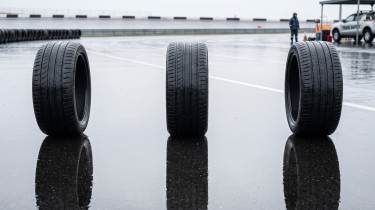
They say that if you want to know how clean the kitchen of a restaurant is, visit the toilets. I have my own version for buying cars that I swear by: if you want to know how well a car has been maintained, look at the tyres. If they all match, they’re a premium brand and they’re pretty new, I guarantee that the service history will be immaculate. However, if a car is fitted with ‘budget’ tyres, I’d walk away. The way I see it, if the seller is comfortable skimping on a safety-critical item like tyres, there are no corners they won’t cut.
I’ve seen some fantastic, almost-new performance cars on what I know are fantastically cheap tyres, and some of these cars were at supposedly reputable dealers. Perhaps the most alarming of all, though, was a street-parked Bentley Bentayga on a Chinese brand I’d never even seen before. The idea of that 2.5-ton SUV trying to emergency-stop on a wet motorway is quite terrifying, because it’s always the wet braking performance that falls well short.
> Best car tyres: the official evo tyre test
I get that low-cost tyres are tempting. For many people, tyres are a distress purchase, a purchase made out of necessity, not for pleasure. Where’s the harm in saving a few quid this time; all tyres are much the same, aren’t they? Black and round, keep your wheels off the ground. Emphatically they are not, and they’re the only thing connecting your car to the road.
As an enthusiast and evo reader, you know how important tyres are, but you should encourage everyone else – your kids, parents, friends – to buy decent tyres, because a poor tyre can ruin any car by reducing its ability. I’m reminded of this on every tyre test because we always include a randomly chosen ‘budget’ tyre. Including something that sometimes costs half the price of the known brands is a bit like having an extra lane for the men’s 100m final at the Olympics for someone who ‘does a bit of running’. They look much like the other competitors right up to the point when the gun fires, then you quickly realise they’re simply not in the same league.
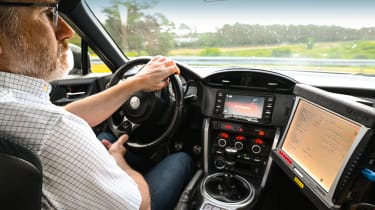
A couple of weeks ago I had the most awful reminder of how woeful ‘budget’ tyres can be, even on a humble 1.6 Golf. I was testing all-season tyres for Auto Express and I’d lapped the wet handling circuit on all the other test tyres, so it was the turn of the ‘budget’ offering. I knew it was going to be tricky from the first corner; there was so little bite, such a lack of feel and such marked wheelspin and side-slip as soon as I got on the throttle. For the whole lap the front and rear skittered wide, and to top things off there was random oversteer in the fastest curves. After three laps I was in a cold sweat, nauseous and had to visit the toilet.
To give scale to the performance gap, the lap times of the other nine tyres were covered by about two seconds while the ‘budget’ tyre was 7.5sec slower than the next slowest. And in the benchmark straight-line wet braking test from 50mph, it took over nine metres further to stop than the best. That’s the length of two Golfs, and calculations show that when it passed the best it would have still been doing 25mph.
The scary fact is that, globally, some two-thirds of the tyres sold each year are ‘budget’ tyres. The premium brands are fighting over only 30 per cent of the market. That’s Michelin, Continental, Pirelli, Goodyear and Bridgestone, with quality/mid-range brands such as Hankook, Vredestein, Kumho, Falken, Yokohama and Toyo pushing to join them. Then you have some sub-brands, lesser-known tyres from the main manufacturers, that are not top-performing but good quality brands like Uniroyal (Continental), Kleber (Michelin) and Firestone (Bridgestone).
That said, the ‘budget’ offering in last year’s evo summer tyre test was a Kormoran, a brand I was not familiar with. It performed very poorly in all the crucial tests, but the surprise came when I was looking up retail prices and discovered that it was more expensive than a couple of the premium tyres. I also saw them advertised as ‘part of the Michelin family’, which I found was true; they were bought out in 1995. But clearly they develop tyres in Poland independent of Michelin in France.
So how do you navigate the replacement tyre market? Seek out independent tyre tests like the ones in evo and Auto Express, and in German car magazines. There are also websites such as Tyre Reviews that amalgamate the test data from independent tyre tests from around the world. Type in the name of any tyre you’re considering and you’ll get a dependable and independent consensus verdict. Five minutes’ research into a safety-critical item that’s going to be on your car – or the car of a friend or loved one – for a year or more has got to be worth it. Otherwise, at best, it could be just money down the toilet.
This story was first featured in evo issue 345.