Peugeot wants to build perfect GTi hot hatches, but with one major caveat
Peugeot CEO Alain Favey outlines his intentions for the GTi brand. For him the cars have to be nothing short of perfect

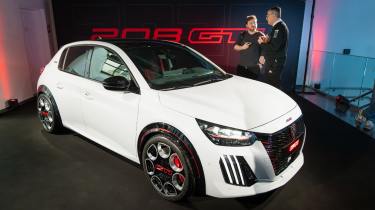
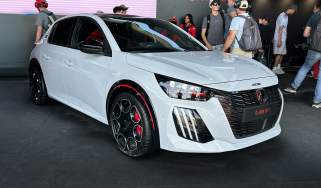
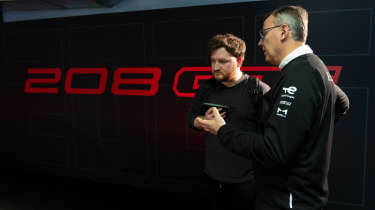
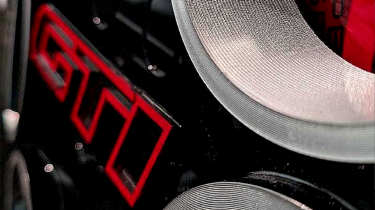
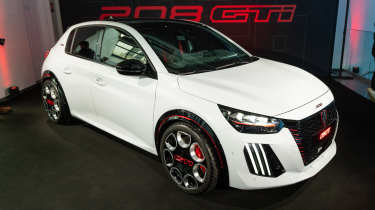
It’s a big year for Peugeot Sport in 2026. All at once, it's committed to the WEC until the end of 2029 (just as Porsche and Alpine bow out), is celebrating 100 years since it first raced at Le Mans and will open European orders for the new 208 GTi at the race in June. Revealed at Le Mans last year, it represented Peugeot's return to the hot hatch space and its first use of the GTi badge since the 308 GTi was discontinued in 2021. Speaking with evo at the reveal of Peugeot’s 2026 endurance racing livery, CEO Alain Favey told us just how important the GTi brand is, what it must deliver and what his ambitions for Peugeot are.
Favey joined as CEO in February 2025, taking over from Linda Jackson. The 208 GTi and ‘returning the magic of Peugeot’ have been priorities for him, as he explained:
‘My main goal was to bring back the magic of Peugeot. That comes from motorsport, design, quality, durability and good driving dynamics. Peugeot is an aspirational but affordable brand. The magic is to have some kind of halo too, that’s now the 208 GTi.’
'Our ambition is to continue with further models'
Favey isn’t overseeing the comeback of a half-baked GTi though. Strong words indicate speak of his and indeed what he thinks customer expectations are of any car to wear the badge:
‘A GTi has to be a really perfect hot hatch. I don’t want to launch this car and be told it’s not up to the GTi badge.’
Will the 208 GTi be a one and done GTi? Possibly not. Though it’s early days, it sounds like Favey has best intentions to bring a range on stream, should the 208 GTi be favourably received and sell well, as long as it’s possible to create cars worthy of the badge:
‘GTi is a story for us. It started long ago. The 208 is the next step and definitely if we start this next generation of GTis with the 208, our ambition would be to continue with further models, though there’s nothing ready yet or that is mature to announce. We will continue to work on future models but until we’re sure they’re really up to the level of the GTi then we won’t launch them.’
He isn’t entirely opposed to the idea of a new Rallye, based on the basic 208 GTi rally car Peugeot currently sells, though the fact he congratulated us for the suggestion perhaps suggests it’s not something he and his team have yet considered:
‘You can imagine a return of the Rallye badge but it would not be with a powerful ICE engine. It’s a good idea.’
Favey claims that legislation precludes introduction of a petrol-powered GTi with the right level of performance. The French ‘vehicle malus’ is a taxation on CO2 emissions of new vehicles payable on delivery, that can rise to as much as €80,000 for cars producing over 194g/km of CO2. The last petrol 208 GTi only emitted 125g/km of CO2 – a figure that would incur a relatively nominal €540 ‘malus’ today. However Favey claims an engine that would produce the kind of power a 2026 GTi needs (the EV, for example, has 276bhp) would produce significantly more. He doesn’t see another all-ICE GTi in Peugeot’s future:

‘I don’t think we can do a GTi with an engine again. This car will be sold mainly in Europe and the rules mean we need to get to a certain level of CO2 just to make the car affordable. In France for example, there’s an €80,000 tax on cars with too high CO2. This kills it. If you want to get to a level of power it needs to be a real GTi with an ICE engine, it’s impossible.’
Indeed the new 208 GTi will be electric-only but will sport a 276bhp electric motor at the front, with a mechanical limited-slip differential, lower, stiffer suspension as well as a suite of other dynamic tweaks. He’s confident that despite only being available as an EV, the new 208 GTi will satisfy critics and enthusiasts alike:
‘We’re happy to take the challenge to convince even the most hardcore of hot hatch fans, to drive the car and tell us it’s not up to the level of a GTi. It is. The road holding, the chassis, is absolutely perfect. The acceleration from a 280hp electric engine in such a size of car, it’s strong. We’re confident.’
That doesn’t mean hybrids are off the table, with Favey claiming that Peugeot is exploring ‘different options’:
‘For me it would make sense to have something that’s the next step to the 208 GTi. Hybrid is an option. It's not excluded but there’s no decision at this stage. It’s something that’s being considered but there’s nothing concrete.’

A next-generation Peugeot 208 is due to be revealed next year, with styling inspired by the striking, retro-modern Polygon concept and based on the new STLA-Small architecture, replacing the e-CMP platform underpinning current small Stellantis EVs. That doesn’t mean the current 208 GTi will be a six-month flash in the pan. Rather, it will be offered alongside the new, next-generation car. A next-generation 208 GTi is obviously a while off yet:
‘This (208 GTi) will be sold alongside the new 208 because there will not be a GTi of the new 208, at least at the beginning. I don’t think it really matters to whoever wants a GTi. It’s been developed for many years, it takes time to get to that level of roadholding. It’s something we will look toward later for the next car.’