Morgan Supersport 400 review – a real Porsche 911 rival with added power and focus
A 67bhp power hike makes this the most powerful Morgan road car ever, and one of the most exciting
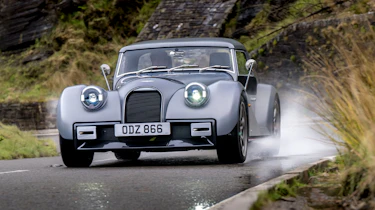
It’s early in the morning but Morgan’s Pickersleigh Road, Malvern Link factory is already bustling with energy. We’re here to drive a car away – and of all the production cars that have rolled out of the factory’s traditional brick and iron-roof buildings over the years, this is the most powerful: the new Morgan Supersport 400, so named because it’s the first Morgan with more than 400bhp: 402bhp to be precise.
It’s so named because it’s the first Morgan with more than 400bhp: 402bhp to be precise. evo has collectively been a big fan of the standard 335bhp Supersport since its launch in 2025, and it powered its way to sixth place out of 12 cars in the same year’s evo Car of the Year test, ahead of big hitters including the Maserati GT2 Stradale and Aston Martin Vanquish. Nonetheless, there was a sense that the Supersport had headroom for more power, and a stiffer suspension set-up too.
Step forward the 400, with those precise attributes. Meeting it for the first time, just outside the factory, with droplets of water bleeding off its optional satin paint finish (a first for Morgan) it looks like it means business. The wheels are new, 19-inch forged ‘Sportlite’ five-spokers (silver as standard, bronze as an option) and with new vents on top of the front wheelarches to extract high-pressure air, there are light shades of Morgan’s GT racing cars of the ’90s and ’00s. Air extracted from the front arches also feeds into the low-pressure pocket of air around the wings that’s a peculiarity of the Morgan shape, reducing lift and drag alike.
Engine, gearbox and performance
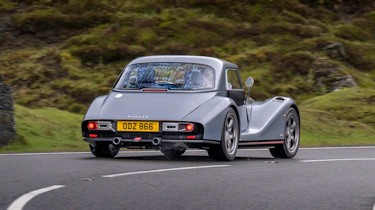
- 402bhp turns the Supersport ballistic...
- ... but it's still delivered progressively
- Angrier vocals from the BMW six-cylinder welcome
More reviews
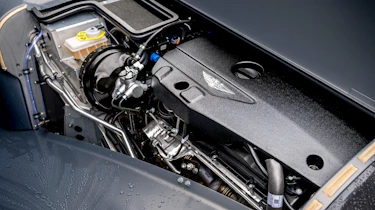
The main changes between the new 400 and the regular Supersport (which continues on sale alongside it) are in the engine room. Like the standard car, power comes from BMW’s B58 single-turbo straight-six but in this case it’s the updated ‘O1’ variant, and Morgan’s been hard at work with developments of its own.

It has worked in detail, and in conjunction with BMW, on engine calibration and tuning of the cooling system alongside. The shrouding of the cooling pack has been modified and there have been detail refinements right down to the shape of the grille mesh. The aim was reliable, repeatable power with smooth delivery, and testing has been carried out on closed circuits as well as in simulation and on the road. The Supersport 400 has not been designed to be an overt track car but it has been engineered to have the ability to rack up laps at an open-pitlane trackday, for example, without issue.
Also fresh for the 400 is a new active exhaust system. For the first time, Morgan’s used acoustic simulation to tune the exhaust in the digital world before making physical prototypes, matching back-pressure to target figures provided by BMW. The intention is not only to develop more power but also to give the Supersport a more memorable sound. As a handy bonus, the new system also weighs 5kg less than that of the standard car.
The 400 also introduces a bespoke, in-house-designed selector – albeit as a £1741 option. It’s pricey because simply reskinning the BMW selector wasn’t an option. Developing and engineering the failsafe measures required to productionise a new selector is a long and relatively costly process for a small number of cars. Mind you, it’s 1.25 per cent of the Supersport 400’s overall price. Either way, the new shifter is infinitely more attractive than the BMW component and a far better fit with the Morgan’s character.
It operates in the usual way – a ‘P’ button on top to put it in Park and a trigger on the front to get out of it. It takes a little getting used to as there’s a less definite click to the trigger and button than most mainstream shifters, but there’s a nice action to the lever’s movement.
An illuminated digital panel at the lever’s base displays the shift pattern but doesn’t tell you what position it’s in – you need to take a second glance at the instrument panel behind the steering wheel to confirm if you’re in Drive or Park, for example. As with the regular Supersport, there’s no manual option: the 400 is auto-only, with an eight-speed ZF torque-converter transmission.
Click the shifter into Sport mode and come down through the gears manually and the active exhaust becomes a lot more vocal. A second button for Sport + mode opens the valve fully for the exhaust system to clear its throat properly. The standard Supersport’s engine note is a little ordinary unless you’re really going for it. By contrast, the 400 has a real rumbly timbre with hard-edged overtones. It sounds rude enough to make you giggle involuntarily. You can use the plastic steering-column-mounted gearshift paddles to change gear but it’s a nicer, more tactile sensation to nudge the aluminium lever forward and back.
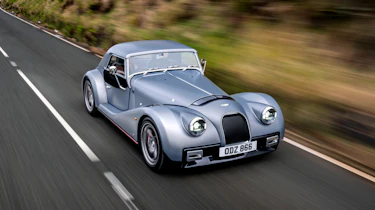
Under acceleration in our test’s rainy conditions, there’s a bit of a wiggle from the tail on the cold tarmac. To help stay on top of it, as per the standard Supersport, there’s a halfway-off Sport setting for the traction control before the you’re-on-your-own, everything-off setting.
When the power’s being put down the Supersport 400 is truly, ferociously quick. A top speed of 180mph and 0-62mph in 3.6 seconds were supercar figures not so long ago, and it feels supercar-quick. After all, official kerb weight is only 1170kg – same on-paper weight as the regular Supersport, which returns 166mph and 3.8sec to 62.
Peak torque is an identical 369lb ft to the regular car and comes in at similar revs but, crucially, doesn’t tail off as quickly. The 400 is still developing peak torque all the way up to around 6500rpm. Also crucially, it only feels ferocious when you ask it to be. Power delivery is progressive, and it’s happy to cruise along in a docile fashion.
As the hours pass and the roads dry, the handling becomes more and more exploitable and confidence-inspiring and the 400 has greater opportunity to shine. Acceleration is truly breathtaking, and that new exhaust system sounds fantastically sonorous, with a great repertoire of sounds both on- and off-throttle. Sonically, it’s a big difference over the regular Supersport, which doesn’t sound particularly memorable. There’s no forgetting the 400’s soundtrack – it’s a real spine-tingler.
Ride and handling
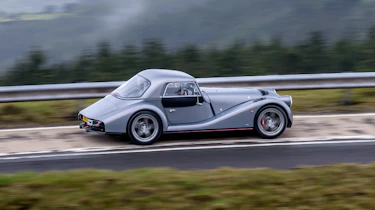
- Extra power means the LSD is a very worthwhile option
- Stiffer damper settings make the 400 sharper, and demand more respect
- Fundamentally still a balanced and exploitable sports car
Steering, brakes and tyres (Michelin Pilot Sport 5) are unchanged, since Morgan is happy with their performance. The new forged wheels are Morgan’s lightest standard rims yet, nearly as lightweight as the optional (and a £4975 option at that) Aerolite wheels fitted to the Supersport we tested at eCoty.
A further option on the regular Supersport is the Dynamic Handling Pack, with single-way-adjustable Nitron dampers and adjustable spring platform for ride-height tweaks. It’s fitted as standard to the 400, with a baseline setting 10 clicks stiffer than it would be on the regular, Handling Pack-equipped Supersport. In context, there are 24 clicks of adjustment for the dampers and the 400 is set 5 clicks from full-stiff. Aside from some slight geometry changes, the chassis is otherwise unchanged.
Padding out of Pickersleigh Road, the 400 is just as easy to drive at low speeds as the base model and feels remarkably refined, particularly with the hard-top in place. (Like the Supersport, the 400 is available with a folding mohair soft-top or fixed carbon composite hardtop, or can be supplied with both).
In the standard Supersport with the Handling Pack dampers in their baseline settings, I felt there was some headroom for them to be stiffer and for the handling to be just a touch more incisive, with less of a rounded edge before reaching the limit.
The 400 is indeed sharper, and in fact, I initially find myself in quite a cautious frame of mind and treat it with a healthy dose of respect. Not least because these roads are as challenging as they come: streaming with rainwater, and full of tricky compound cambers and tightening corners.
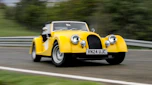
Credit to the brakes here, with superb feel through the pedal. To the tyres too; even in such soggy conditions, there are big reserves of lateral grip. And the stiffer damper settings haven’t equalled a jarring ride. There’s still a padded edge to the way the Morgan deals with rough surfaces at speeds low and high.
To begin with, I don’t feel quite as confident towards the limit as I did in the standard car. Like the standard Supersport, there’s quite a bit of energy at the rear axle (a sensation amplified because you’re sat relatively close to it) and with the stiffer damping, mid-corner ridges and cambers can amplify that sense further.
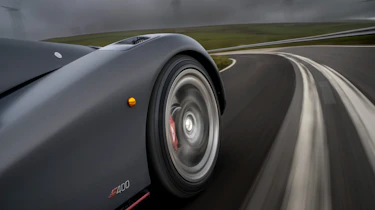
At the same time, the already direct steering combined with stiffer suspension makes the front feel more responsive than ever too. With such a lot of torque available from such low revs, I’m being quite careful with my right foot too. This car is fitted with a limited-slip diff, an option rather than standard; it’s a box worth ticking.
None of this is to say that the 400 is wild or unsafe, however. Driven with respect, it doesn’t become truly wayward or get out of hand. It’s also worth noting that the dampers remain fully adjustable and could easily be set back toward their baseline Supersport settings if you wish (or owners of the regular car could go the other way and sharpen its set-up).
Together with the searing turn of pace it’s now capable of, and the sharpened chassis response, the 400 specification makes the Supersport a truly exciting experience. The regular model is already a very talented, covetable car and these latest developments lend it an extra dimension. Ride quality is a subjective thing but for me it’s still comfortable, even on the stiffer damper settings.
Interior and tech
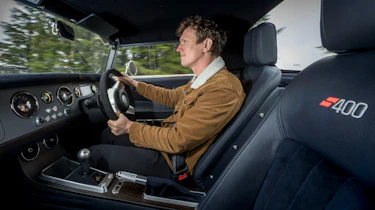
- View out is as special as ever
- New shifter adds extra bespoke feel
- Well-equipped and plush, though wind noise is high
Climbing inside, there are new Alcantara interior trim options for the dash-top and steering wheel in place of the Supersport’s leather. Aside from giving more of a motorsport vibe, they save a few grams, too. The Biggest change is the bespoke (optional) new gear selector detailed above. Up until now, Morgans have used a selector from the BMW parts bin, which works perfectly well but jars visually with the rest of the interior.
The view ahead over the flowing fenders is always evocative in a Morgan, and the extra vents at the top of the 400’s wings constantly remind you you’re in something even more special. The big expanse of curved (and heated) glass behind you means all-round vision is excellent.
It’s easy to maintain a fast motorway cruise, phone charging wirelessly, listening to music via Bluetooth, and the option to make sound-balanced phone calls if you wish – in a Morgan! There’s a fair bit of road and wind noise but it is a sports car, after all. Fit, finish and overall sense of quality impress, and it’s worth noting the Supersport comes with a 36-month/36,000-mile warranty.
Price and rivals
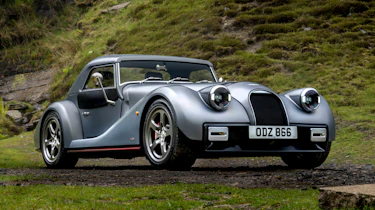
The bad news is that the 400 costs £138,883, an extra £29,835 over the standard Supersport (about £445 per additional horsepower).
You can tell where the detailed engine, cooling and exhaust enhancements along with expensive components such as the forged wheels all add up, however. It’s a shame the limited-slip differential is still an option, at an extra £2425 at the time of the car’s launch.
Other options buyers may need to budget for to make the most of the car include the Sennheiser Bluetooth audio system, at £3731 and phone connectivity and wireless charging at an additional £342. Then there’s the aforementioned gear selector at £1741. The hardtop (the soft-top is standard) is a considerable £4347. It’s also possible to spec both the soft-top and hardtop together, which costs more than £6000 extra. And of course, there are a huge number of exterior and interior paint and trim customisation options, a key part of the Morgan build experience’s appeal.
The Supersport 400 stands as testament that Morgan can turn out a car that deserves to be in the conversation with the finest of today’s sports cars. That price includes some big-hitters, however. Before options, the Supersport 400’s price is similar to that of a new Porsche 992.2 Carrera GTS, and more than a nearly new Porsche 718 Boxster 4.0. Buyers looking for a British sports car could also consider the new Lotus Emira 420 Sport priced at around £106k, or all manner of used options. And Morgan buyers with less sporting inclinations, who don’t feel they need the extra performance and vocal range, might decide to stick with the regular Supersport.
But the Morgan Supersport 400 has a singular appeal all of its own. If you love the base model but always felt there was headroom in its package for something a little bit hairier and more focused, without losing the charm and usability at its core – this is it.
Specs
| Engine | In-line 6-cyl, 2998cc, turbocharged |
|---|---|
| Power | 402bhp @ 6500rpm |
| Torque | 369lb ft @ 1250rpm |
| Weight | 1170kg (344bhp/ton) |
| 0-62mph | 3.6sec |
| Top speed | 180mph |
| Basic prce | £138,883 |