Why Lamborghini was one of the car industry's only success stories in 2025
As industry titans like Porsche and Audi struggle, Lamborghini enjoys healthy profitability and plump order books. We explore what Sant'Agata's done right

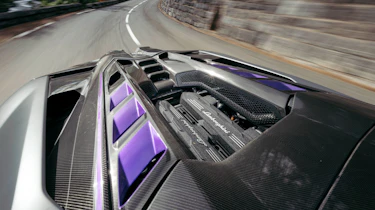
The concept of Lamborghini selling cars at volume at all, let alone that it’s not just weathering a crisis in 2025, but is handsomely profitable and in rude health, would be utterly laughable to any car industry figure from the mid-1990s, were you able to go back in time and tell them.
Yet here we are. Lamborghini stands triumphant and resilient above its once mighty but presently wounded Group mates Volkswagen and Audi (the companies that saved it from extinction over 25 years ago). Now having seemingly won the game of legislative chicken with the EU that’s now rolling back its combustion car bans, its hesitation to commit to electric is now looking astonishingly prescient.
Year-end figures are to come but as of the end of Q3, turnover thanks to the sale of 8140 cars was €2.41billion, with profit sitting at €592million. Lamborghini profitability stood at 24.6 per cent – marginally lower than the same period for 2024 but healthy, compared to Porsche’s 99 per cent drop (yes, really). How can that possibly be? Can it be sustained, or does the pain felt by so many others, somehow delayed, await in Lamborghini’s future? Let’s discuss…
Today’s motor industry struggles are of course very different to what they were in the ‘90s. Car companies are caught between conflicting forces of electrification mandates and customer demands for more affordable, still combustion-powered cars. Put simply, people don’t want to buy what the car companies have been under increasing pressure to build.
The stakes around what are make-or-break decisions have been impossibly high: do you invest billions in new EVs (developing the cars as well as the supply chains and factories to build them), or hold fast, sell cars but suffer fines for missing targets? Porsche bet big on electric platforms and it hasn’t paid off. It’s now course-correcting (the cost of £2.7bn a major dent in its profit for this year), renewing development of combustion-engined models in a 'strategic realignment'.

And all this is to say nothing of other industry headwinds. Pressure comes from the west, in the form of volatile exchange rates and the US’s increased import tariffs (up to 27.5 per cent from 2.5 per cent but potentially dropping to 15 per cent in future) on cars built in Europe. Then from the east, new competition from impossibly aggressively priced models that are gaining serious traction and fast.
And so to Lamborghini – what advantages does the Sant’Agatan brand enjoy and what has it done to be so shielded from this turmoil? Some of it is happenstance, some of it is very much the result of making the right calls at the right time.
First, the inherent advantages it's lucky to have. Being a high-value, high-end brand, Lamborghini doesn’t face such competition from incoming Chinese cars. All but a few are aimed at lower-end, higher-volume segments and we don’t see Revuelto owners chopping in for a Yangwang U9 just yet. The Porsche comparison could also be considered unfair, given how much bigger the Stuttgart marque is and how much more exposed it is across numerous segments with much higher volumes. Lamborghini happens to occupy market sectors that enjoy good health at the moment.
Being higher-end, Lamborghini isn’t so exposed to fines (like ZEV mandate) and tariffs either, though the latter has been one of its biggest challenges. Though significant at the current 27.5 per cent US rate, customers in higher-end segments have more scope to tolerate small compensatory price increases, while Lamborghini’s higher per-unit margins can take a hit to soak up the rest. Lamborghini stopped invoicing in the US between April and July because of the tariffs, while US pricing was modestly adjusted. The extra cost is still an issue, putting off some buyers as the slightly reduced profit numbers show. But sales clearly haven’t stopped dead.
The prospect of a Lamborghini without petrol power doesn’t bear thinking about for many, so core is an expressive combustion engine to its identity. And Lamborghini has been shrewd in its approach to the idea, listening carefully to customers and staying admirably resistant to the now-waining legislative pressures.
It revealed its Lanzador Concept back in August 2023, previewing what could have been a fourth production model for its lineup to be introduced as early as 2027. Then as market conditions evolved and customer sentiments were taken on board, it was pushed to 2030, with no guarantees or hard deadlines.
The second-generation Urus too, was set to go full-EV but Lamborghini pivoted earlier this year, saying it would be a plug-in hybrid when it arrives in 2029. Its agility and hesitance to commit and ultimately invest a huge amount of money in cars that might not sell, looks astonishingly prescient now. Should Lamborghini eventually face a market that’s ready for an EV, it’ll be able to move quickly and leverage the development work its Group mates have already undertaken.
‘For the full electric cars, we have enough time to decide down the road and to make up our mind, if there’s something which is changing. We look into it in a very analytic way,’ CEO Stefan Winkelmann told us over dinner at the UK debut of the Fenomeno hypercar.

Ferrari by comparison, which has been even more profitable in 2025, is much further down the road, with the Elettrica set for introduction in 2026, for better or worse. Lamborghini will undoubtedly be keeping a close eye on its introduction and crucially, how it's received. Ferrari has at least been clever in making the new e-building (where the Elettrica will be built) flexible, ready to adapt to production of combustion and hybrid as well as electric cars.
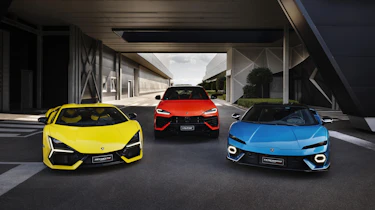
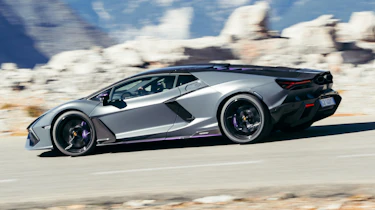
For now, Lamborghini’s great strength has been in its agility, versatility, and astute decision-making, learning from other's mistakes and presenting cars its customers actually want to buy. The Revuelto might be a hybrid but is still as jaw-dropping a loud, proud, V12-engined supercar as any of its flagships have ever been – potentially its very best. That car was sold out until the end of 2026 back at the beginning of last year…
The Urus is still a car for which there is more demand than supply – hybrid yes, but still with a V8 and still with monstrous performance and presence in equal measure. The Temerario is perhaps the most ambitious model of its new hybrid era, wielding an enormously potent twin-turbo V8 engine, albeit one that’s not as emotionally resonant as the old V10 (in spite of that 10,000rpm redline), in concert with the Revuelto’s hybrid system. All the same, they’re still sold out for over a year. Lamborghini has all its cards left to play and a healthy pot of cash still to invest.