Polestar 3 review – a cheaper alternative to the BMW iX?
The Polestar 3 is a luxurious and keenly priced electric SUV, but does it really feel like a sports car?
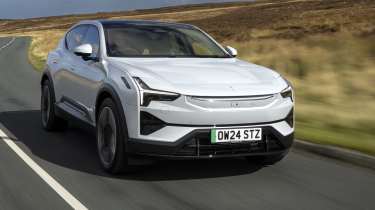
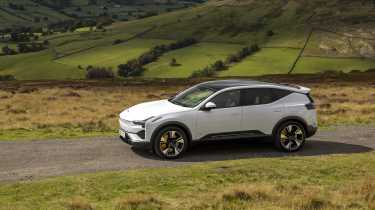
The Polestar 3 is one of a number of new models to join the Swedish marque’s range in the last couple of years. An all-electric SUV, it’s positioned as an alternative to BMW’s iX, so is physically larger than the Porsche Macan Electric, Tesla Model Y and Kia EV6 GT. Despite what you might infer from its name, the 3 is also larger than Polestar’s 4 crossover. As with all Polestar models, it’s said to possess a performance edge, the firm claiming this c2600kg SUV ‘feels more like a sports car’.
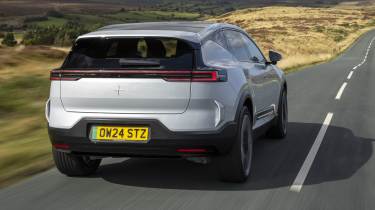
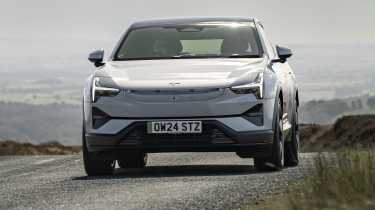
Designed by the team behind the striking Precept concept from 2020, first impressions of the 3 are stronger than for some of its German rivals. Numerous clever design touches usually reserved for more exclusive, low-volume models can be found throughout, and while this SUV’s large dimensions are hard to hide, the use of black elements along the car’s lower quarters does a good job of reducing visual mass. Meanwhile, the functional aero passthrough on the bonnet makes for a neat conversation starter.
While it looks good, the competition is stronger than ever in the expanding electric SUV market, so we’ve spent some time with the model beyond the initial launch in Spain, tackling some less flattering roads in the UK to really put it to the test.
More reviews
> BMW iX review – the ugly duckling still stomps the Tesla Model X
Powertrain and technical highlights
The latest addition to the Polestar 3 lineup is a single-motor, rear-wheel-drive model. This has dropped the entry price to £69,990, which gets you 329bhp, a 6.3sec 0-60mph time and a 130mph top speed. In the middle of the range you’ll find the 536bhp dual-motor variant, which costs £77,900, gets to 60mph in 4.5sec, and features a larger, 106kWh battery pack (up from 92kWh for the rear-motor model) for a WLTP range of 394 miles (versus 375 miles). Opt for the range-topping, £91,990 Performance version with 670bhp and the 0-60mph time drops to just 3.8sec – a match for the £114,000 BMW iX M70 – although range falls to 368 miles.
In an effort to make the 3 more engaging and efficient, Polestar has installed a trick ‘dual-clutch’ torque-vectoring unit on the rear axle for the dual-motor cars, taking the place of a conventional limited-slip differential. Developed by BorgWarner, the system also allows the rear motor to completely disconnect while in low-demand scenarios. While similar solutions have already featured in numerous combustion cars, this is the first time the tech has been used in an EV.
Now employing a new 800V architecture for the 2026 model year, the Polestar 3’s charging times have been improved by a welcome 25 per cent. As always, the WLTP range ratings should be taken with a pinch of salt: 368 miles may be claimed for the Performance model, but we saw just 230 miles from a full charge, although admittedly this did include some efficiency-harming mountain roads.
Performance, ride and handling
A peak output of 670bhp in its most potent form brings the Polestar 3 well in line with the range-topping BMW iX M70. If you’re coming from a combustion-powered alternative, you’re very unlikely to be left wanting more straight-line performance, with the claimed 3.8sec 0-60mph time considerably quicker than the 4.7sec of the previous Performance variant.
Figures within Polestar who have ordered the 3 as their company car told evo they did so because it’s the most driver-focused of the range, and that is true to an extent. The 3’s Geely-sourced Scalable Product Architecture 2 platform feels more upmarket than many, enabling the 3 to conduct itself with more precision than the 4 thanks to the standard fitment of active air suspension.
A squirt of throttle on the exit of a corner will have the Polestar 3 shimmying around to your chosen direction of travel, and the power isn’t crudely delivered either. Unlike some EVs, the throttle is progressive regardless of the mode, and while the 3 is not as playful as something like a Jaguar F-Pace SVR, it’s pleasingly neutral when pushing on. Its considerable mass does become apparent during consecutive direction changes, but plan ahead for the weight transfer and it’s easily managed.
A 50:50 weight distribution and an identical centre of gravity to the Polestar 1 coupe are certainly impressive, but they don’t change the fact that the 3 can weigh as much as 2605kg (the single-motor model can trim this down to 2315kg, mind). While a hefty kerb weight is to be expected from an EV of this size, the laws of physics are hard to beat.
The Brembo brakes are up to the task, however, with strong regenerative braking blending with the conventional stopping efforts provided by 400mm front and 390mm rear discs. Unlike in some EVs, Polestar gives you the option to turn regenerative braking off entirely, giving the pedal the most reassuring, natural feel, with a longer, more linear action. (Increase the regenerative braking power to the ‘one-pedal’ mode and the pedal becomes shorter and more artificial in feel.) Despite the slight degradation in feel that it brings, we found that the middle regenerative braking mode the best for a spirited drive, with the closest replication of conventional engine braking allowing for a more familiar feeling of flow.
The steering isn’t bustling with information, but reassuring heft and good off-centre response inspire confidence, with just enough feedback being sent through the rim to convey a sense of load. The rack is a little slow, but on most roads it suits the 3’s character well. Even in Performance trim this is a comfortable car on smoother surfaces, with slow spring rates and a very relaxed character, but tackle trickier surfaces and things start to fall apart – the 3 can lack body control on the most challenging roads, taking longer to settle than we’d like.
Interior and tech
Step inside and it’s immediately clear that the 3 means business, with an abundance of black ash wood, repurposed aluminium and plush leather. In typical Polestar style there’s a focus on sustainability, but the use of higher-end materials gives the 3 a more conventional luxury feel than you’ll find in other models in the range, with fewer bespoke materials and visibly recycled elements.
Features such as soft-close doors, a frameless rear-view mirror and a neatly integrated 9-inch digital dashboard all contribute to a mature, refined overall feel. Piano black trim and hollow-feeling window controls aside, the 3 appears as substantial as you’d hope for a car of this calibre. Build quality is great overall, with most touchpoints feeling reassuringly solid. Insulated glass all round (and active noise cancellation with the £5000 Plus pack) makes for a very refined experience even at higher speeds.
The neoprene-like material on the dashboard is better than bare plastic, but it does seem a little out of place amongst the wood and leather elsewhere. The touch-sensitive D-pads on the steering wheel are also not quite up to par with the rest of the cabin, lacking illumination and the tactility you’d expect from a premium product. What makes these even more frustrating is that they’re the only way to adjust the mirrors and steering wheel. Thankfully, the seat and air-vent controls are manual. The wheel and these controls are actually oddly different to those on the Polestar 4 because of the difference in platform (the steering wheel itself has a higher-quality feel). We’re told the Polestar 4 has more in common underneath with a Lotus Eletre than the Polestar 3.
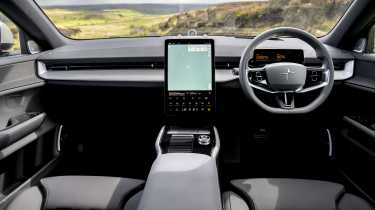
The heart of the cabin is the central, 14.5-inch portrait infotainment display, running the same snappy Android Automotive system as the rest of the Polestar range. While it’s underpinned by Google software, Polestar has added its own unique skin. BMW’s latest iDrive feels more responsive, but the attention to detail in Polestar’s system is second to none – icons featuring a car show the silhouette of the 3 as opposed to a generic model, with bespoke animations for driving modes and various settings dotted throughout the UI. Split-screen functionality and customisable widgets aim to make the user experience more fluid, but more physical buttons for certain controls would be welcome.
Price, specs and rivals
In the not-so-distant past, the Polestar 3 wouldn’t have had many rivals, but things are hotting up in the electric premium SUV space. The BMW iX is perhaps its closest current rival, majoring on cruising comfort, quality and sustainability, with the Volvo EX90 also targeting the same corner of the market.
Now starting from £69,990 thanks to the introduction of the entry-level single-motor, rear-wheel-drive version, the Polestar 3 is more competitive than it ever has been. This model does have a smaller battery pack than the dual-motor versions, but increased efficiency makes the knock to range less severe than you might think – its WLTP rating is just 19 miles less than the middling dual-motor model, and seven miles more than the range-topping Performance.
Opt for the dual-motor model, with its extra power and larger battery pack, and you'll pay from £77,990, with the range-topping Performance costing from £91,990. Stack these figures up against rivals like the Volvo EX90 and you'll find that the Polestar offers reasonable value for money, with the more ordinary Swedish equivalent starting from a much higher £82,660. The BMW iX is a more polished product in more ways than one, with a better range throughout the lineup and a not-so-high £75,405 starting price; opt for more performance, however, and you can easily spend in excess of £110,000.
Polestar 3 Performance specs
| Powertrain | Dual-motor, all-wheel drive |
| Power | 670bhp |
| Torque | 642lb ft |
| 0-60mph | 3.8sec |
| Top speed | 140mph |
| Battery size | 106kWh |
| Range (WLTP) | 368 miles |
| Basic price | £91,990 |