Revolution Race Cars to launch new, more affordable model
New race/track car will cost around £100k, and is expected to develop around 300bhp
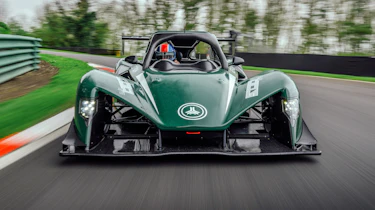
Revolution Race Cars, the Peterborough-based racing and track car company, has announced that it will expand its model line-up following securing new investment. The company currently manufactures the Revolution 500 Evo, a star of evo’s 2024 Track Car of the Year.
With an innovative carbonfibre construction, 500bhp from its supercharged 3.5-litre V6 and a huge amount of downforce, it’s a potent machine. You can read evo’s review of the Revolution 500 Evo here.
Details are under wraps for its new model but evo understands it will have a target price of £100,000 (the 500 Evo costs around £165,000), and may be named the Revolution 300. From the working name, one can extrapolate the car’s likely power output.
> First Maserati MCXtrema delivered: MC20-based track special hits Laguna Seca
It will likely be a little smaller than the Revolution 500 model but will still be built around an epoxy carbon monocoque structure and feature carbon bodywork. Like its bigger brother, it will be a track/race car aimed at experienced and novice drivers alike, with target customers a mixture of private owners, racing teams, racing schools and motorsport country clubs – the latter being a market which is expanding rapidly in the United States.
Revolution is now entering a new era of management with new shareholders and investment from the USA. A new company named Cabotage Corporation has been created, into which Revolution slots.
Revolution already has a strong presence in the United States, and its new investment means that will increase. Elements of its parts business, currently solely in the UK, may be expanded into the USA too, the better to supply American motorsport customers with parts rapidly and support a growing customer base Stateside.
Like the 500 Evo, the new car will use vacuum resin infusion technology for the chassis and bodywork’s construction, plus other elements such as the crashbox. The 300 will use the process – well established in other industries, but relatively new to motorsport, and pioneered by the first Revolution model – in a more comprehensive way through the car’s production.
‘We’ve “productionised” the process a little more,’ says Revolution co-founder Phil Abbott. ‘The first car is five to six years old now, and we’ve been able to move forward from that, reducing the cost to the end user.’