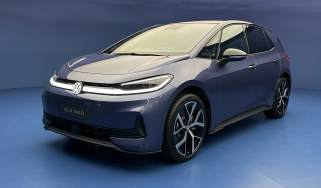
Volkswagen ID.3 GTI revealed as the most powerful GTI ever
Following behind the new ID.Polo GTI, Volkswagen has applied the GTI formula to its all-electric ID.3 to make it the most powerful GTI yet
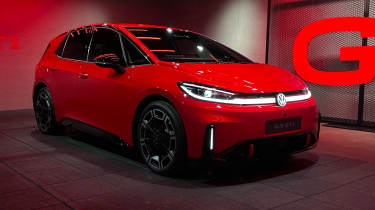
A couple of years ago, Volkswagen launched the ID.3 GTX as a warm alternative to the long-standing Golf GTI. Now it’s finally applied the full-fat GTI formula to the newly updated ID.3 platform, following shortly behind the ID.Polo GTI. We got up close with what is the most powerful production GTI ever in Hamburg.
The GTX of 2024 offered improved straight-line performance over the standard car, and not much more. Now though, VW believes it’s finally created a genuine all-electric alternative to the iconic Golf GTI with the ID.3 GTI. On paper at least, it has the stats to suggest it might stand a chance.
> New Volkswagen ID.Polo GTI: the first electric GTI is slower than the old one
Not only does this car nudge 0.5bhp just ahead of the Volkswagen Golf GTI Edition 50 as the most powerful GTI ever, at 321bhp, it sends all of that power to the rear wheels alone. To manage this power and its not-insubstantial 403lb ft torque figure, Volkswagen has developed new software. This allows the motor to virtually mimic the inertia of a combustion engine and stop the motor from spinning up to maximum rpm under traction loss when ESC is disabled. The result, according to VW engineers, is a less snappy car than some high-performance EVs.
It won’t break any records with its 5.6sec 0-62mph time and 124mph top speed, three tenths and 44mph behind the similarly powerful Golf GTI Edition 50, but more has gone into this car than increased power. A derivative of the same DCC adaptive sports chassis found in combustion-powered GTI products has been employed to give the ID.3 more composure than ever before, and there’s even a dedicated GTI mode to sharpen everything up further.
While manufacturers such as Porsche and Honda have adopted the ‘virtual gearshift’ technology first showcased in the Hyundai Ioniq 5 N, Volkswagen is yet to do the same. Neither the ID.Polo GTI or the ID.3 GTI feature this tech, but what they do receive is a simulated engine sound pumped into the cabin for an added sense of speed, should that be what you’re looking for.
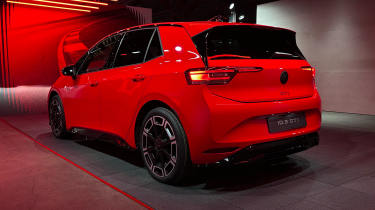
As far as design is concerned, the changes are subtle beyond the new Tornado red paint. There are red highlights to be found throughout and new 20-inch diamond cut ‘Worthersee’ wheels similar in design to those seen on the new ID.Polo GTI. These in addition to elements like new side sills, unique honeycomb grilles and a redesigned rear bumper all make it look a little less ordinary than the standard ID.3 Neo.
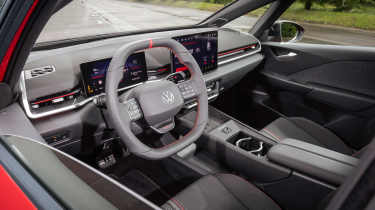
There’s a similar theme inside, with red highlights, a tartan-like upholstery on the seats, that dedicated GTI button on the steering wheel and changes to the software too. The same 10.9-inch digital dash and 12.9-inch central displays as in the standard car are carried across, but the GTI gets unique performance displays, and even an optional retro skin referencing the dash design of the iconic mk1 Golf. Buyers will also receive the same tactile, physical door and steering wheel controls introduced on the standard ID.3 Neo, which ought to be very well received.
Despite the performance enhancements, the ID.3 GTI’s 79kWh battery pack is said to allow for a 373-mile range on a full charge, just 18 miles behind the ordinary ID.3 Neo. Peak charging standard at 183kw, which is some way behind some performance EVs like the 250kw-capable Ioniq 5 N, but allows for swift charges regardless.
Pricing is yet to be confirmed, but first cars will hit the road in spring 2027.
Volkswagen ID.3 GTI specs
| Powertrain | Single motor, rear-wheel drive |
| Power | 321bhp |
| Torque | 402lb ft |
| 0-62mph | 5.6sec |
| Top speed | 124mph |
| Price | TBC |