Engineer Chris Porritt on working with Elon Musk, Apple cars, Aston Martin and a life in cars
From Land Rovers and Astons to the rejuvenated Bizzarrini – via Tesla and Apple – accomplished automotive engineer Chris Porritt hasn’t quite managed to retire to play with his historic single-seaters

My first car memory is driving with my dad to Oulton Park. I grew up in Cheshire and we used to go fairly regularly, once or twice a month from the mid-’70s through to mid-’80s, to all the big meetings: the Gold Cup, the Aurora AFX F1 Championship. I remember him driving there in a fairly sedate fashion and then driving home somewhat quicker. He had a Lotus Cortina and then a Mk2 Cortina 1600GT, purple with a vinyl roof…’
Chris Porritt’s Cheshire upbringing sowed many of the seeds of his car passions. ‘The first car I drew as a kid was a Chevron B8. A lot of Chevrons drove in the North West because that’s where they’re from, and I got attached to the marque. It just sort of got infused into me. Latterly, I’ve ended up with a collection of Chevrons.’
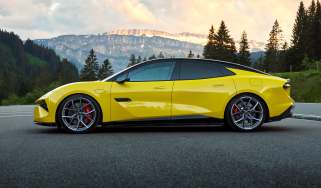
> Meet the man who turned a Lotus Exige into a 270mph hypercar
What set him on the path to becoming one of the most sought-after vehicle engineers in the business, though, was his design and technology teacher. ‘He looked at my O-level project – a racing go-kart – and said, “I think you need to do engineering.”
‘There wasn’t a family car industry connection. Dad was in textiles; the Porritt company made the felt that was used in the paper-making industry. It was a very big business: Porritts are synonymous with Rochdale, Bury and that sort of area, almost as common as Smiths around there.’
Chris ended up doing a degree in mechanical engineering with an automotive option at Hatfield poly. ‘I’d got sponsorship with Land Rover, which made life somewhat easier and meant I could run a car: a Vanden Plas 1100 in grey. It had been my grandmother’s. I had to fix it up: new rear subframe, lots of welding… Eventually it all rotted away and so later on at uni I had a couple of tuned-up Minis.’
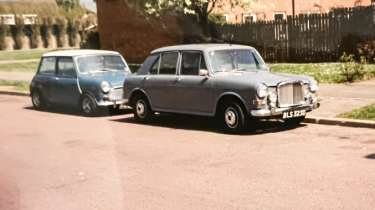
The very first car he drove was his sister’s Mini. ‘At the time there were Red Hot and Jet Black versions. Hers was brown so we used to call it ‘Shit Hot’. One day I washed it for her and then took it for a drive “to dry it off” and unfortunately ended up going through a hedge. I learned the limits of front-wheel drive and understeer at that point.
‘At uni I got a steady Desmond – a 2:2 – and then went to work at Land Rover in engine development but quickly realised that developing engines meant running them on dynos: you don’t get to drive cars much. So I looked around for the department that drove cars a lot and it was vehicle dynamics, so I engineered a transfer as quickly as I could.
‘The off-road capability of Land Rover was paramount, its USP. Still is, to a point. We used to do a mixture of steering, suspension and wheel and tyre tuning but a lot of off-road development too, to make sure the cars were still capable. There was, and I think still is, an appetite and aptitude for developing technologies. Land Rover were first to introduce hill descent control and first with active roll control and air suspension. The biggest project I worked on was P38, the replacement for the classic Range Rover, and the last was “Tempest”, the Discovery 2.
‘After my Minis came a Mk1 XR2, which I turned into a racing car, then a couple of Peugeot 205 GTIs but I got frustrated with their lack of traction so bought a Mazda 323 4x4 Turbo, which was a very understated car. Unfortunately, the wastegate stuck closed which meant it had monster boost. The Mazda dealer said, “A replacement turbo is going to be a few thousand quid or you can just drive it until it blows up.” So I just carried on driving it. The Mazda was probably producing the best part of 300bhp but it never failed. I ended up selling it to a mate, telling him it was probably going to blow up at some point, and he ran it for another five years!
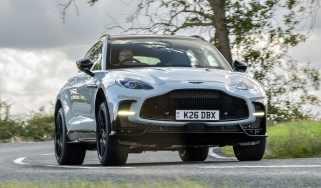
‘I’d enjoyed my time at Land Rover, learned a lot, but I wanted to work on cars, sports cars, quick cars. I joined Aston in July ’97. My job was whole vehicle engineering and my first project was the DB7 Vantage, the DB7 with the V12 engine.’
It was a project that would set the tone for Porritt’s future career. He created a team of just four – three poached from Land Rover! – and they set about the project with a passion and intensity that saw them working terrifically long hours to get the best possible result. ‘I was living near Solihull and driving over an hour each way to Newport Pagnell every day and I often ended up sleeping in my Fiesta diesel van in the car park.
‘I was at Aston for 16 years and thought that I’d be there forever and a day. My first boss was a bit of a legend, John Wheeler, the brain behind the Ford RS200. I also worked closely with John Miles at Lotus when we were doing Vanquish, then I set out the initial layout and architecture for V8 Vantage and DB9, again with a very small team, but from there the team grew to deliver these cars and their derivatives. That layout was where the front-mid-engine thing came in, with the rear transaxle. Before that we laid out a mid-engine car and showed it to Jacques Nasser, head of the Premier Automotive Group at the time, but when Ulrich Bez arrived he said, “Aston’s not a mid-engine car company at this point. Let’s stick with the front-mid-engine and develop our bread and butter.” It was the right call.
‘I would sometimes fetch Uli from the airport, which was an opportunity for him to drive a development car and me to badger him about stuff. I’d say, “We need to go racing with our road cars like Aston used to back in the day. You’re German, we should race at the Nürburgring and you should drive too.” He’d say, “Yeah, maybe someday.” And every year I’d go to him with a car and he’d say, “No, we won’t race that.” I’d done proposals about how much it was going to cost, how much publicity we’d get, yada yada, and he’d say, “No, no, no.”
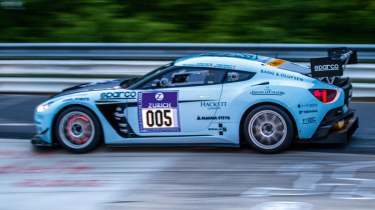
‘And then we were sitting in a presentation from a marketing guy for the launch of V8 Vantage and he was saying we’re going to do this, going to do that, it’s going to cost us £120,000, and I remember Uli standing up and saying, “This is Scheiße. We’re not going to do this. Chris is going to build me a racing car and we’re going to race at the Nürburgring.” The marketing guy looked daggers at me but that’s how Aston’s engineering team got into racing again.
‘The whole project was £120k. The car was road-legal, so we could drive it to and from the circuit, and in the entire N24 I think we were stationary for 34 minutes. It was absolutely reliable. Uli had always wanted to do it, but the last thing he wanted was for us to take the wrong car there and look like idiots.
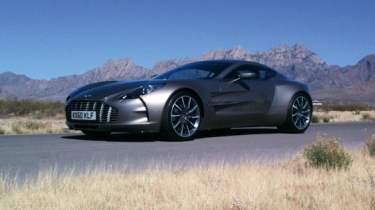
‘Then came the One‑77. I think it was an 18-month programme from the point of showing it to the first customers getting cars, which is pretty wild. We used quite a lot of known technology from other models, so the riskiest thing was making the V12 as powerful as it possibly could be at the time. I used to deal directly with Ulrich. He said, “Right, we’re going to make a car that weighs 1600 kilos, it will have 700 horsepower and it will go 200 miles an hour. Now you tell me some of the other things, what the acceleration will be, and I’ll tell you if that’s right.” So I did loads of calcs and ended up with 0-60 in 3.4 seconds, 0-150 in less than 10.
‘We ran the first engine on the dyno at Cosworth and it made the 700 horsepower. I called Uli and he said. “Now the target is 770 horsepower.” I’d held a bit back, and I think we got to 750 in the end. A similar thing happened at Nardo. I rang and said we’d done 200mph and he said, “Now the target is 220,” but I’d got wise by that point; I knew that the car could do 220mph. That One‑77 was a career-forming project for me. It was such a lovely programme to work on because, again, small team, really tight team, which was the way to get it done that quickly. Not that easy, but an amazing project.’
In terms of his own cars, around that time Porritt had built and was racing his first Caterham Seven and needed a tow car. ‘My wife, Jules, had a company Cavalier with a tow bar but refused to drive my Fiesta van when I borrowed it, so finally I had to get into a company car. Most fun were the bubble-shaped Fiesta Zetecs. Later on, Aston offered cars on their scheme, so I had two V12 Vantages, a Rapide and a Virage.’
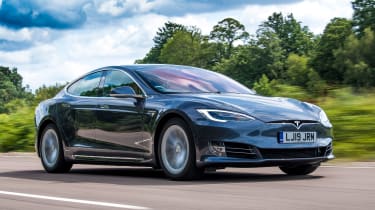
The One‑77 spawned Aston’s Special Projects department, where Porritt oversaw the V12 Vantage Zagato. ‘A brilliant car but after One-77 it was never as exciting.’ So when he got a call from Tesla offering him a job as VP of vehicle engineering, his interest was piqued. ‘I came home to Jules and said, “I think if we survive there for a year, it’ll be worth doing.” So I had a phone conversation with Elon Musk, then a second. It seemed to go well.’ After a visit to California, the Porritts decided to ‘take the punt’.
‘I was head of vehicle engineering from May 2013 until the end of 2015, nearly three years. In that time I think I had four weekends where I didn’t work, and a one-week vacation, so it was pretty full-on. It was a proper start-up: everyone had to give their all for the company to survive. Elon was all over everything, as he needed to be. Like him or loathe him, Tesla wouldn’t exist if it wasn’t for Elon. So again, for camaraderie and team behaviours, it was brilliant. There was no bullshit, we just delivered, and it was magic for that. As a reward to myself for my first year at Tesla, I bought a Ducati Superleggera, mostly to look at. I still have it. It’s done 1201 miles.
‘Then I had a call from Apple. They wanted somebody with automotive experience who’d been there, done it, launched cars, just to offer a critique of what they’d done [an electric car was widely rumoured]. Soon after I started, [project leader] Steve Zadesky left, so I ended up being in charge of more than I’d expected. After Tesla I was thinking I might be able to just, you know, consult a bit and chill a bit but it became pretty full-on again. They ultimately concluded there wasn’t anything automotive that suited the brand.’

By then, the Porritts were already back in the UK, drawn back by a family tragedy. ‘My nephew was killed in a car crash in Bolivia. I came back to be close to the family but also decided at that point that I’d probably retire.’ But then Mate Rimac came knocking and he and Porritt really clicked. However, the plan to work part-time in Croatia was stymied by Covid and he ended up working there in three-month blocks. ‘After nine months of doing that, Jules and I chatted and I told Mate I couldn’t do it. It wasn’t fair on the Rimac team or me and the family, so we parted.’
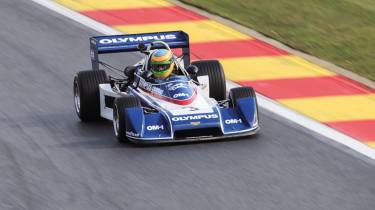
However, as you’d guess, retirement for Porritt was never going to involve an armchair and comfy slippers. Next-door to the family home is a 5000sq ft garage/workshop full of cars, motorbikes and race cars. Quite a few race cars, a number of them Chevrons. ‘In 2016 I bought a Chevron B19, one of the cars I saw race as a kid. Always liked the shape of them. Before we went to the US, I bought a Chevron B29 Formula Atlantic car as well from a guy called Jon Waggitt, on the understanding from him and the previous owner’s widow that I would restore it and use it. It’s a theme with a lot of my cars.
‘I’ve also got a Lotus 18 Formula Junior I’m building and I have a Titan Formula Ford. The majority of my racing has been in Historic Formula Ford because it’s there where I learned race-craft, and that’s something you need to maintain to be good in Formula Atlantic and F2, which put the biggest grin on my face. My most recent thing is a Chevron B39, a Formula Atlantic car by build, but only raced in the UK as an F2 car by Divina Galica at Donington in 1977.’
A happy retirement then, tinkering with and racing classic single-seaters? ‘For a couple of years… and then Rezam Al Roumi and Dr Bez called: “We’ve got this thing called Bizzarrini…’ So I had a quick look at it and decided I’d give it a go, but only part-time. And we’ll employ the right people, so we can have fun and do it right…’ Retirement’s overrated anyway.
This story was first featured in evo issue 330.