Ford returns to rallying to help bring back the fun to its road cars
Ford’s returning to the WRC with a full factory effort and it’s developing one of its all new European models for the job

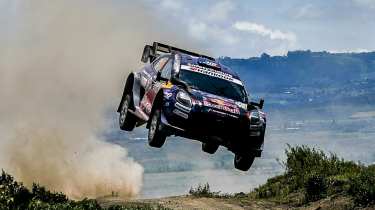
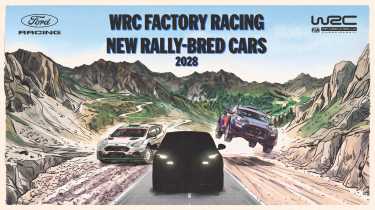
There’s been much buzz of late around what Ford’s next steps are in Europe. After the categorical flops that have been the Capri and Explorer EV SUVs, the company announced that it is working on a new Fiesta among five new products, inclusive of two ‘multi-energy, rally-bred crossover’ models, aimed directly at European customers. ‘Rally-bred’ is no exaggeration either as the company is now announcing its return to full factory-supported WRC contention, in collaboration with long-time partner M-Sport, in 2028.
While M-Sport and Ford have been at the forefront of WRC throughout the hybrid Rally1 era with the Puma and long before, this has been in a more limited capacity. Ford’s factory team status in 2028 will be a first since 2012 for the Blue Oval.
For the 2028 season, which features new technical regulations that strip away the hybrid element, the Ford Racing outfit will run a modified Rally2 car before introducing its new model in 2029. The car will be developed globally and in collaboration with M-Sport.
What will Ford return to rallying with?
While President of Ford Europe Jim Baumbick wouldn’t be drawn on what model the new car would be based on, he has said that it will be one of the forthcoming next-generation cars. For reference, these include a small electric hatch (the Fiesta), a small electric SUV, two additional ‘multi-energy’ (which could mean hybrid and pure combustion options) ‘rally bred’ crossover models and a new multi-energy Bronco variant for global sale.
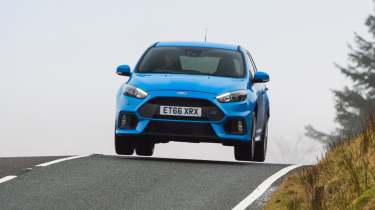
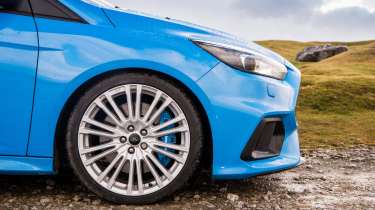
> Ford Focus RS (Mk3, 2016 - 2018) review – the last proper fast Ford?
As the regulations feature a 1.6-litre turbocharged petrol engine without any electrification, it would therefore be odd if the new WRC racer is based on the forthcoming Fiesta. Why? That car is set to be the first child of a deal Ford has done with Renault and is being developed out of the bones of the popular Renault 5 electric car. Between the technical challenge and the lack of synergies there would be between road and race models, that doesn’t seem to make the most sense. More likely, one of the two ‘rally-bred’ crossovers will be the candidate – think next-generation Puma, perhaps.
Does Ford’s rally return mean new RSs and STs?
We also don’t know the specifics or the greatest extent to which this rallying activity will bleed into the road car range. Questioning Baumbick, I asked if like the Mustang GTD’s synergy with the GT3 racer, whether we could expect a return of the RS or ST monikers for a road-going flagship model inspired and more closely related to its rally car.
‘We’re not in a position to talk about future product plans,’ he said. ‘I would suggest, take a look at how serious we are about bringing race and road to life for customers in a whole wide range of capabilities and we will be congruent with that strategy.’
Reading between the lines and looking at Ford’s motorsport activities and the road cars they inspire, from Dakar and the Raptor, to Le Mans and the Mustang GTD, we can safely expect Ford to cash in on the WRC cache in some way shape or form. When asked how it would be possible to rationalise the kind the character of a combustion rally car into a hybrid or EV road car, Baumbick emphasised the importance of looking beyond the powertrain when considering the prospect of a rewarding, engaging enthusiast car:
‘I think there’s a lot more to the vehicle than just the propulsion system. What really brings the vehicle to life is how it responds and performs in that environment. The nature of the roads in Europe are so varied and so diverse, we want our customers to feel, engage and desire. At the core of the soul and character in the product we want to develop, is being glad you took the challenging road versus the direct shot.’
That sounds protective of the Fiesta and indeed any performance models set to be spun off from it, which we expect for the moment to be a full EV like the Renault 5 it’s based on. Baumbick however went on to emphasise that ‘we do have a wide range of propulsion types so I don’t think it has to be specific, and I think that’s also something that could change over time’.
Why the return to rallying?
While he was unsurprisingly not ready to be drawn on specific models, the motivation to return to rallying is rooted in what Ford wants to be able to offer its customers.
‘That will be a virtuous circle within our portfolio. Making our products better from rally, learning insights from off-road and on-road family members, back into rally. We think it’s almost like it feeds itself. It’s a virtuous circle of learning and capability. It underpins what is core to our brand. We would never take the easy route, we’re not just trying to cash in a heritage cheque. We know based on our experience in all our racing that we’re doing globally, that we can make these products better as we get that flywheel rolling, as we position the future European passenger vehicle portfolio.’