Jaguar F-Pace (2016 - 2024) review – is it still relevant?
The F-Pace has always looked and driven better than most of its rivals. In its final form, it has the interior and tech to match, too

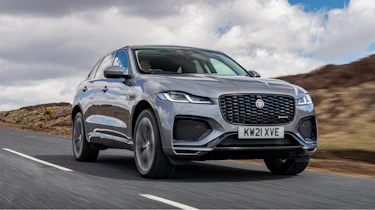
Jaguar’s F-Pace had traditionally been one of the more composed and entertaining cars of its type, but it sat in one of the fastest moving sectors of all. Premium SUV buyers demand the very latest and greatest in terms of tech, design and refinement, and while the F-Pace didn't quite nail every basis when it launched in 2017, it sat at the sharp end of the class towards the end of its lengthy production run in 2024.
The F-Pace was offered with a variety of petrol and diesel engines – including mild-hybrid and plug-in hybrid units. The 2020 facelift also brought a completely revitalised interior and with new tech interfaces – all big marks against for the previous car.
> Jaguar F-Pace SVR – living with it
Combined with its excellent driving dynamics and sleek design, the F-Pace has never been more desirable, and with a range so varied as to offer a PHEV at one end and a fire-breathing 542bhp SVR model at the other, there’s no sliver of the premium SUV marketplace it doesn’t appeal to.
So Jag was on to a bit of a winner, which is unfortunate for a few reasons as there’s no plan to directly replace it. Instead it will stand as a final flourish of brilliant engineering before the brand goes all-electric ahead of its 2025 relaunch. Still, right here, right now, the F-Pace is a very strong competitor in the segment with no obvious or deal-breaking flaws, making now an ideal time to enjoy this sort of combustion-powered Jag while we still can.
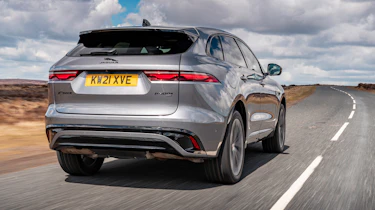
Jaguar F-Pace in detail
- Performance and 0-62mph time – Six- and eight-cylinder options offer great performance, four-cylinder ones less so, PHEV excepted.
- Engine, gearbox and technical highlights – Four-cylinder options aren’t great, but the six-pot engines makes up for this. The PHEV solid, too.
- Ride and handling – The excellent chassis remains – it’s polished, precise and perfectly suited to the UK.
- MPG and running costs – Comparable to its rivals in terms of economy, that’s to say respectable for an SUV but far from exceptional.
- Interior and tech – Much better than the launch car, it’s plush, sumptuous and wonderfully detailed. Tech’s good, too.
- Design – The F-Pace’s inherently sound aesthetic remains largely the same, with just enough detail upgrades to keep it looking fresh.
Prices, specs and rivals
The final F-Pace might look similar to the model that was launched back in 2017, but the latest range has taken some pretty solid leaps under the skin, starting with the available range of engines that are almost completely renewed, but no less varied than before. There are five powertrains available (plus the supercharged V8 found in the SVR) made up from four- and six-cylinder petrols and diesels. All F-Paces come standard with all-wheel drive and an eight-speed automatic transmission too.
More reviews
In-depth reviews
Long term tests
Reviews
- Jaguar F-Pace SVR (2019 -2024) review – F-type character and Range Rover practicality from £45,000
- Jaguar F-Pace SVR Edition 1988 2023 review – V8 range-topper takes inspiration from Le Mans
- Jaguar F Pace P400 HSE 2021 review – popular SUV refreshed, but can it take on a Macan?
- Jaguar F Pace (2018-2020) SVR review - SVO upgrades combine to create Macan Turbo rival
The entry-level D200 diesel comes equipped with a mild-hybrid assisted 2-litre Ingenium unit. Step up to the D300 and two extra cylinders will be thrown in. In terms of petrol options, there’s a P250 four-cylinder, a P400 straight-six mild-hybrid petrol and finally the P400e plug-in hybrid that pairs the turbo four with an electric motor and lithium-ion battery pack. The SVR still features a supercharged 5-litre V8 petrol, and is none the worse for it.
The standard F-Pace is offered across four trim levels, ranging from the R-Dynamic S (£48,770), R-Dynamic SE Black (£53,360), R-Dynamic HSE Black (£57,915) and all the way up to the £69,475 400 Sport with the mild-hybrid straight-six petrol. The base car comes equipped with a curved touchscreen Pivi Pro infotainment system, LED headlights, 19-inch wheels and dark exterior accents, with higher trims adding bigger wheels (up to 22 inches), black styling elements, heated and ventilated seats and other luxuries.
Rivals are numerous, and start with the Audi Q5, BMW X3 and Mercedes GLC – of the three, the Audi Q5 feels the most dated and doesn't drive with the same polish as the Jag, with the BMW running it closest in this department. The Porsche Macan and Alfa Romeo Stelvio are two other driver-orientated options, but each have their own compromises – namely the Porsche’s thirsty engine range (no diesels or hybrids) and the Alfa’s basic interior design, fidgety ride and underwhelming petrol engine.