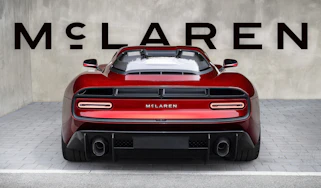
McLaren McL 820 to replace the 750S next year as Ferrari-baiting supercar
McLaren has released the first official details of its next series production supercar, set to arrive next year as a replacement for the 750S
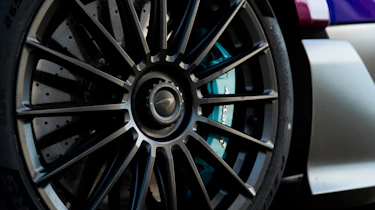
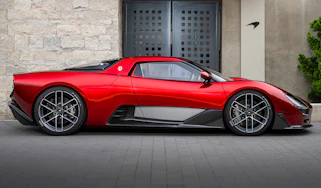
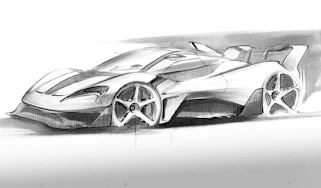
Almost a decade on from the introduction of the McLaren 720S three years since its close 750S relative made its debut, Woking is finally launching a new supercar. Called the McL 820, it will be revealed next year as a series production replacement for the 750S, and is expected to be joined in the range in 2028 by the bold McL 6GT first shown at Monterey Car Week.
Its ‘McL’ name takes inspiration from the brand’s motorsport naming structure, just like the 6GT, and will wear the newly designed McLaren badge shown earlier this year. If you hadn’t already guessed it, ‘820’ is a reference to its power output in PS, meaning it has a total of 809bhp to put it 69bhp ahead of the 750S.
> McLaren McL 6GT is a new manual supercar and a complete reset
While we do know its power output, there are no new details on precisely how it will reach that number, but we did get an early insight last year. In 2025 evo spoke to McLaren's head of communications, Piers Scott, about the future for the powertrain developed for the W1 hypercar, where he revealed its 'high-performance hybrid V8 will power the next generation of McLaren supercars.'
The £2m limited-number hypercar sends 1258bhp to the rear wheels alone to rival the Ferrari F80, but the McL 820 will be a different proposition at a 449bhp disadvantage. Based on previous suggestions though, it will receive a development of the same 4-litre twin-turbocharged hybrid V8 powertrain regardless.
The £250,000 Ferrari 296 GTB (then of course its replacement, that we’ll most likely see before the decade is out) will be its closest rival on paper, with its 3-litre twin-turbocharged V6 powertrain also featuring hybrid assist. It's two cylinders behind the incoming McLaren, but does produce a little more power at 819bhp, sent to the rear wheels only for a 2.9sec 0-62mph time and 205mph top speed.
We'll have to wait until next year for the official figures, but if previous McLaren models are anything to go by we can expect some punchy numbers. The less powerful pure-combustion 750S it will replace managed the 0-62mph sprint in 2.8sec before hitting a 206mph top speed, meaning the 820 is very likely to go further still.
One point of concern is whether or not the introduction of a more complex, hybrid powertrain will increase kerb weight beyond the established norm for a McLaren road car. A relatively basic formula and a carbonfibre tub has made them the lightest of their kind until now, and while the £2m W1 has managed to keep weight down, whether the same can be achieved in a cheaper, series production model is yet to be seen.