Best McLarens – Woking’s scintillating Ferrari fighters
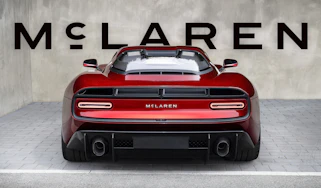
McLaren has produced some of the most stunning, technically impressive supercars in history – these are the best of the bunch, including the new W1 hypercar
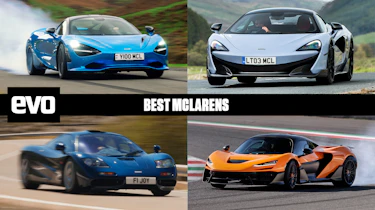
It's hard to believe that McLaren has been in the modern supercar game for less than 20 years. In that time it’s evolved from a maker of technically impressive but slightly cold supercars to a bonafide Ferrari competitor, a perennial producer of five-star cars and perhaps inevitably, an evo Car of the Year winner.
Yes, there have perhaps been too many derivatives of the tried and tested McLaren formula (nearly all of its road cars have been mid-engined with twin-turbo V8s so far), but when the peaks are so high, we can't blame the firm for sticking to what it knows. A broad range of flavours across a similar formula also means there’s now a McLaren to suit many tastes and budgets. Want the ultimate in track-focused tactility? The 675LT, 600LT and 765LT, not to mention the Senna, have you covered, whether your budget is £130,000 or £1.5million. Want a thrilling supercar with surprisingly good ride comfort and practicality? The 720S and 750S are the all-rounders. The Artura can add hybrid versatility to that too. Meanwhile the new W1 hypercar has delivered on its promise, earning its place among the ranks too, following the footsteps of the mighty F1 and P1. Here we list our favourite models from the brand’s fast evolving portfolio, from past and present.
Best McLaren road cars
- McLaren F1
- McLaren P1
- McLaren W1
- McLaren 675LT
- McLaren Senna
- McLaren 720S
- McLaren 600LT
- McLaren 765LT
- McLaren Artura
- McLaren 750S
- McLaren Elva
McLaren F1
-
Star rating 5
-
Used price from £10m+
-
McLaren F1 review
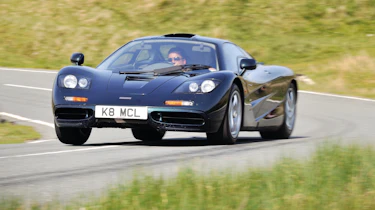
The F1 is, of course, where McLaren’s road car story begins. It’s father of the P1, grandfather to the new W1, and arguably still the benchmark for analogue hypercars to follow. According to its designer, Gordon Murray, nothing has meaningfully moved the game on from the F1 despite its age, prompting him to create his own successor, the T.50.
But back to 1992, in the F1’s centrally-mounted seat. You instantly feel plugged into a place where every synapse is overwhelmed and you feel giddy, excited, terrified, faint even. The legend of the F1 contributes to this feeling – I mean, this is a McLaren F1 for godsakes, and you’re driving it – but so does the tangible experience. Sat in the middle, your back is aligned with the crankshaft of that glorious 6.1-litre V12 and your ears inches from the overhead air intake. The noise, intensity and feedback are all consuming, and though the F1 isn’t perfect – its brakes aren’t quite up to the task and it can feel slightly lazy compared to modern supercars – it remains unforgettable, and one of the most exciting road cars we’ve ever driven.
McLaren P1
-
Star rating 5
-
Used prices from £1.2m+
-
Read our McLaren P1 review
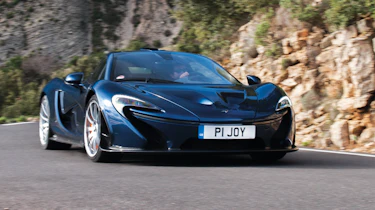
The P1 was a turning point for McLaren. Aside from its monumental, mouth-drying performance, it marked a turning point from the 12C’s somewhat clinical character, demonstrating that the revived McLaren Automotive could produce something truly wild and exciting. Even in the current age of 2000bhp EV hypercars, it still feels absurdly fast, with outrageous levels of grip, stability, control and precision.
It’s raw, too. Stones ping loudly into the underside of the carbon tub and tyres slap noisily into the road surface. The soundtrack from the 903bhp 3.8-litre V8 hybrid powertrain is uncultured, with the tuneless din of industrial turbocharging: whooshes under load and piercing whistles from the wastegate. The car feels rigid over bumpy roads, dropping heavily into potholes, suspension just about rounding off the edges enough to keep it the right side of useable. The P1 is extreme, and until the W1 launches, remains the ultimate expression of what modern McLaren can do.
McLaren W1
-
Star rating: 5
-
Prices from £2million
-
Read our McLaren W1 review
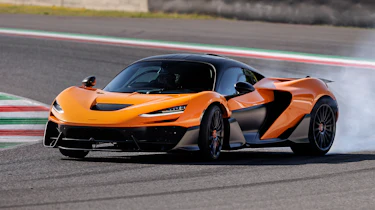
McLaren’s successor to the P1 and F1 has been a long time coming, with almost two years passing between the reveal of the W1 and us getting a chance to get behind the wheel. There were doubts about whether it would move the game on enough, whether it looked right, what it would bring to the hypercar genre in 2026. Now we have driven it, those doubts were for the most part assuaged. This is an astonishing hypercar, not just because of its mind-bending performance but also its tactility. There’s a joy to being at the controls that’s not exclusively tapped when pushing the W1’s limits. It’s the essence of McLaren, distilled; the raw pace and performance, textured feel, delicious balance and fine-tuned compliance we love about its series supercars, heightened to another extraordinary level.
What it isn’t, is a totally different, reinvented proposition by comparison to the P1 that preceded it. That’s probably not surprising, given that while it is an all-new engine, the 4-litre MHP-8 V8 is similar in character. The W1, like the P1, trades heavily on track-deployable downforce, rear-driven agility and hybrid powertrain elasticity and so, it feels like it’s several generations on but a close member of that genus nonetheless. A worthy member of the ‘1’ lineage and halo model for McLaren? Absolutely.
‘The W1 looks like evolution rather than revolution, but the benefit of that approach is that, although the car might lack some of the shock of the new, it has also stubbornly retained all the vital ‘old’ things we loved about the previous generation, such as the steering and braking. And by improving as much as innovating, McLaren has made a fundamentally better car than what’s gone before, not just a different one.’ – Henry Catchpole, evo contributing editor.
McLaren 675LT
-
Star rating 5
-
Used prices from £170,000+
-
Read our McLaren 675LT review
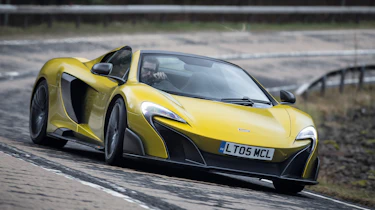
The 675LT distils some of the P1’s DNA into a more conventional supercar package, and the result is one of the most intensely involving cars of recent memory. In everything the LT does – the way it grips, steers and brakes, the way it accelerates and corners and the way it sounds – there is certified perfection.
It has the same flat-bodied, instantaneous chassis response as the P1 and the same way of digging both axles equally hard into the tarmac so that you feel suspended perfectly between them. Its non-hybrid V8 doesn’t get near P1 levels of outright thrust, but the 675 is still utterly ballistic, with 666bhp giving the rear tyres a hell of a lot to think about. Even in light of the further developed, more advanced 720S and 750S, it remains one of the most bewitching McLaren supercars of them all.
McLaren Senna
-
Star rating 5
-
Used prices from £790,000+
-
Read our McLaren Senna review
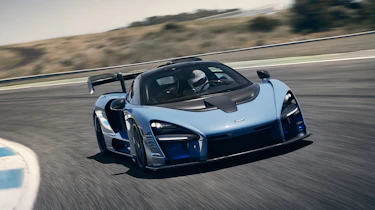
When a car is named after one of the most revered racing drivers in history, it better be good. Thankfully – and despite its slightly gawky appearance – the Senna is a truly formidable supercar, with a level of track performance that makes you wonder whether it was destined for the grid at the Spa 24 Hours.
Central to the Senna's ability is its aero package, with intricate air pathways, vents and downforce generators scattered all over the body. It's not the prettiest solution but it's damn effective, the Senna generating 800kg of downforce at 155mph. Combine this with a sub-1200kg dry weight and a 789bhp twin-turbo V8, and you have the makings of an almost otherworldly road car. Extracting the Senna's maximum requires serious concentration and bravery, but it's ultimately as precise and progressive as it is fast.
McLaren 720S
-
Star rating 5
-
Used prices from £140,000
-
Read our McLaren 720S review
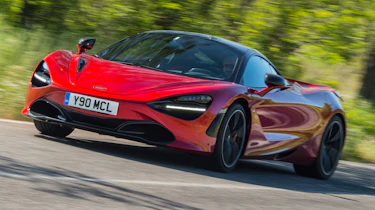
McLaren’s road to being the one to beat in the supercar space was a rocky one, starting with the 12C, evolving through the 650S and culminating in the stunning 675LT. The proof would be in the difficult second album however – a ‘normal’ model shorn of all the intensity-adding paraphernalia of a track special.
The 720S delivered and then some, increasing performance, retaining usability and refinement compared to the 12C and 650S, but dialling in some of the interaction and intensity you’d perhaps expect of an LT. At the time, most really did wonder exactly where you’d take the 720S on the road to a track special. Indeed, astonishing though the 765LT is, nine out of ten times, a 720S is enough car for the job.
‘The 720S is the product of a manufacturer that hasn’t changed its focus on wanting to build the most exciting, thrilling and best performance cars it can despite any obstacles it has faced along the way,’ evo’s editor-in-chief Stuart Gallagher summarised, sealing the 720S’s evo Car of the Year victory. ‘McLaren Automotive has defined itself as one of the greats, and in the 720S it has created the best of the best.’
McLaren 600LT
-
Star rating 5
-
Used prices from £130,000
-
Read our McLaren 600LT review
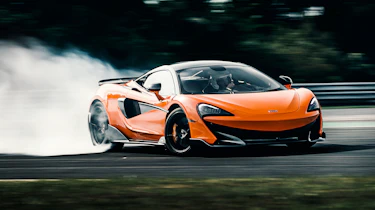
When McLaren launched the 570S, we couldn't help but wonder how brilliant a hardened, GT3 RS-rivalling LT model would be. In 2018 we found out with the 600LT, which blew us away with its combination of speed, agility and tactility – so much so that it took victory at evo Car of the Year 2018.
There's more than a hint of 675LT-style aggression about the 600LT. Feedback streams through the car and while a 592bhp mid-engined turbocharged supercar sounds like it should be treated with caution, the LT is progressive enough to be exploitable on both road and track. It shoots flames out of its top exit exhausts, too, which is always a plus.
McLaren 765LT
-
Star rating 5
-
Used prices from £300,000
-
Read our McLaren 765LT review
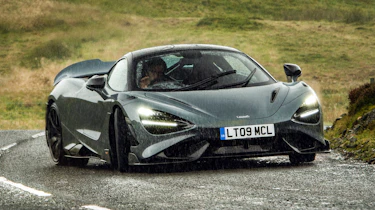
Adding aggression and intensity to a McLaren 720S is something of an ask. So complete was the package that the role of a track-attack supercar was just one of the 720S’s many masks. Nonetheless it managed with the 765LT. On the outside, the more aggressive looks also contribute to a 25 per cent bump in downforce. Under the skin a titanium exhaust system was lighter, gave it the added vocal fry of an LT and contributed to its 755bhp and 590lb ft. It borrowed the Senna’s forged pistons and stronger head gasket and added a sturdier oil pump too for more track suitability. It’s also a useful 80kg lighter. The 765LT is also lower at the front and a hair wider, with recalibrated damping to suit.
The transformative change, though? The 15 per cent shorter final drive for the seven-speed dual-clutch transmission, contributing a great deal to the quoted 2.8sec 0-62mph time. For all the detail changes you’d expect of an LT laced up around it, the 765’s bombshell is how that 4-litre V8 engine rips through the revs and craves ratios. Nonetheless in that true McLaren fashion, it’s how accessible the ferocity of this car is and how rich in feel and detailed in calibration its control points are:
‘The talking point the moment you extricate yourself from the 765LT is its steering,’ Adam Towler wrote. 'Its tactility, perfect weighting regardless of speed and how the calm feedback isn’t impacted by pace. It’s far too fast for the road, but due to its unmatched combination a perfect driving position, chassis balance, intuitive stability systems and that steering precision, is a masterclass of the modern supercar.’
McLaren Artura
-
Star rating 5
-
Basic price from £201,400
-
Read our McLaren Artura review
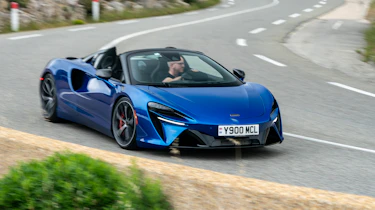
You might have wondered whether moving to hybrid power would erode the purity of McLaren supercars, but a run in an Artura would eradicate those concerns in about 5 minutes. The Artura is as absorbing as modern supercars come, and even more so in its latest, updated form. The hybrid V6 powertrain generates 690bhp, giving it a rapid 0-62mph time of 3sec and a turn of pace that used to be reserved for the very pinnacle of supercars.
On the chassis side, the Artura is clear, communicative and a joy to drive hard, coming alive and communicating it's limits clearly when you reach them. The latest Artura has further refinements in the form of calmer steering with less kickback and more consistent braking feels and performance. The updates make what was already a fabulous supercar – one that came joint third at eCoty 2022 – even better.
McLaren 750S
-
Star rating 5
-
Basic price from £244,760
-
Read our McLaren 750S review
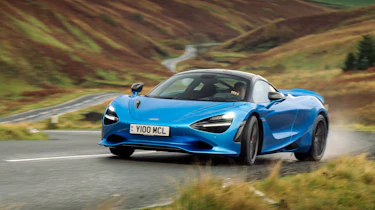
The 750S looks very much like the 720S, and the spec sheet isn't much different either. It still uses a 700bhp+ M840T 4-litre twin-turbo V8, a carbon MonoCell chassis and sophisticated hydraulically cross-linked suspension, but given that the 720 is one of the most intensely involving cars we've driven in the last decade, we don't mind that the 750 is more of the same.
In fact, the 750 is the same but better. Upgrades inspired by the 765LT make it even sharper and more exciting, with revised spring rates, new geometry and tweaked damper settings give it an extra level of bite without sacrificing the 720’s usability. The freefall-style acceleration of its predecessor is even more explosive, too, with the engine now generating 740bhp – and without the assistance of an electric motor. The result is an old school-feeling supercar that makes for a raw and refreshing alternative to hybrid rivals, one that narrowly missed out on evo's Car of the Year crown in 2023.
McLaren Elva
-
Star rating 4.5
-
Used prices from £800,000
-
Read our McLaren Elva review
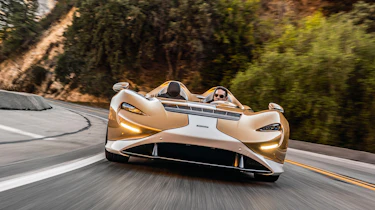
Put aside the cynicism around speedsters that aren’t actually much better than the existing supercars on which they’re based and consider this: the McLaren Elva is perhaps the only McLaren yet to be totally focused on being a satisfying road car. It’s the opposite of a Senna, fully shorn of any aero addenda and much downforce-generating bodywork at all. It’s on the 720S’s set-up in terms of its pro-active chassis control but features essentially the 804bhp version of the 4-litre twin-turbo V8 engine that powers the Senna GT-R.
The result is a visceral experience – not necessarily the most precise, pin-sharp experience, like a Senna or an LT. But more intense than, say, a standard 720S. On top of the Elva being the lightest car from McLaren Automotive yet, weighing just 1198kg dry, it’s also one of the rarest, with just 149 reportedly made.
‘There’s genuine appeal in the way it combines the supple poise of a 720S with even greater agility and next-level performance,’ Jethro Bovingdon wrote. ‘Would it be any less thrilling with a windscreen? Or even a roof? I don’t think so, but I understand that some people love the fresh-air sensations and the unique look that the Elva offers.’