Average car weight climbs 100kg in 10 years with huge impact on emissions
Market trends for larger, heavier cars and SUVs are having a profound effect on the climate, according to Green NCAP’s findings

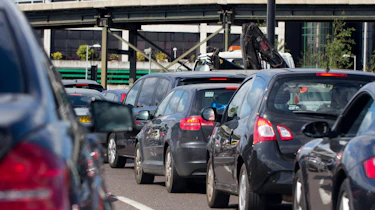
In succumbing to market pulls for heavier cars and SUVs, car manufacturers are advancing in a direction that causes significant harm to the environment, a report from Green NCAP has found. Heavier vehicles bring increased greenhouse gas emissions through their more intensive production, maintenance requirements and energy consumption, and with the average weight of cars sold in Europe increasing by 100kg over the last ten years, the climate is bearing the brunt of this trend.
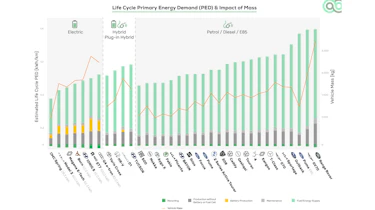
Green NCAP used the average mileage data of 27 EU countries and the UK - along with how each country generates its energy - to calculate the overall environmental impact of producing and owning 34 new cars. The study finds an obvious upward trend of lifetime greenhouse gas emissions and energy demand against vehicle weight, and while electric cars perform 40–50 per cent better than ICE models in the former, the gap closes significantly in terms of their energy demand.
This is primarily due to the comparative extra weight associated with EVs, as Green NCAP technical manager Aleksandar Damyanov notes. ‘Electric vehicles and electrification in general offer huge potential in reducing greenhouse gases, but the ever-increasing trend of heavier vehicles diminishes this prospect’, he said. ‘To counteract this, Green NCAP calls on manufacturers to reduce the mass of their products and calls on consumers to make purchasing decisions that not only consider the powertrain of their new cars, but also consider their weight.’
The popularity of SUVs in recent times is certainly a factor in the 100kg average car weight increase in Europe, and according to Green NCAP, the environmental impact of this is equivalent to an extra 200,000 cars on European roads.
But the problem isn’t confined to ordinary models. Many staple performance cars have seen their kerb weights spiralling upwards with recent generations, and this is well documented at evo.
The G80 BMW M3 is 170kg heavier than its predecessor, the Mercedes-AMG C63 comes in at over two-tons and even the Maserati MC20 - our 2022 Car of the Year - weighed in at a hefty 1655kg on our scales.