The real reason you suddenly can't afford a classic performance car
The modern classic market has gone into hyperdrive, and Meaden’s not impressed
Even if you pay only scant attention to auction results, it can’t have escaped your notice that the classic and particularly modern classic supercar market went nuts over the summer. Most noticeably in the US, where the auctioneers’ gavels fell on record bid after record bid.
Predictably, Ferraris led the way, an F40 selling for $8,365,000, an F50 for $12,105,000, an Enzo (one of three US-market cars painted black) for $10,675,000 and a LaFerrari for $8,695,000, including commission. All were all-time highs for regular, non-charitable auctions. But though extraordinary amounts of money, these special-series Ferraris have always been precious things, commanding the highest values. What hit fewer headlines but blew my mind were some of the bids offered for ordinary series-production Ferraris.
> Ferrari 12 Cilindri Manuale review – the fake manual is brilliant but not perfect
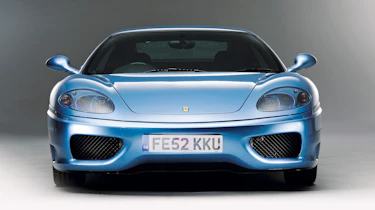
Across Monterey Week, no fewer than three 550 Maranellos found winning bids of more than $600,000, the highest – admittedly a freak with just 527 miles – going for almost $650,000, the ‘cheapest’ still hitting $610,000. Another, with 12,000 miles on the clock, still sold for just over $400,000. Equally bewildering was the $841,000 paid for an 11,000-mile F430 manual, with another selling for similar money.
Even if you accept that the US is a world of its own so far as spending power goes, these prices make no sense. Just a couple of months ago, in preparation for our ’90s Supercar Eras test, I insured an extremely nice, low-mileage 550M for £130k, which was about the top of the market. I’m not sure what they were smoking in the auction rooms at Monterey, but there’s no way a 12k-mile 550M is now worth three times that. Manual 360 Modenas are going the same way, even though they’re far from a great Ferrari.
Why am I bothered? Aside from feeling uncharacteristic socialist pangs about the increasingly obscene, world-skewing gulf between the mega-wealthy and everyone else, as someone who has enjoyed a life-long love affair with cars, it’s how this wealth gap has slowly corrupted the classic and modern classic car scene that I find increasingly unsavoury. It seems our world is now divided between true car enthusiasts, who were spending their money on cars long before they became asset-class items, and the wealthy enthusiasts who happen to have found investment vehicles (excuse the pun) that rarely if ever get driven.
Meanwhile, in the world of current production supercars, it’s a different picture. Ferrari sales remain strong thanks to a fresh range and capped production figures, but anecdotally buyers are increasingly frustrated at hefty depreciation on new models such as the SF90, Purosangue and 296. The problem is just as bad (or probably worse) for Aston Martin and McLaren. Even buyers of GT and RS Porsches are being bitten by oversupply and the prevalence of once-exclusive Paint to Sample colours.
There aren’t many advantages to being 55 years old, but it does give you some perspective. I’m old enough to remember when the people who bought big-ticket supercars did so knowing they were going to take a hammering. Both in running costs and depreciation. Even McLaren F1s lost significant value. Rather heroically, those people bought supercars because they really wanted to, not because they were forced to buy cars they didn’t want so they might be considered for an allocation of the one they did, nor because it was somewhere to park money with a view to making more money without paying any tax.
My point? It feels like we’re now at a tipping point. One where the supercar industry – for too long selfishly geared to serve itself (and its wealthiest customers) – is running out of ideas. Not least because the newer generation of supercar buyers who aren’t mega-wealthy but perhaps rode the wave of cheap credit, or became accustomed to the idea of maybe getting ‘overs’ on list price when they came to sell, are now unwilling to take that pain.
Worse, the cars that legislation is forcing supercar makers to build are way more expensive, less desirable and higher depreciating than the cars they replaced. And thanks to hybrid tech they are increasingly viewed as perilous long-term liabilities.
All of which means that spending power is being pointed at the older, more desirable, less complex modern classics. And so, as the values of the most iconic cars become out of reach, people look to the next rung down, and the next, and the next, which means all the values end up rising, often pricing true enthusiasts out of the scene they love.
Buying a performance car shouldn’t feel like speculating on the stock market, and it certainly shouldn’t feel like clawing your way onto the property ladder. Sadly, this appears to be where we’re at. Great if you’re on it. Crap if you’re not.
This story was first featured in evo issue 351.