New Lotus Esprit V8 engine details revealed – British Ferrari rival to get twin-turbo hybrid power
Horse Powertrains is providing the new twin-turbo V8 for Lotus’s hotly-anticipated supercar
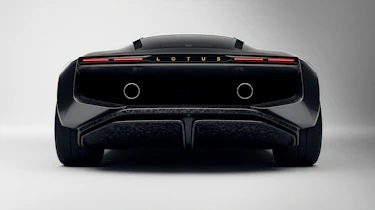
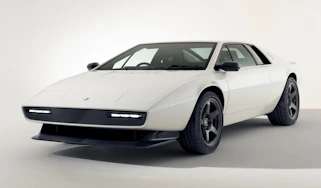
Lotus is bringing the Esprit back as a V8-engined hybrid supercar, built in Europe and going on sale in 2028. Now we can confirm details on its V8 hybrid powertrain, including its size, output and who will be supplying it.
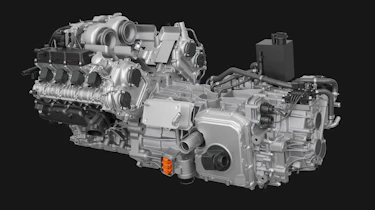
Coming from Lotus’s fellow Geely subsidiary, Horse Powertrains, the V8 will be a 4-litre and package twin-turbochargers above the cylinder heads in a ‘hot-v’ configuration, a-la the Mercedes-AMG 4-litre twin-turbo V8. Power maxes out at 670bhp from the combustion engine alone, while torque is 590 lb ft.
The engine will be mated to Horse’s proprietary eight-speed dual-clutch transmission. The gearbox is said to be rated for torque outputs of up to 774lb ft and be good for shift times of under 20 milliseconds.
While details of the electrified element of the powertrain aren’t confirmed, Horse’s description of the 8LDCT ‘box as a ‘hybrid transmission’ suggests it will feature an integrated electric motor. It’s expected the Esprit will also feature an electric motor of Lotus’s own design to augment the V8, potentially on the supercar’s front axle.
That Horse is providing the V8 for Lotus doesn’t come as a surprise. Horse announced a new 536bhp twin-turbocharged V6 earlier this year, which has the capability to be mated to either a 402bhp or 603bhp electric motor. The V6’s modularity back then suggested it would be the ideal basis for the new V8.
Lotus CEO Feng Qingfeng confirmed the engine would feature in the Type 135 but is still yet to confirm the Esprit name:
‘We are excited to partner with Horse Powertrain to bring its advanced V8 engine and hybrid transmission technology to the upcoming Lotus Type 135. The Horse W40 V8 engine and 8LDCT hybrid transmission represent significant advances in powertrain engineering, combining exceptional power and torque density with a highly integrated design.
'By bringing these technologies together with Lotus’ expertise in lightweight engineering and chassis dynamics, we aim to deliver a new generation of supercar performance, combining outstanding power, efficiency, and the precise, engaging driving experience that defines Lotus.’
2028 Lotus Esprit: What we know so far
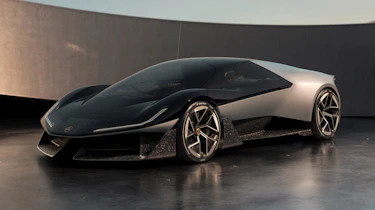
The new Esprit, codenamed Type 135, hasn’t had the easiest of gestation periods. For a start, its Type number was initially applied to the all-electric replacement for the Toyota and Mercedes-AMG powered Emira sports car. Due to launch in 2025 for circa £75,000 it was meant to be offered with a range of electric powertrains ranging from 470bhp to more than 800bhp with a dual motor set-up.
In 2024 Lotus also showed the Theory 1 concept car, a 986bhp all electric hypercar. Principally a design study to present a future ethos that car lends a lot of its styling to the new Esprit, specifically around the rear of the car including the diffuser.
> Lotus ditches all-electric plans, launches 939bhp Eletre X-hybrid
Lotus has committed that the new fifth-generation Esprit will be built in Europe. In the last 18 months work has been carried out at the company’s Hethel facility to create a flexible production hub, and the company still operates the Lotus Tech Innovation Centre in Frankfurt, Germany.
A carbon fibre monocoque tub is expected to feature at the new Esprit’s core, with extruded aluminium subframes to hang the suspension from. All very McLaren.
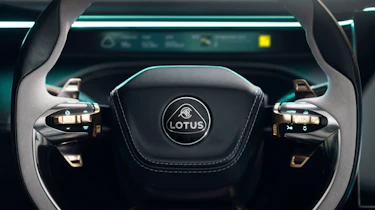
It’s safe to say that the new Esprit will share much of the original’s core DNA in terms of its mid-engined layout, class leading Lotus dynamics and distinctive wedge-shaped design. What it’s unlikely to offer is the Lotus affordability.
Where the first four generations of Esprit not only out-paced their rivals on the road for ride and handling, and power to weight, they also out-punched many on price, too, undercutting key rivals from Aston Martin, Honda, Ferrari and Porsche.
However, the new Esprit will wear a heavy price expected to be closer to that of a Ferrari 296, McLaren Artura and Lamborghini Temerario. It will more than likely be the first Lotus priced over £200,000, or perhaps higher still if they decide to target the V8-engined hybrid 849 Testarossa.
A new Lotus Esprit has been called for by enthusiasts for over a decade, a concept that Lotus has been happy to entertain with suggestions of an all-electric example. But the collapse of both the electric hypercar market (if there ever was one to collapse) and slow down of electric vehicle growth outside of short-term increases in interest during the start of the Middle East conflict, the sports and supercar market has a future that will still be petrol powered with electrical assistance. Hopefully Lotus is able to capitalise with a fitting return of the Esprit name.
Lotus Focus 2030 strategy – combustion engines are back
The new Focus 2030 strategy will see Lotus develop a product portfolio consisting of battery electric and plug-in hybrid cars, with a 60:40 split in favour of PHEVs. Internal combustion engined cars will consist of more specialist Emira models expected to make up a small proportion of global sales.
Under Geely ownership Lotus has yet to establish itself and secure its financial future as many had hoped. In 2025 Lotus sold 6,520 cars, a 46 per cent drop on 2024’s sales. Of that total, 1,968 were sports cars with the remaining number made up of Eletre and Emira models, the company’s all electric SUV and Porsche Taycan rival. As a consequence total revenue was down 44 per cent to $519 million, with an operating loss of $423 million a 46 percent year-on-year improvement.
Under its new plan Lotus expects China to be a growth area for its new energy vehicles (BEV and PHEV), Europe will focus on building on the racing heritage and British engineering equity to influence the company’s powertrain portfolio. The strategy for North America will remain with sportscars and the growing electric and hybrid SUV market in Canada (the region accounted for 16 percent of all Lotus sales in 2025, a 21 per cent drop on the previous year).