Lotus Emira review – better than ever, but almost Porsche 911 money
Now available in Turbo, Turbo SE, V6 and 420 Sport guises, the Emira is more complete but also more expensive than ever
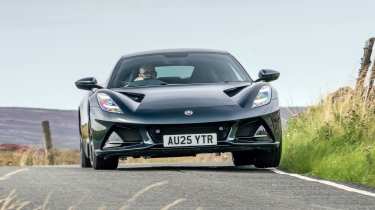
Lotus’s new era sports car, first promised to be its last powered by petrol, is now four years old. A lot’s changed since its reveal, both in terms of Lotus’s trajectory and the Emira itself. It’s taken some work, but here now is a car worthy of bearing the weight of Hethel’s sports car heritage in a lineup that looks so otherwise unfamiliar to the Lotus faithful, as the brand pivots back to combustion power.
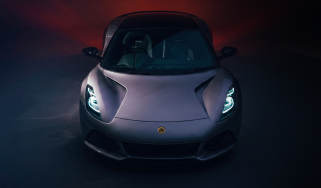
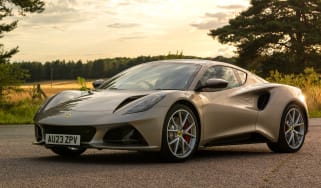
The Emira might be heavier and more luxurious than its immediate predecessor, the Evora, but it’s undoubtedly a proper Lotus, and a proper sports car. The junior supercar styling is just as easy on the eye today as it was on the car’s 2022 launch.
Now, with the mid-range sports car market all but extinguished, the Emira’s tried-and-tested combination of a mid-engined chassis, hydraulic steering assistance and the offering of a charismatic multi-cylinder engine available with manual gearbox are more appealing than ever. The Turbo and Turbo SE models have also refined the four-cylinder offering to be much more appealing, while the 420 Sport has just arrived to offer the kind of focus and edge we always knew the Emira was capable of sustaining.
It isn’t without its foibles, and at today’s pricing it strays perilously close to the mighty Porsche 911, but it’s not far off becoming one of the greats.
Engine, gearbox and performance
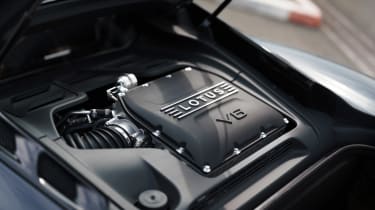
- Toyota-derived V6 and AMG four-cylinder
- Manual available with the V6, AMG is DCT only
- 420 Sport features a more powerful AMG engine and responsive DCT
More reviews
It’s unlikely Toyota Camry owners will notice the Emira’s 3.5-litre supercharged V6 engine as the same base unit in their dreary saloon, and with good reason, because it remains an engine stacked with character. It’s not the most sonorous to listen to, but it’s cultured where McLaren’s V8 is gruff, hard edged where Porsche’s flat-six is silky smooth.
> Lotus Evora (2009 - 2021) – review, history and specs
It’s beginning to feel its age, though. Off the line the throttle pick-up isn’t as sharp as expected, some of which you can put down to the 1457kg kerb weight (or 1486kg, as measured on our scales). But as you step into the midrange a quick jog snaps to a furious sprint as the 394bhp Emira feels good for its 4.3-second 0-60mph time and 180mph maximum. Its performance surge tails off quicker than you might expect, the 6800rpm redline feeling a long way off, which means the six-speed manual is never far from being called into action, which is both a blessing and a hindrance.
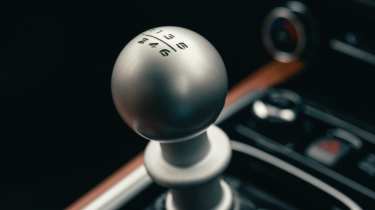
There’s a no-nonsense physicality and mechanical feel to the shift, each up and down change requiring a very positive action from your wrist, but more often than not even giving it 100 per cent of your attention can result in a botched shift, with second to third (and down again) the stickiest – all the across the gate upshifts aren’t as instinctive as the best out there. In the Evora this powertrain blends into the background as the rest of the car demands your attention, but the superb refinement and useability of the Emira only highlights that the V6 is past its best.
The Emira's four-cylinder option, an AMG-sourced four, made 360bhp on launch but has since been joined by the 400bhp Turbo SE, just shy of the 415bhp it makes in the AMG A45. It cuts 40kg from the weight of the V6 and is happier to rev, just as it is in the Mercedes, though the engine note is somewhat uninspiring, whooshing turbo noises aside. It doesn’t want for performance, though, even in earlier form, and in some ways feels better matched to the chassis than the V6.

The Emira 420 Sport takes the A45’s fully-fledged 415bhp engine and pairs it with a revised, more focussed transmission tune. It’s nominally quicker than the Turbo SE, getting to 62mph in 3.9sec, on the way to a 186mph top speed. It doesn’t feel much faster at the bottom end but there’s an extra bit of intensity high up, with gearshift cracks reminiscent of the McLaren 675LT’s ignition cuts.
‘Time is generous to this car, wary first impressions morphing into a warmer connection as the miles pass by. The engine just never steps up from functional to inspirational. Its various chuffs, whistles and huffs bring a welcome dose of theatre, but its power delivery feels punchy and efficient rather than rousing or effervescent. You ride its wave of torque and snap those gearshifts home rather than savouring every rev. ’Twas ever thus in the turbocharged world, of course, and it’s undoubtedly a quick car.’ – Stephen Dobie, evo contributor, who tested the Emira Turbo SE.
Ride and handling
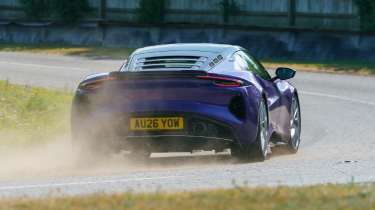
- Flows down the road like a proper Lotus
- Natural and involving to drive
- 420 Sport model is an Emira that’s more focused and happier at the limit
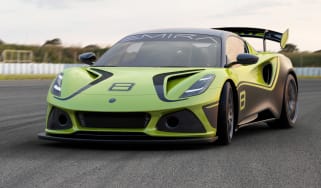
Three chassis options are available for the Emira, with the Dynamic Pack offering Tour or Sport settings, the latter featuring stiffer spring and damper rates and also available with a limited-slip differential. Both feature fixed rates for springs and dampers, with the switch in driver modes adjusting throttle and steering response only. The 420 Sport is a step up from the Sport chassis, with the option of adjustable Multimatic dampers that add even more focus. It also features revised aerodynamics for improved airflow to the engine, as well as increased downforce.
Our experiences with the Emira have so far been with Sport chassis cars, and true to Lotus form have a beautiful flow to their ride, while feeding back everything you need to know about the surface and nothing you don’t. There’s a sense of it floating across the asphalt but with none of the aloofness this would traditionally be accompanied by.
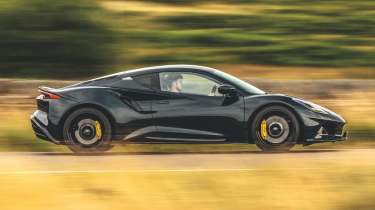
It takes very few miles to dial yourself into the Emira and after a couple of hundred extra miles you don’t want to get out. It feels every inch the next generation sports car Lotus wants and needs it to be. Those traditional Lotus controls weights are all present and correct, providing an organic link to everything it does from how it steers, rides and stops all three combining to deliver a connected driving experience like few others. It pours itself into corners with a linear calmness, settles sweetly and leans on its rear axle, loading the diff and feeling every inch the complete sports car.

The Emira isn’t quite perfect however. While more natural to drive than its Evora predecessor, it doesn’t quite have the same Elise-like detail to its steering, and there’s also a remoteness around the straight ahead, where older Lotus sports cars seemed to react as much on thought as on fingertips. Very occasionally, we’ve also found surfaces where the car’s composure comes undone, wandering and tramlining and feeling unsettled, where rivals like the A110 and Cayman are completely unfazed.
In standard form at least, it’s also not a car that revels in being really hustled. Lean on the Emira more, push it harder and ask more from it than everything you have enjoyed until now, at around eight-tenths of its ability it starts to peel away at the edges. Push harder and a Sport chassis that felt expertly tied down, blending control with pliancy begins to feel soft-edged, the front tyres less keyed into the surface, the body control less resolute as the loads build, and the rear-biased (61 per cent) weight balance makes itself felt.
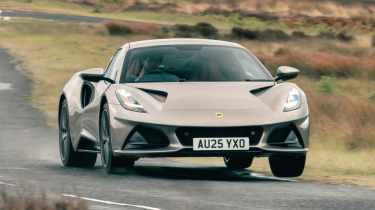
It takes the Emira from a car you trust implicitly to one that requires you to be on top of it every time you step up to its edge, not because there’s a feral nature that requires a strong hand, but because a mask falls over the car that leaves you on your own. The delicacy, the precision and sense of connection can’t quite keep up with your increased commitment and desire to push harder.
The 420 Sport is an altogether tauter, more focused Emira. The Multimatic dampers are adjustable for both bump and rebound, with factory recommended settings for road and track use. On the road, that makes it keyed into the road and happier with increasing pace unlike any Emira before it. It’s also the most similar in feel to Lotuses of the past than any Emira before it. The only catch is that by the time you’re ticking the box for the Handling Pack the dampers are a part of, the Emira 420 Sport is close to £120,000… or for context, not much at all off what you’ll pay for a Porsche 911 Carrera T.
Driver’s note
‘The Emira’s talents take some warming to, compared to the instant rightness of its Alpine and Porsche rivals. Despite an excellent ride it feels more at home on smoother roads, and you need a road trip to appreciate the strides Lotus has made in refinement over the old Evora’ – Antony Ingram, contributing writer, who drove the Emira on the sports car group test in evo 336
Interior and tech
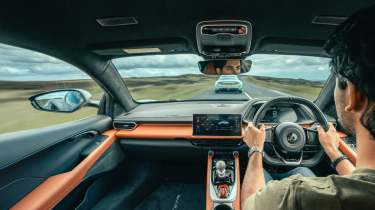
- Cabin style and quality easily eclipse previous Lotus
- Digital tech is effective but not class-leading
- Comfortable and fairly refined over longer distances
Those familiar with Lotus of old – and we don’t mean Elan Sprints and Eclats, but late-model Elises and Evoras – will probably be blown away by the strides Lotus has made with the Emira’s interior ambience and quality. The better, and perhaps more relevant metric is that if you’re moving laterally from a Porsche or other high five-figure sports car, you’re still unlikely to be disappointed.
Changes to the extruded aluminium chassis have improved ingress and egress – that’s no longer a topic of conversation. Like the Evora the seating position initially feels a little high (especially in comparison with the low-slung A110 and Cayman pews), but much like the Evora, or an original Honda NSX, this is partly because of the Emira’s low scuttle, giving you a fabulous view of the road. The seating is comfortable too – long trips are unlikely to cause many aches and pains.
The not quite round, not quite square steering wheel looks a little odd but feels good to have in your hands, although some will find its rim a little thick to grasp. The TFT instruments are clear and well lit in all light conditions, but they lack the ability to be configured to show a traditional speedo and rev counter dial leaving you with bar-style rev counter and large numerical display for your speed. The 10.25-inch central touch screen is home to everything else bar the heater controls and toggle switch on the central transmission tunnel for the driving modes. It’s all instinctive and simple to use on the move and if you own a Volvo you’ll recognise the switchgear, which is no bad thing.
The 420 Sport does not add the option of a more focused seat, which would go a long way to completing its evolution into a true Cayman GT4-alike sports car. The standard seats are good but lack the support and properly hunkered-down driving position you might expect of a car of this type. The revised paddles and steering wheel are welcome, though, as is the more liberal use of alcantara trim and back-coloured seat perforation pioneered on the Evija. New for the 420 Sport and now available across all Emiras is the removable roof panel, a £5000 option.
Price and rivals
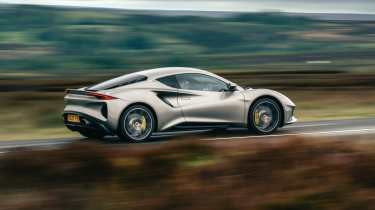
The Emira launched at £59,995 with the AMG four-cylinder, though that price has since risen to £79,500, jumping another ten grand in Turbo SE trim (with the Driver’s Pack and sports suspension as standard) and up to £92,500 for the SE Racing Line special edition. The V6 SE nudges perilously close to the hundred-grand mental barrier at £96,500, and the SE Racing Line version gets even closer, just £500 shy.
The new Emira 420 Sport starts at a fairly dizzying £105,900. The Handling Pack with the dampers that are really needed to set it apart is a £12,900 extra however. That’s close to £120,000 before the road fund licence is paid and any carbon packs, or extra features you might also want…
That means that in the last couple of years the Emira has gone from heartland Alpine A110 and Porsche 718 Cayman territory, to scratching on the door of a Porsche 911 if you want six cylinders, though its price has recently jumped to over £110,000 for a Carrera. The Alpine and the Cayman are now off-sale, meaning the Emira now sits on its own in between the 911 and other less focused options, like BMW’s M2 and the Ford Mustang GT. You could also spend well-optioned Emira 420 Sport money on a Morgan Supersport 400. Or, half the price of a basic Emira on a top-spec Mazda MX-5…
Lotus Emira specs
| Turbo | Turbo SE | V6 | 420 Sport | |
|---|---|---|---|---|
| Engine | 4cyl, 1991cc turbocharged | 4cyl, 1991cc turbocharged | V6, 3456cc, supercharged | 4cyl, 1991cc turbocharged |
| Power | 360bhp @ 6600rpm | 400bhp @ 6800rpm | 400bhp @ 6800rpm | 416bhp @ 6500rpm |
| Torque | 317lb ft @ 3000rpm | 354lb ft @ 3000rpm | 310lb ft @ 3500rpm | 369lb ft @ 5500rpm |
| Weight | 1446kg (claimed) | 1445kg (claimed) | 1457kg (claimed) | 1430kg (with Lightweight Handling Pack) |
| Tyres | Goodyear Eagle F1 Supersport | Goodyear Eagle F1 Supersport | Goodyear Eagle F1 Supersport | Michelin Pilot Sport Cup 2 |
| 0-62mph | 4.4sec | 4.0sec | 4.3sec | 3.9sec |
| Top speed | 171mph | 181mph | 180mph | 186mph |
| Basic price | £79,500 | £89,500 | £96,500 | £105,900 |