Aston Martin's 697bhp DBX707 super SUV is now half price, but I can't see why
As our 697bhp super–SUV departs, we examine if it improved upon the entry-level DBX we previously ran on the fleet

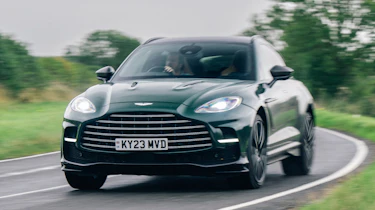
We have covered over 20,000 miles in Aston Martin DBXs on evo’s Fast Fleet, initially with the original 542bhp model for six months in 2021, then in this 697bhp 707 version. It remains one of the few dynamic success stories within the performance SUV sector. Alongside Porsche’s Cayenne, the old Turbo GT especially, and Ferrari’s Purosangue, it’s one of a small group of 2.2-ton-plus behemoths that can walk the walk they talk so much about. Audi’s RS Q8, BMW’s X5/X6/XM, anything with an AMG badge, the Urus… they’re predominately marketing exercises chasing numbers. The lesser models in their families are all better at doing what they were initially designed to do.
Which is where the DBX scores so highly. It was designed to be a luxury performance SUV from the outset, and it won’t come as a surprise to hear that the 707 hits harder when it comes to its performance brief.
> Aston Martin DBX S review – beating the Ferrari Purosangue to the top of the class
Its advantage and greater impression of speed over the original 542 wasn’t when you wound the drive mode up to Sport+ (via the new rotary control in the centre console rather than the push controls of the original) and pretended you were in a Vantage GT8, because despite its crisper, more precise steering, tighter body control and more detailed balance, there are very few roads that are suitable for a car of this size to be let fully off its leash. Rather it was when you wanted to make progress that its 155bhp and 147lb ft advantage (giving totals of 697bhp and 693lb ft) was instantly welcome and very much needed to get 2245kg moving swiftly and on its toes with less effort.
More reviews
The investment that went into developing the 707’s chassis was one that Aston couldn’t afford when developing the original DBX, and the dynamic improvement was abundantly accessible when the right road came along, or when I found myself on Silverstone’s GP circuit: a car of this size and bulk has no right to carve such clean lines and make you such an integral part of the process. There were drives in the 707 that had me thinking Aston Martin had created an upscaled M3 Touring.
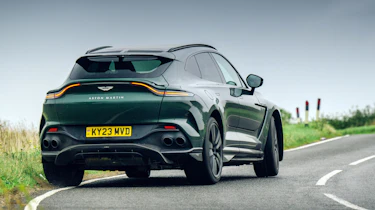
Its size and mass never truly drift away, though, and the deeper you dive into the 707’s character, the closer you get to reaching the limit of its (high) ability. Allow your enthusiasm to run away with you and that solid body control begins to soften, the forces squeezed through the air springs and active dampers eventually gaining the upper hand as body roll takes hold, removing some of the clarity and precision the 707 displays until that point.
It outperformed the standard DBX in every area bar ride quality, the more powerful model’s 23-inch wheel and tyres far more sensitive to tyre pressures. Where it does stumble, however, is when it comes to expected luxury. Even before the elegance of the new DB12 was revealed, the DBX’s interior came in for criticism. A carry-over from the DB11/Vantage/DBS era, it never had the design, details or material finish expected of a car costing the thick end of £200,000. It looked dated in 2020 when it was launched. The old Mercedes HMI system has now been replaced, along with a large proportion of the car’s interior, but despite the impressive configurability Aston Martin offers – who knew gold carbonfibre would work with tan leather? – the 707 lacks the quality of a Range Rover and the detailing of a Bentley.
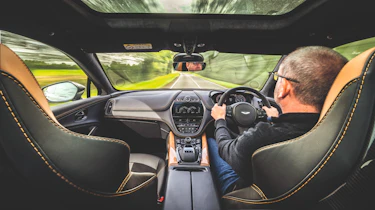
The team at Gaydon also needed to work on the 707’s exterior fit and finish, specifically the aerokit that completes the car’s design. From afar it adds the aggression we’re told the market demands, but up close the gaps between the additional trim elements on our car were unforgivable. Thankfully, the range-topping DBX S and more subdued DBX GT launched since this car go some way to resolving these issues.
Is the DBX still one of the best of its breed? Yes it is. The Purosangue costs an additional six figures again and, V12 aside, I struggle to see where the extra money goes, the Bentayga can’t shake off its VW Group DNA dynamically, and the Urus makes the 707 look smart and sophisticated. Yet having been fortunate to run both versions of Aston’s SUV, my choice would be the 707’s engine and chassis clothed in the original’s simpler, cleaner and more classy design. Better still, you'll now pay half of its original list price if you dive through the classifieds...
| Total mileage | 10,085 |
|---|---|
| Overall mpg | 21.7 |
| Total costs | £0 |
| Purchase price | £223,000 |
| Value today | c£115,000 |
This story was first featured in evo issue 318.