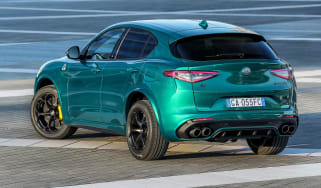
Alfa Romeo Stelvio Quadrifoglio review – a uniquely thrilling performance SUV
The Stelvio Quadrifoglio isn’t the most polished or sophisticated fast SUV, but in 2026 it remains one of the most exciting
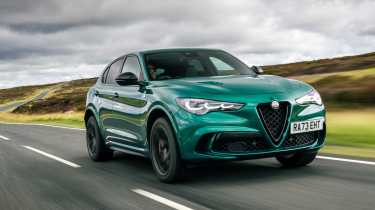
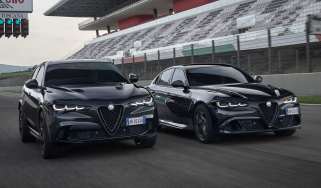
It’s hard to believe, but it’s been nearly ten years since Alfa Romeo decided to launch a pair of high-performance models to take on BMW M, and kick start a new era of genuinely driver-focused cars – the Giulia and Stelvio Quadrifoglios. The Giulia has since established itself as one of the all-time great supersaloons, and though the taller, SUV-shaped Stelvio was never going to be as endearing to enthusiasts in concept, it’s proved to be a cracking performance car in its own right – a genuine foil to the hot Porsche Macans and BMW X3s of the world.
The Stelvio and Giulia Quadrifoglios were developed by something of a skunkworks engineering team, led by Roberto Fedeli, whose CV includes Ferrari’s 599, F12 and 458 Speciale. The Stelvio is built around the same ‘Giorgio’ platform as the saloon with a 513bhp V6, which derives some of its make-up from an engine made up the road in Maranello.
Though the Porsche Macan GTS and the (now defunct) Jaguar F-Pace SVR might be more rounded and luxurious, the Stelvio remains one of the world’s only truly engaging SUVs, and a car you’d happily drive just for the fun of it. Updates to the styling, powertrain and chassis in recent years have boosted its appeal just enough for it to remain a worthy, exciting alternative to the mainstream – even if it does cost a faintly ridiculous £95k…
Engine, gearbox and technical highlights
- 2.9-litre twin-turbo V6 shared with the Giulia Quadrifoglio, generating over 500bhp
- Four-wheel drive with a carbon propshaft and a mechanical limited-slip differential
- 20- or 21-inch wheels, with carbon ceramic brakes optional
More reviews
In-depth reviews
- Alfa Romeo Stelvio 2025 review – a worthy alternative to the BMW X3?
- Alfa Romeo Stelvio Quadrifoglio – engine, gearbox and technical highlights
Long term tests
Reviews
Beneath the Stelvio Quadrifoglio’s aluminium bonnet is the 2.9-litre, twin-turbo V6 as found in the Giulia Quadrifoglio. Like the Giulia, for 2024 power was increased from 503bhp to 513bhp (following a similar upgrade for 100th Anniversary special editions in 2023). Torque, too, is identical to the Giulia Q’s at 442lb ft, but the eight-speed ZF gearbox has been recalibrated to suit both the increase in kerb weight over the saloon and the four-wheel-drive transmission. The Quadrifoglio reaches 62mph in 3.8sec and cracks 177mph flat out.
Default mode for the Stelvio Quadrifoglio is rear-wheel drive, and it’s only when the system detects an angle of slip or a loss of traction that it will direct up to 50 per cent of the engine’s torque to the front wheels through a carbon propshaft. A rear limited-slip differential, active torque vectoring and Alfa’s Pro-DNA switchable drive mode system are all standard.
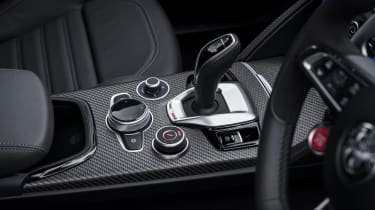
The DNA switch allows the driver to switch between Dynamic, Natural and Advanced Efficiency, with a further Race mode available via an extra twist of the switch, disabling the stability and traction control systems. That also increases the volume of the exhaust system and speeds up gearchanges to be as swift as 150 milliseconds. Advanced Efficiency helps fuel consumption by enabling cylinder deactivation and minimising transmission loss under deceleration, plus switching to a softer throttle map.
The Quadrifoglio comes fitted with cast-iron brakes, although carbon-ceramics are an option. Both 20- and 21-inch wheel packages are fitted with a Pirelli P Zero tyre by default. A set of Pirelli winter tyres has also been homologated for the Stelvio Quadrifoglio.
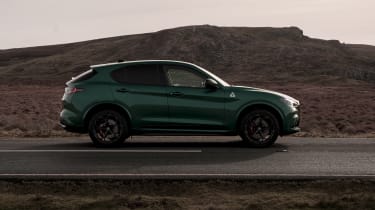
Aluminium features extensively throughout the vehicle’s structure and chassis, keeping its weight comparatively low compared to rivals at 1830kg (1850kg for 2024-on models). If that sounds like a lot (and it is), for reference the all-aluminium F-Pace SVR weighs in at 1995kg, despite only being marginally bigger on the road.
The suspension has the same engineering-first layout as the Giulia saloon, pairing a set of forged aluminium double wishbones at the front to a four-and-a-half-link system at the rear. The doors, brake carriers, wheelarches and the engine are all made of aluminium too, and the bonnet is made of carbon.
A 2024 update brought revised software for the standard-fit adaptive dampers, partly informed by lessons learned in the special-edition Alfa Giulia GTA. The dynamics are also enhanced by the new mechanical differential at the rear. The previous electronic torque-vectoring unit could be less predictable on the limit, and prone to overheating during very hard driving, hence the change to the mechanical unit despite its extra cost.
Driver’s note
‘It’s getting old, the interior is inexcusable for a near-£100k car, and there are more sophisticated rivals but the Stelvio still gets under my skin somehow. It almost feels like a mutant 500bhp hot hatch – anyone who doesn’t crack a smile driving this must have a heart of stone.’ – Yousuf Ashraf, evo Senior Staff Writer, who tested the Alfa Romeo Stelvio Quadrifoglio on the road in the UK
Performance, ride and handling
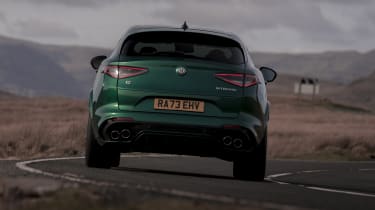
- V6 is flexible and rev happy, with ferocious performance
- Lacks the Giulia’s fluidity and poise, but deeply exciting for a performance SUV
- Ride is gnarlier than a Porsche Macan or Jaguar F-Pace SVR
From the get-go the Stelvio Q feels light and responsive and benefits from the quick and direct steering similar to the Giulia Quadrifoglio’s, giving it a level of response that’s unmatched for a tallish SUV weighing the wrong side of 1800kg. The steering’s interaction with the wheels is backed up by the Quad’s intense geometry set-up, which like the most aggressive sports and supercars compromises on day-to-day useability – the turning circle is poor, and there’s more scrub on full-lock than some other cars – for the sake of front-end grip and response.
The front axle puts its power down well, and the steering remains largely free of corruption. It mostly feels like the Stelvio is rear-wheel drive with an unnatural amount of traction – a similar feeling to that felt on modern BMW M products with xDrive fitted.
Overall, the 2.9-litre V6 loses none of its brio with the extra weight and driven wheels attached to it compared to the Giulia. In fact it's more useable here thanks to four-wheel drive, although it is still useful to remember that this is a part-time rear-biased system – it’ll still squirm if you’re greedy with the throttle.
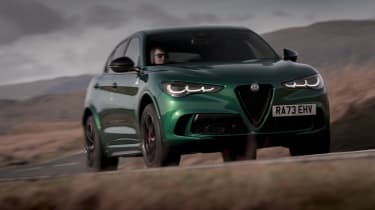
Its power delivery isn’t just rapid, it’s savage, ripping up the rev range with incredible urgency – it almost feels as if the car’s on a rolling road. There’s also a real timbre to its exhaust note, and together with the supercar-like pace makes the Stelvio’s powertrain distinctly enjoyable at all speeds.
Left in automatic mode the ZF delivers each ratio with a relatively seamless shift, but as with the Giulia, you’ll likely want to use the beautiful aluminium paddles fitted to the steering column and change gear yourself. Unless you’re in Race mode, the gearbox doesn’t downshift as you approach a corner, instead waiting for you to get on the power before kicking down.
It’s worthwhile to select Dynamic or Race mode on the DNA system, even if you’re using manual mode, because not only do the throttle’s response and the ZF’s shifts sharpen up, but the ESP loosens its reins, too (it switches off altogether in Race mode) and the exhaust valves open to increase the volume.
The DNA settings also alter the dampers’ stiffness. In all modes, the ride is much less pliant and forgiving than the Giulia Quadrifoglio, particularly so in Dynamic. The upside is that body roll and pitch is better contained in Dynamic and the firmer-still Race, though bumps can make the Stelvio feel bouncy and unsettled. However, the damper button in the middle of the DNA dial allows you to tone down the dampers by one setting, so in Race mode you can select the Dynamic damper setting, and in Dynamic the Natural setting, and so forth.
Although the 21-inch wheel option holds plenty of visual appeal, it further impacts the ride quality, so it’s worth test driving this option before making a decision; the standard 20-inch wheels are likely to be a comfier choice.
Driver’s note
‘The Stelvio Quadrifoglio isn’t the obvious choice when it comes to performance SUVs. It’s not the most refined, most spacious, or most tech-laden in its class, but it does have bags of charisma. It feels special in a way that few performance SUVs manage to.’ – Aston Parrott, evo Creative Editor, who ran the Alfa Romeo Stelvio Quadrifoglio for six months
MPG and running costs
Alfa Romeo’s official MPG rating is 23.9mpg on the WLTP cycle, a figure that’s difficult to match in the real world. Over the course of more than eight months with a pre-2024 Stelvio Quadrifoglio on our Fast Fleet, we managed an average of 21.3mpg, but found on limited occasions it would rise to closer to 30mpg on gentle motorway cruises.
Over the course of nearly 18,000 miles it also needed an oil change, which cost just over £300, and two sets of rubber (one being winter rubber, admittedly) that cost somewhere around £900 for a set. The Pirelli P Zero standard rubber performed well, but the aggressive geometry set-up and low wear rating will make tyres an expensive enterprise, especially if you upgrade to the new 21-inch options.
There are also some question marks over the long-term reliability of the power and drivetrains, as with Stelvios now coming to the end of their warranty period, dealership workshops have started murmuring about issues surrounding the turbochargers and the older electronically controlled differentials.
The wide tyres may also make regular touch ups around the lower surfaces a requirement if you wish to keep it free of excessive stone chips.
Interior and technology
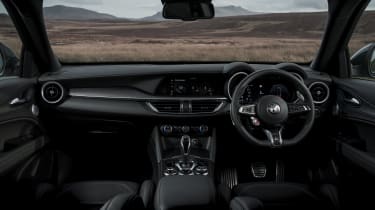
It’s fair to say that the interior struggles to warrant the Quadrifoglio’s £95k+ price tag in terms of its subjective feel and dated appearance.
Standard equipment is substantial and the basics are right, such as the firm, bolstered seats (although it took this tester a while to establish a comfortable driving position), well-shaped and nicely trimmed steering wheel and wonderfully tactile aluminium paddles behind, but the overall interior is not up to the high standards seen in rivals such as the Porsche Macan.
Post-2024 cars get a three-dimensional carbonfibre finish throughout much of the interior as standard, which is an acquired taste. They also get a new configurable digital TFT screen for the instrument panel ahead of the wheel, within the traditional dashboard cowling. It takes a little while to learn the best combination of graphics and to navigate through the different displays until you become familiar with it, but it’s an up-to-date set-up that helps to keep the Stelvio cabin feeling contemporary.
Something that to some testers feels slightly compromised is the seating position, which like in many SUVs with saloon car origins, cants the driver forward ever so slightly. It’s as if the steering wheel doesn’t so much level out in front of you as rise from somewhere lower beneath your feet. If you’ve driven a Volkswagen Tiguan, you’ll know what we mean.
Interior space is otherwise good, sitting somewhere between that of an Audi Q3 and Q5, and the boot is certainly more than big enough to cope with an evo photographer’s gear as Aston Parrott found out while running one as a long-term test car.
Living with it
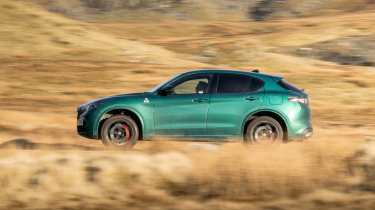
We’ve run two Stelvio Quadrifoglios on evo’s long-term test fleet – the first back in 2019, and another – the latest facelifted version – in 2025. Here’s what evo photographer Aston Parrott had to say about the newer model:
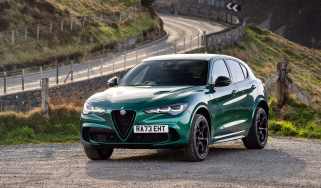
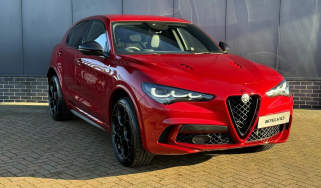
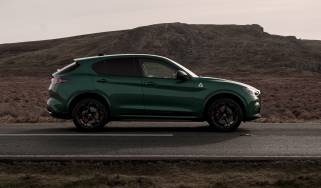
‘At a glance, the 2024-model-year Stelvio Quadrifoglio doesn’t look dramatically different from the original, and that’s no bad thing. Alfa has kept the same classic-style five-hole 20-inch wheels and made only subtle tweaks to the rest of the exterior: adaptive full-LED headlights with an updated DRL graphic give it a fresher face, but otherwise it’s still the same aggressive, purposeful-looking SUV.
‘Under the bonnet, the 2.9-litre twin-turbocharged V6 remains, now pushing out 513bhp – up a modest 10bhp. Drive is still sent through an eight-speed auto to all four wheels, but the old torque-vectoring differential has been swapped for a purely mechanical one, as per the Giulia Quadrifoglio, where we found it more predictable in its behaviour and less prone to overheating. Unsurprisingly, the numbers haven’t changed much: the 0-62mph claim is still 3.8 seconds, while top speed has risen by 1mph to 177. That’s still properly quick for a family-friendly SUV, and if my last experience is anything to go by, it’ll feel every bit as rapid as those stats suggest.
‘Inside, the Stelvio sticks to largely the same formula as before: no oversized screens or unnecessary distractions have crept in, so there’s just the right amount of tech for it to feel modern without overcomplicating things. The standard leather sports seats provide plenty of support (more extreme Sparcos are a £3250 option), while the new, fully digital instrument cluster is crisp and clear.
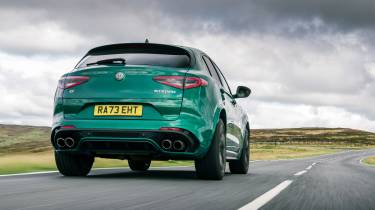
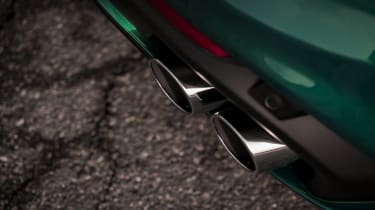
‘Options on our car include Montreal Green paint (£2000), red brake calipers (£450), an intelligent speed control upgrade for the driver assistance tech (£1100), and an Akrapovic sports exhaust (£3500). I’ve driven Stelvio Quadrifoglios with and without the Akrapovic system and there’s no question it adds an extra layer of intensity to the driving experience, bringing a sharper, more characterful V6 soundtrack punctuated by pops and bangs on overrun. Altogether, our car came in at £94,245 when it was new last year (it spent time performing other press fleet duties before we got our hands on it). Brand new today, you’d be looking at over £100k for the same spec – or a price starting with a seven if you’re happy not to be the first registered keeper and for the car to have covered a few dozen miles.
‘Behind the wheel, the seating position remains a little high, and some of the old quirks linger, such as the way the tyres scrub on full lock due to the geo settings. The brakes are seriously sharp at the top of the pedal’s travel too, with just the lightest touch enough to dramatically slow the car (and this is with the standard cast-iron items, not the £7200 carbon-ceramics). It takes a bit of getting used to, but after a few miles you start to adapt to its responses. The revised suspension has a noticeable firmness to it by default, so my go-to set-up is Sport mode for the powertrain but with the suspension returned to soft – the perfect balance for a proper stretch of road. And when that road arrives, the Stelvio still feels like a true Alfa: fast, charismatic, and a little bit wild. It’s hard not to love it.
‘I really enjoyed my time with our previous Stelvio Quadrifoglio, and it looks like time hasn’t tarnished the model’s appeal.’
Prices, specs and rivals
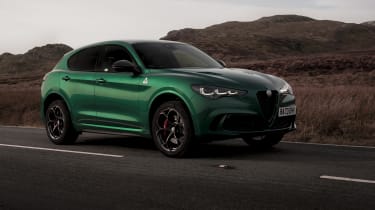
Prior to 2024, the Stelvio Quadrifoglio cost £78,719. At the time of writing, its price has increased to a quite incredible £95,890. Big money for a near-ten-year-old car…
The Quadrifoglio is only available in one highly specified form, rather than in a range of trims. The list of standard equipment is extensive, including a valved sports exhaust system, DNA drive mode selector, adaptive dampers, and the aforementioned rear limited-slip differential. Carbon-ceramic brakes are available as an option to replace the standard cast-iron discs, though it’s a far from cheap box to tick. Sparco carbonfibre-backed bucket seats, which look fabulous and are surprisingly comfortable, are another tasty option.
In terms of rivals, the BMW X4 M is a luxurious and potent car, but doesn’t offer the most inspiring driving experience. The Mercedes-AMG GLC63 S features a 671bhp four-cylinder hybrid powertrain, but is significantly pricier (£125k), and lacks the Alfa’s poise and interaction.
The Jaguar F-Pace SVR is a more worthy rival but has gone off sale as Jaguar prepares for an all-electric future. Like the Alfa, it’s one of the more expressive performance SUVs available, and comes with a cracking 542bhp supercharged V8.
The Alfa’s most adept rival is the Porsche Macan, particularly in GTS form. With only 434bhp it’s nothing like as aggressive or entertaining as the Alfa, even if its broad capability impresses.