When will we get sick of retro cars? Carmakers need to be careful
‘We need to pace it a little bit,’ are words from Renault’s design boss that the industry might want to bear in mind on the subject of retro design…

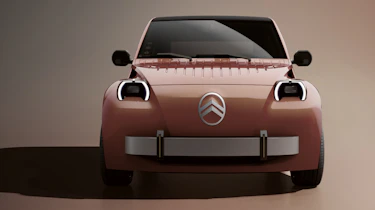
It’s a bad time to be one of those rare haters of retro car design. If you count yourself among that slightly curmudgeonly minority, the 2026 Paris Motor Show was certainly a bad place to find yourself. Inspired by the success of the Renault 5 and desperate for anything to give it an edge over the Chinese onslaught on its market share, the European car industry appears to have gone all-in on heritage and nostalgia.
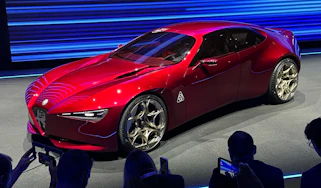
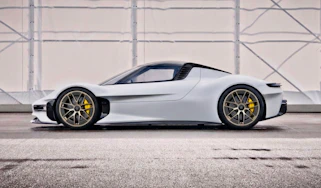
Wandering the Paris show’s halls, I had great fun, finding myself for the first time in a while looking upon everyday metal and feeling optimism and desire. It wasn’t just the exotic Alpine A310 Vision or the wild 1980s rally-inspired Peugeot E-T16, but the Citroën 2 CV – projected to arrive in production form in 2028 priced from less than £15k – and Renault’s E-Space, a gloriously trad-futuristic MPV Concept that felt like a bitten thumb (and flipped bird) to SUV and crossover homogeneity, even if its designers wouldn’t admit it.
Even so, I still found myself batting away a nagging question: at what point does all this get a bit much? When will the novelty wear off and when will people get tired of it all? When does what has up until this point been the exception – the Renault 5 and newly-introduced Twingo started the party and are surely reaping the rewards – become the norm? Is it not long after rivals from Peugeot (the next retro 208 hides within that E-T16 concept if you strip away all the Group B-inspired distension) and others hit the road?
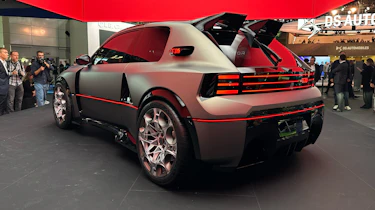
In an interview at the show, Renault Group’s Chief Design Officer Laurens van den Acker faced down a number of these questions, dismissing some, accepting others and remaining optimistic overall.
‘We saw a trickle that has now become a wave,’ van den Acker said, acknowledging the retro ramp-up. ‘It’s become a little bit of a recipe but I think we saw it coming. When we talked about doing iconic design, five or six years, we thought it would be the new thing because of EVs. Everybody would have the same ingredients and you couldn’t make a difference anymore between six-cylinders and eight-cylinders and so on. Iconic design is what will make us different, we thought. Now with the arrival of competition from Asia, it’s become even more of a trump card. It cannot be copied easily.
‘I think you guys are ahead in a sense, you see the wave building. For the public it’s still something new that’s happening. Where I agree with you is we need to pace it a little bit.’
He’s right to highlight that journalists can get a little inside baseball and become jaded with things much quicker than the public. The 5, that we’ve been used to for over two years, is only now entering the wider public zeitgeist as more of them are seen on the roads.
Nonetheless, he concedes that there’s potential for it to be too much, which is why Renault will keep its ‘legendary icon’ (retro) and its ‘future icon’ (contemporary) models separate. Their separation and the fact the 5 and the Twingo, and maybe a future Espace, have their own language, separate from trad’ corporate design homogeneity (think 3, 5 and 7 series, C, E and S-class) is an asset.
‘We'd like to keep them apart because I think the goal of the legendary icons is to be an icon first and foremost and to be recognisable. As you can see between the Twingo and an R5, they have the logo but we're not trying to give them the same eyes or the same layout, and even the form language is completely different. I think when somebody buys a Twingo, they want a Twingo first and they’re not buying into a design language as such.’
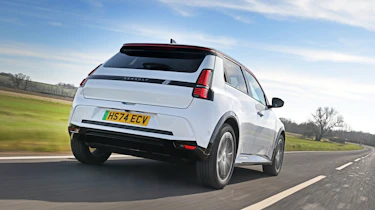
Fascinatingly, Laurens was unsure of whether the 5 would resonate when the concept was first revealed: whether it would just be like an old, forgotten car:
‘I even thought it would be an issue with the 5 because, I thought it’s a ‘70s car – I still know it but young people might not. We've been very surprised that our sons and daughters love the car. You’d think they wouldn't know it – they don't know the history and so on – but they appreciate it much more than we thought. Maybe also because it's just a cool car.’
The question of the future of these models is one Renault is taking great care to answer, however. No doubt looking at how the Mini has evolved since its reinvention in the early 2000s for what can go right, and wrong.
‘I think we need to really animate the lives of these vehicles. If you look at some of the other examples – first generation has the advantage of the surprise and the unexpected. Second and third is going to be harder. The good thing is we're not dependent on one icon, you know? I mean if you have only one icon and you need to reinvent it, there will be a plateau at some point. We have a 5, a Twingo, a 4 and another. We don’t have to be dogmatic about what comes next. It’s a bit early for the R5. I think the R5 still has some uh, some mileage.’
Renault’s CEO, Francois Provost, said when asked about what the future holds, that ‘we are working to nurture our icon’ and that we should expect ‘significant changes’ to that end. ‘I agree that we cannot rely on a few icons,’ he concluded.
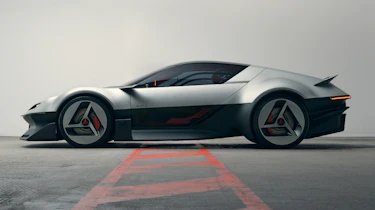
I’m still worried, though. Nevermind the cynical notion that retro’s a cheap trick and nostalgia is the lowest of the low-hanging fruit and all of it is a sign of a creative drought: We’re in the boom for these kinds of cheerful rearward-looking comfort food designs, but with every boom comes a bust or at least, a deflation. The exceptional becomes the norm.
When that happens, these manufacturers will have a curious problem on their hands: Exactly how do you nurture icons? How can the creators of these cars expect to cultivate innovation and continued success when it comes time to renew and replace these models? Volkswagen didn’t have much success at all with its ‘new Beetle’ to the point it’s now very much an old Beetle and as we’ve seen, none of Mini’s efforts have replicated the magic of the original reinvention. How do you move forward, having previously taken a deliberate and gargantuan jump backwards? In ten years time, will we see a ‘reborn icon’ that looks like a MK1 Clio, then a Mk2 and Mk3 after that? Where does it end? It’ll be fascinating to find out.
What I will say is this: I don’t see retro as a sign of creative drought. I see the legacy car industry wielding its heritage, arguably its most powerful weapon in the fight for your cash and ultimately, its survival. I also think that you don’t necessarily have to pigeonhole design as retro. It’s simply good design, worthy of a revisit, or it isn’t. Laurens van den Acker’s daughter likes the Renault 5 ‘simply because it’s a cool car’ after all.
It’s certainly something the market is responding to at the moment and is proof that being in touch with what resonates with your customers – what makes a product appeal to a buyer’s heart as well as their head – is the ultimate key to success. Putting aside the design ego and hunger for wholesale innovation, reinventing old icons has paid dividends. The real question is what will be that next lightning-in-a-bottle moment, if there comes a time when retro gets old…
Don't miss the latest evo news and reviews, get our free email newsletter