Renault Sport Clio (Mk3 197/200, 2006 - 2012) review – a more grown-up but still fun Mini Cooper S alternative
Renault Sport’s difficult third album came good in the end. Here’s everything you need to know to buy a modern hot hatch icon
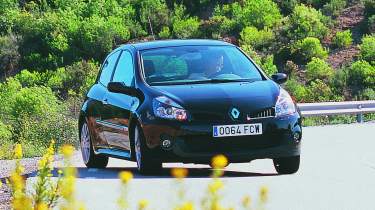
The mid-2000s were awash with some absolutely legendary hot hatch icons, and the Renault Sport Clio was one of them, even if for the 197 of 2006 (eventually becoming the 200 with a 2009 facelift), it grew in both size and seriousness. What remained a fun hot hatch is a bit of a bargain today and should tempt anyone left disheartened by the state of the modern hot hatch market.
Many decried the changes the Renault Sport Clio underwent in the transition from 182 to 197, with gains in weight and size paired with a loss of tactility. But the third-generation hot Clio had its own appeal outside of still being a great fun car and only improved over its years.
Renault Sport Clio 197 in detail
We’ll admit that when the 182 was replaced by the 197 in 2006 we felt a slight twinge of regret, because whilst the impressive new 197 was much more grown-up, with more weight and better build quality, some of its predecessor’s tactility had been lost, in part due to the electric steering.
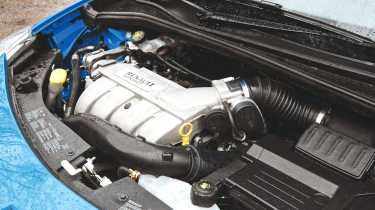
However, even if a little of the fizz had gone, the 197 did benefit from a useful power increase. A development of the previous-generation Clio’s 182 unit, the naturally aspirated 2-litre motor featured a redesigned variable valve-timing system. That made it capable of 194bhp, albeit at a high 7250rpm. Torque however, was a modest 159lb ft, which also had more mass to move thanks to the Clio’s 1240kg kerb weight.
However, with a better driving position and cabin materials of a much better quality, the 197 felt much more refined than its predecessor, making the 182 suddenly look and feel very outdated. The 197’s eagerness and tendency for lift-off oversteer was certainly very amusing, and further developments eventually recaptured the missing zing of the 182…
More reviews
The 197’s generous specification at launch included four-piston Brembo front brake calipers with 305mm vented discs, a functional rear diffuser, air con, keyless entry and start, and 12-spoke 17-inch alloys with Continental SportContact tyres which were specific to the Clio. Five paint colours were available: two solid (Ultra Red and Racing Blue) and three metallic (Albi Blue, Deep Black and Nimbus Silver).
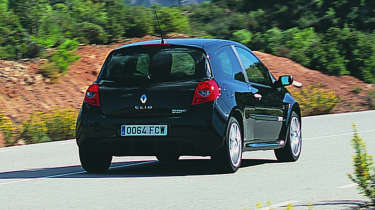
The sporty Clio line-up got much more interesting in 2007 when the F1 Team R27 special edition was released to celebrate Renault’s 2006 Formula 1 successes. An iconic Liquid Yellow paint colour was introduced with special side decals, as well as Recaro seats and a numbered plaque by the handbrake to commemorate the limited run. It also marked the first Cup chassis on a 197 model. It was 7mm lower with springs stiffened by 27 per cent up front and 30 per cent at the rear, with improved MacPherson struts to help sharpen the steering.
The Cup package was soon offered as a £400 option on regular 197s, too. Cup chassis cars are distinguishable by their anthracite alloys and red calipers. These can easily be replicated, however, so the only sure-fire way of spotting one is to check the colour coding on the springs – orange and blue on the front and rear means it’s genuine.
At the same time, and slightly confusingly, Renault introduced the stripped-out, cut-price 197 Cup, which also featured the Cup chassis but did without steering wheel adjustment, air con, cruise control, key-card access, electric mirrors, and even the tool kit. It cost £1k less than a regular 197, though if you specced the manual air con and Recaros, it soon cost more.
Another useful improvement came in August 2008, with a new set of gear ratios, including a longer sixth that made for easier motorway cruising. Over the final few months of production, Renault offered a Lux model, which added a machined finish to the standard 12-spoke wheels, auto lights and wipers, climate control and leather upholstery.
Driving the Clio 197
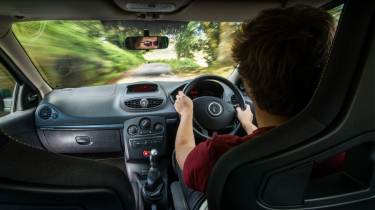
‘While the 197’s controls on the whole feel far more positive and precise than the old Clio 182’s, they also feel more detached, more aloof. The new Clio would feel more involving if it had some of the old car’s organic mechanical weighting.
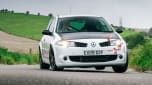
‘For all that, though, the Renault has an astonishingly accomplished chassis. In the 197 you can brake later, turn-in harder and carry more speed through to the exit. Torque-steer is virtually non-existent, the tenacity of the chassis’ grip and its general economy of motion freakishly good.
‘The biggest let-down, however, is the engine. It sounds wonderfully potent at the top end and that’s where the real action resides. But, below 5000 revs, forget it. You continually have to change down when you don’t really want to, and sometimes even then it’s not enough – second gear out of a hairpin really should be adequate but, under fire from an R56 Mini Cooper S, it never was. It isn’t a relaxing motorway car, either, the engine hitting a frenetic 4500rpm at barely 85mph.’ – David Vivian
Renault Sport Clio 200 in detail
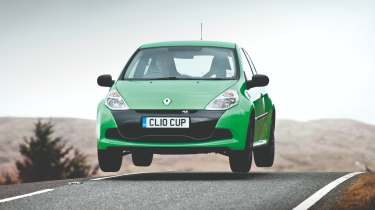
Production of the 197 ended in summer 2009, when it was superseded by the Renault Sport Clio 200 – essentially the same car, but with a number of upgrades that finally allowed the third-generation Clio to reach its potential. The engine got minor changes to the head casting, variable valve timing and ECU map, lifting peak power to 197bhp, adding low- and mid-range muscle and dropping the 0-60 time from 6.9sec to 6.6.
The visible differences included a revised front bumper and headlights, five-split-spoke alloys and a revised rear diffuser, while the interior was given a general spruce-up and there were some tasty new options, including an integrated TomTom satnav and a panoramic sunroof.
Once again, the real interest lay under the skin, with new spring and damper rates on all versions and a quicker steering rack for the Cup variants, which this time were available right from the off. The 200 also adopted the torque-steer-killing ‘independent steering axis’ front suspension geometry first seen on the Mégane R26.R. The combined effect was stunning: more power everywhere, more steering feel and tight suspension control.
Three special editions to look out for are: the Gordini with its exclusive blue paint job, white stripes and unique alloy wheels with touches of blue (Cup pack optional); the Silverstone, in silver with a black roof and with the Cup pack, Speedlines and Recaros; and the Raider, in matt grey or red and with 18-inch R26.R wheels and leather Recaros.
Driving the Renault Sport Clio 200
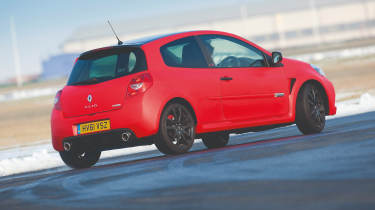
‘Although noticeably quicker than before, the steering avoids nerviness and simply feels more accurate. It also seems to have gained a little more weight and feel. The Clio is quick to change direction but it doesn’t turn in with the edgy zeal of a Cooper S, doesn’t feel quite as playful and keen to please. That said, its calmer dynamic demeanour comes into its own when the road starts asking questions that would cool the pace of lesser hot hatches.
'The 200 Cup remains steadfastly unfazed, continuing to cover the ground at an undiminished lick while maintaining a beautifully judged balance between sheer speed across the ground and throttle-induced entertainment.
'It has a lithe, sinewy athleticism that manages to carry seemingly implausible speed into and out of corners without wasting energy, while the Brembo stoppers are among the very best fitted to any hot hatch, R26.R and Focus RS included, not just for their power and firm pedal feel but also an absolute refusal to fade. Point is, if you want to play games with the throttle, the Cup will oblige with just the right degree of rear-end mobility. Classy, not crass.
‘Admittedly, if you stand on the throttle early exiting a tight roundabout, the inside wheel will scrabble away drive. It’s no R26.R in that respect (no trick diff) but in virtually every other it can be regarded as a worthy junior. Renault Sport has come good on the promise and delivered the car we dared hope the 197 might become.’ – David Vivian
Values, running costs and buying guide
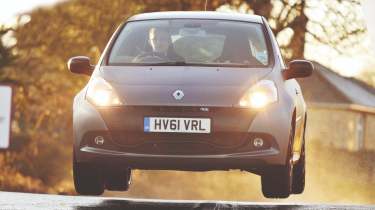
Be aware that both the 197 and 200 like a drink, preferably the expensive stuff, ideally 99 RON. If driven gently, 30-33mpg is possible, but use all the performance regularly and you’ll see that drop to 25-28mpg. This is a marked drop compared to what the 172 and 182 were capable of, in part due to the newer car's increased size and weight.
All variants make fine trackday cars, though the standard brakes can quickly fade. Otherwise they seem to stand up well to track use, though always be extra attentive to the service history. As with any car, there are good and bad examples out there, but find the right one and you’ll have a blast.
Our guide here is William Moses of Clio197.net, and his first tip is to avoid cars with patchy history or missed services. The 12,000-mile/12-month service intervals are fine for cars used only on the road, but 6000 miles is preferable for cars that see track action. The cambelt service, due at 72,000 miles, is very important, should be undertaken on time and is an expensive job – over £500 from an independent and over £800 from a Renault dealer.
If correctly serviced, both engines are tough and reliable, although Moses advises avoiding cars with aftermarket induction systems. Also exercise caution with ‘performance’ exhausts; many reasonably priced systems have a reputation for exaggerating a flat-spot at moderate revs.
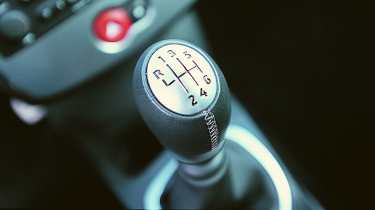
Gearboxes are known to be awkward when cold, but all changes should be smooth when warm. Both versions of the gearbox are prone to premature synchro failure – generally most noticeable when changing down into third, especially if you skip a gear, though some owners have first noticed issues with fourth, so pay attention to the ease of the shift on the test drive.
Steering link rods seem prone to wear, though this is cheap to resolve. A clunking noise from the steering can indicate a failing rack; complete racks are not prohibitively expensive (£400-500 from Renault) and since they come complete with new track rods and track rod ends, it’s an opportunity to upgrade any 197 or non-Cup 200 to the slightly quicker Cup rack. Before doing so, make sure that this is the issue – there have been suggestions of failed power steering motors. These are part of the upper steering column and a replacement will cost close to £1000.
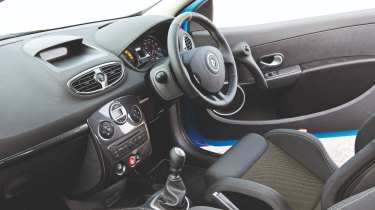
Both standard seats and Recaros are prone to wear on the outer bolsters. The top layer of the leather trim on the steering wheel can also peel off. Both can be retrimmed at around £50 per seat bolster, or around £150 for a wheel retrimmed in Alcantara. The wiper mechanisms can be faulty, so check that the wipers operate freely, while you should also check that both key cards work – they cost c£200 to replace.
Early 197s are now below £4000 from private sellers in sme cases. Generally these cars have higher miles (over 80,000) and more than one owner, but provided they’ve been well-maintained, they can still be a good buy. Take extra care to check the service history (including the cambelt), and pay particular attention to the gearchange and steering on a test drive.
Pay a little more, however, and from £7000 there’s a wide choice of average-mileage cars with Recaro seats and Speedline alloys. Cars with the Cup chassis start at around £5k. Expect to pay £8000-plus for a well-specced 2007/2008 car, and from £9k-plus for the very best in terms of spec and condition. Reckon on adding around £500 if buying through the trade. Top price for an end-of-line 197 with Cup chassis is £9k – about the same as a cheap 200.
| Engine | In-line 4-cyl, 1998cc |
|---|---|
| Power | 194bhp @ 7250rpm |
| Torque | 159lb ft @ 5550rpm |
| Weight (kerb) | 1240kg |
| Power-to-weight | 159bhp/ton |
| 0-60mph | 6.9sec (claimed) |
| Top speed | 134mph (claimed) |
| Price when new | £15,995 (2007) |