Ferrari 296 Challenge Stradale abandons hybrid to tackle Porsche head-on
Over two decades since we last saw the Challenge Stradale name, Ferrari has brought it back with this trend-breaking 296.
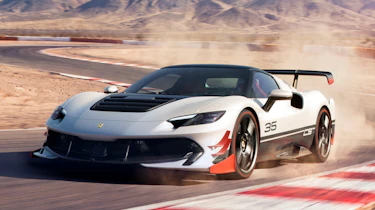
Michael Schumacher won his sixth world title, the Porsche Carrera GT entered production and Ferrari introduced the 360 Challenge Stradale, all 23 years ago. Now the badge makes a return with the new and especially crowd-pleasing 296 Challenge Stradale.
It's a crowd-pleaser because it’s answered the prayers or many by sacrificing the outright power of a hybrid system for the purity of a pure-combustion powertrain. This is a car that ditches the hybrid system entirely for lightness, improved engagement and a Fiorano lap time five tenths ahead of the significantly more powerful 296 Speciale.
> Ferrari 296 Speciale Aperta review – definitive proof Italy hasn’t lost the plot
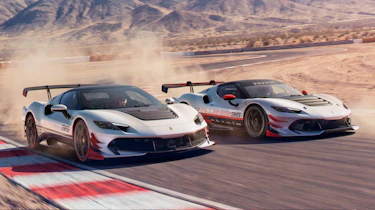
Seeing the car for the first time in Barcelona ahead of its world premiere, my initial impression was almost underwhelming. But not because it’s a dull car to look at, because I’d practically seen this car before. Just 30 minutes prior I’d spent time with the new track-only, race-ready 296 Challenge Evo launched alongside it, and the similarities between the two are staggering. The Challenge Stradale is essentially a Challenge Evo with number plates, and the comparisons go further than exterior design.
Engine, gearbox and performance figures
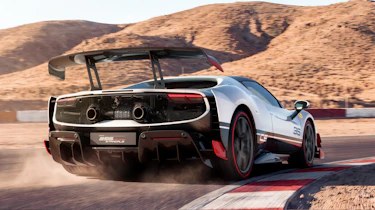
Stripped of the hybrid system and virtually all surplus components, it weighs just 1330kg (dry), 140kg less than the GTB and 80kg less than the already lightweight Speciale. What’s more astonishing is that this is an exact match for the kerbweight of the race-ready Challenge Evo, with it using the exact same hybrid-less 3-litre 120-degree twin-turbocharged V6. The two also utilise an identical eight-speed dual-clutch gearbox, with the CS sharing its sharper 170ms shift times with the original Challenge race car under high load.
Stripping hybrid drive from the equation also strips peak power back to 661bhp and 546lb ft of torque, making it the least powerful 296 in the range – it’s actually a match for the decade-old 488 GTB. The keen-eyed will have spotted that this output is lower than the 690bhp engine-only output of the hybrid Speciale, and its track-only Challenge Evo relative, but there’s good reason. With the instantaneous, from-zero torque of electric motors no longer available to make up for its lack of pull at low revs, Ferrari’s had to retune the V6 through changes to boost pressure and cam phasing to prioritise low end power, sacrificing peak output in the process. This isn’t an issue in the Challenge Evo as these cars spend most of their time at the top of the rev range.
Combine this new output with its new weight figure and you’ll find that despite reduced weight, the CS is significantly down on power-to-weight next to its hybrid alternatives. At 497bhp/ton it’s over 100bhp/ton down on the Speciale and over 60bhp/ton down on even the GTB, but as we all know, this figure isn’t everything. The Challenge Stradale hits 62mph from a standstill in the same 2.8sec as the much more powerful Speciale, and completes a lap of Fiorano five tenths sooner.
Chassis, brakes and technical highlights
These performance gains don’t just come from its reduction in weight, as Ferrari’s engineers have thrown everything at its chassis setup in order to extract as much from its hardware as possible. Suspension is semi-active, now with double the spring stiffness, a reduction in ride height and the introduction of a helper spring to improve consistency.
The result of these changes is an increase in lateral performance by seven per cent and a 34 per cent increase in stability. The latter comes in part thanks to the use of the latest Ferrari Integrated Vehicle Estimator (FIVE) stability system derived from the F80 and sticky Pirelli P Zero R and Trofeo RS tyres. Brakes are carbon ceramic in the same 398mm, 360mm front and rear configuration as the Speciale, but there’s an improved cooling system in the CS now it’s without regenerative braking to take some of that load away. Pedal travel has been reduced and feel improved, too.
Ferrari had to develop a number of new components for the Challenge Stradale to make it all work without a hybrid system. The air conditioning system (yes, it still has one) now has its own unique mechanical compressor, and Ferrari’s had to devise a new belt starter generator system now there’s no high voltage electric motor to take care of that job.
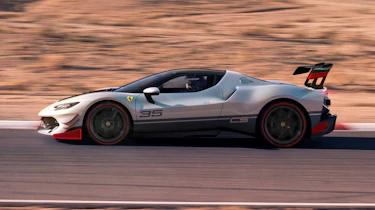
With aerodynamic elements seemingly lifted straight from the Challenge Evo, it doesn’t take an aerodynamicist to deduce that the Challenge Stradale produces more downforce than the standard car. It’s undoubtedly traded the 296’s sleek, elegant silhouette for something more function-focused in the process, but what you get in return is a 72 per cent increase in peak downforce over the GTB at 617kg. That's more than the kerb weight of a Caterham Seven.
That fixed rear wing (heavily inspired by the Challenge Evo’s, only narrower to comply with road homologation) produces 270kg on its own, with the aggressive new splitter, canards, vortex generators and an enclosed underbody all contributing. It's not quite a match for the Challenge Evo’s 980kg downforce figure, but scaled down to the same 155mph speed, the CS falls in line with the 992 Porsche 911 GT3 RS.
Interior and tech
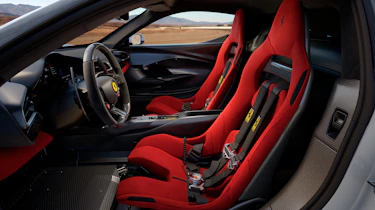
Inside you get the same heavily bolstered ‘tubular’ bucket seats as first seen in the SF90 XX, and while buyers can configure it in a very similar way to a GTB, it can also be stripped all the way back to feel much like the Challenge. Door cards are single-piece carbon items without storage pockets or arm rests, and if you opt for the most extreme configuration, quite literally all trim is removed from beneath the seats to expose the bare chassis. The carbonfibre central tunnel is minimalist and bare like the Speciale too, but you do get a handy wireless phone charging pad.
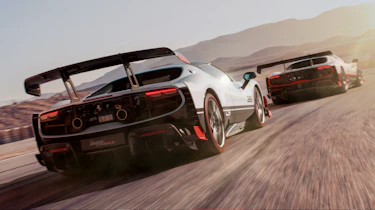
Another reflection of the Challenge Evo’s design is the use of a twin-exit tailpipe arrangement as opposed to the single-exit of the rest of the 296 range. In the Challenge Stradale, this system is designed to reduce back pressure, feeding from equal length manifolds to enhance the exotic sound of the V6 and its 8500rpm crescendo. Sound deadening has been removed inside for the same reason, with the balance of intake and exhaust sound taken into consideration for the very best sound experience.
Will you be able to buy one?
With added focus typically comes added cost and exclusivity, but not here. Curiously, the 296 Challenge Stradale is not a limited-production car like the Speciale, and even more curiously, it’s set to cost the same as the ‘entry-level’ GTB at c£260k, around £100k less than the more complex Speciale. Don’t worry, I was struggling to process this too, but speaking to product manager Stefano Frigieri made things more clear.
Frigieri said that while some 296 Speciale buyers do venture out onto the road and track to use them as intended, their exclusivity and value makes that a rare occurrence. The Challenge Stradale is designed to eradicate that scenario, making it more accessible, less precious and a product that buyers will feel they can use more of the time – think of it more as Ferrari’s GT3 RS. It’s for this reason that Ferrari’s offering a much less restrictive track-only, dealer-fit exhaust system for it, allowing buyers to maintain the factory warranty while extracting everything from their new purchase.
We’ll have to wait a bit longer to get behind the wheel, but the ingredients are there to suggest this could well be one of the highlights of 2027.
Specs
| Engine | 3-litre twin-turbocharged V6 |
|---|---|
| Power | 670bhp @ 8000rpm |
| Torque | 546lb ft @ 6250rpm |
| Weight | 1330kg (dry) (497bhp/ton) |
| 0-62mph | 2.8sec |
| Top speed | >186mph |
| Price | c/£260,000 |