Why car bosses are quietly scrapping their multi-billion pound EV plans
Industry giants U-turning on EV plans is not entirely good news, reckons Meaden
We’ve said it many times recently, but who would be an automotive CEO or product planner right now? Aside from dedicating your life to engineering ADAS systems in the knowledge the first thing anyone in their right mind does is switch them off, attempting to formulate and execute a cohesive and consistent long-lead product strategy must surely be the most thankless task imaginable.
In recent times we’ve heard from a succession of top-tier brands announcing radical changes of plan. And no wonder, for compared to the stability of the ’00s and ’10s, the ’20s are proving to be absolute carnage thanks to economic uncertainty fuelled by conflict, tariffs and the increasing pressures of achieving Net Zero. A slump in sales of premium and luxury cars to China and a lack of confidence in residual values of top-end EVs being an additional kick in the goolies for all the major European car brands.
> Porsche confirms no electric 911 as it revises product plans
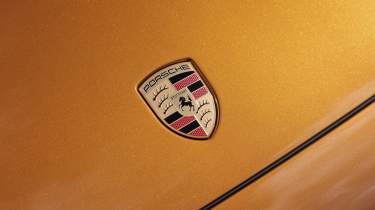
We’re all well-versed in Porsche’s woes and the steps being taken to address the catastrophic nose-dive in profits. New boss Michael Leiters has been quick to clarify the company’s plans to slow the transition to EV by pushing its commitment to continue developing petrol engines – in pure ICE and PHEV applications – well into the 2030s. He’s also reported to have canned the EV-only Boxster and Cayman in favour of a PHEV powertrain that will also find its way into the 911.
Elsewhere Lamborghini has confirmed it will no longer be launching the new Lanzador as an EV, preferring instead to introduce it as a PHEV alongside the Revuelto, Temerario and Urus hybrids. Given Lambo embodies the appeal of a raucous petrol engine this is surely a sensible decision.
Alfa Romeo has given its much-liked but ageing Stelvio and Giulia models (now into their 10th year of production) a stay of execution until sometime in 2027 to extend development time on their planned replacements, which were initially intended to be BEV, but will now be reinvented to accept a range of PHEV and BEV powertrains to hedge against the sluggish appetite for battery-powered vehicles. More U-turns come courtesy of Maserati’s decision to knock its electric MC20 on the head, and instead stick with the ICE-powered MCPura. And then there’s Aston Martin, which has kicked plans for its own EV model into the weeds to instead focus efforts on hybridising its current range.
Meanwhile, in Maranello, Ferrari remains resolute in its commitment to bring its first BEV model, the Luce, into production. Ferrari has been an absolute powerhouse since its stock market flotation back in 2015, but even the Prancing Horse has had a rocky ride of late, thanks to all the aforementioned economic factors, plus the fickle mood swings of the financial markets and institutional investors prone to getting a bout of the yips.
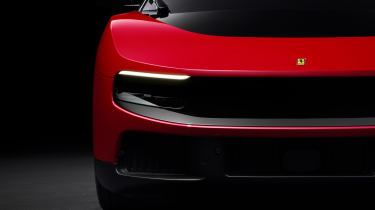
Luce has contributed to both downs and ups in Ferrari’s volatile stock valuations: a significant drop in October 2025 when the brand underlined its commitment to the EV model followed by a positive recovery in December when the EU announced a small but symbolically significant row back on its zero emission requirements by 2035. Its final reveal in May caused another downturn, before it recovered not long after.
Similarly, Jaguar has let us get much closer to the controversial Type 00 GT car, which is closing in on its early 2027 on-sale date. Early drives of pre-production prototypes suggest it will be a deeply impressive machine to drive. Still JLR’s senior management must be sweating on the top line in the hope that the prevailing mood towards luxury high-performance EVs changes in the next 12 months.
As car enthusiasts it’s tempting to rejoice at the perfect shitstorm that’s currently capsizing the legislators’ best efforts to eradicate the internal combustion engine. Sadly, like most things, the situation isn’t as simple as we’d like. For the trouble is, in order for the high-performance sports and supercars we obsess over to exist, we need the automotive industry to be buoyant, not embattled. So, while it might be a relief to hear all our favourite brands are stalling their EV plans, it’s concerning that they are instead faced with finding assorted ways of MacGyvering ICE and PHEV powertrains into platforms originally intended for battery power, or scrapping them entirely and starting again at eye-watering cost.
I’ve long since resigned myself to the fact the connection and affection I have for the internal combustion engine will never be replaced by an EV, however good it might be. But I also know that significant engineering compromise is the enemy of excellence, whatever the powertrain. Selfishly I’m pleased the internal combustion engine has a lifeline that will hopefully see me to the end of my career. I just hope it’s not a Pyrrhic victory.
This story was first featured in evo issue 344.