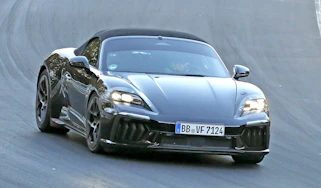
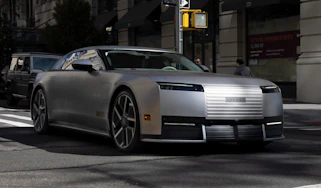
Is Porsche really pulling the plug on the all-electric Boxster?
Reports by Bloomberg suggest the new CEO is considering ditching the all-electric Boxster and Cayman for hybrid power.

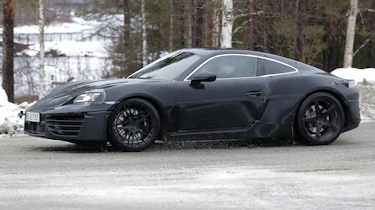
On 1 January 2026, Michael Leiters officially started his role as Porsche’s new CEO, replacing Oliver Blume. Then 33 days later Bloomberg reported that the ex-McLaren, ex-Ferrari and, er, ex-Porsche man has canned the all-electric Boxster and Cayman sports cars. A decision few will be upset about but most certainly an expensive one.
> Panic over. The Porsche Cayman and Boxster aren’t going electric-only after all
Porsche had, before Leiter’s arrival, already confirmed that top-end petrol-powered Boxster and Cayman models were to live on and most likely be Spyder and GT4/GT4 RSs variants. This would allow the company to clear enough profit to justify the considerable investment required to adapt the PPE platform the new sports cars will be based upon, to take an engine and gearbox.
Leiters, who has taken over a Porsche that has seen its share value drop 50 percent since its IPO in 2022 with a 30 per cent drop in 2025 alone, takes on the role that isn’t expected to see the brand return to double-digit margins for another 18-24 months. He therefore must work with much tighter budget for new products as Porsche adapts to a period of lower sales volumes and expectations.
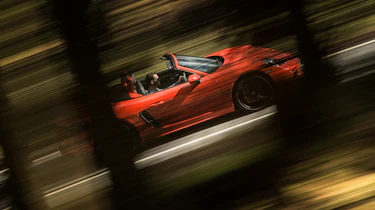
To address this, one plan on the table is a range of new hybrid-powertrains, which would not only be used in the new Boxster/Cayman but the 911, too. The 992 generation was designed from scratch to accommodate a hybrid powertrain from the gen2 model onward (hence its size and weight).
That version of the 992 was canned as Porsche went all in on full electric models across its range to completement (and give legislative reprieve) to its internal combustion engine models. Its 3.6-litre flat-six turbocharged t-hybrid powerplant used in the 911 Carrera GTS is far more advanced compared to what Porsche had planned almost a decade ago when the 992 was in development.
> Porsche officially puts EV plans on hold, developing new petrol models instead
Porsche, like so many other European manufacturers, are experiencing an unprecedented downturn in fortunes both in terms of sales volumes and revenue. Tariffs applied by the US President have hit sales in the company’s biggest market, which has coincided with a downturn in Porsche’s second largest, China.
This is down to extreme competition from Chinese manufacturers, a slow adaptation to the Chinese market’s demand for EVs, the electric Macan having only gone on sale in China in Spring 2024 and the new all-electric Cayenne not arriving until later in Q1 2026. China has also seen a considerable downturn in the luxury sector.
Porsche’s, or rather Leiter's decision to delay or cancel the all-electric Boxster and Cayman is not one that will be taken lightly. The investment costs for the project to date already run into billions of Euros, admittedly spread across the VW Group with Audi, Cupra and VW all working on potential all-electric sports cars.
Adapting it to take both the T-shaped battery pack that will live behind the rear seats of the electric models and a hybrid and pure petrol powertrains will only add to that bill. So too the cost to develop a hybrid flat-six engine to complement the 911 Carrera GTS’s impressive, but most likely too large, 3.6-litre turbcoharged flat-six hybrid motor.
While Porsche’s decision is one it will make independently, others will be looking closely at its decision, not least Alpine. The French manufacturer has committed to electric for the next A110 but has designed a platform that can be adapted easily for hybrid and combustion powertrains. I wonder if Michael Leiters has picked up the phone to his former Ferrari colleague – Alpine’s CEO Philippe Krief?