Rolls-Royce Ghost review – is it really worth £100k more than a Bentley Flying Spur?
While Rolls-Royce produces an electric car in the peerless Spectre, in the Ghost Black Badge it proves its old school V12 still has plenty of life left
The Rolls-Royce Ghost is in an awkward spot. It’s never been a car for drivers, and yet it’s the only saloon in the range designed and engineered not just for being ‘driven in’, but for the driver too. The Black Badge was launched in 2021 as the model to plug this gap and offer more for the driver, but now its arch rival from Bentley - the Flying Spur - is so talented (and comparatively well priced), Britain’s stately alternative doesn’t have an easy job.
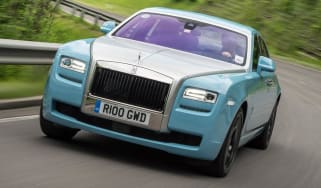
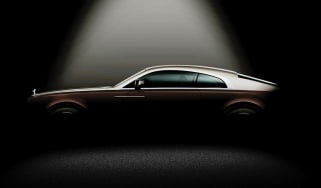
Regardless of how it drives, its retained all of the presence you’d expect from a Rolls-Royce over the year. It might be the smaller sibling to the Phantom but at over five and a half metres long and more than two metres wide, it’s still significantly larger than a Mercedes-S-class. It also crushes the scales at 2490kg (more in Black Badge-form) to put it in-line with some EVs, but considering what goes into constructing a Rolls-Royce Ghost, you might expect that number to start with a three. There’s 100kg of sound insulation alone…
> Bentley Flying Spur review – the ultimate driver’s limousine
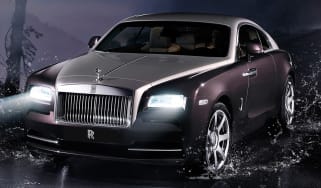
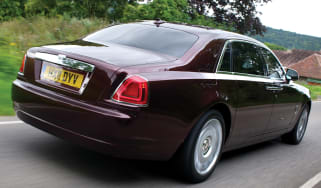
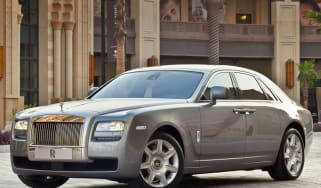
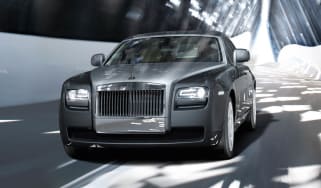
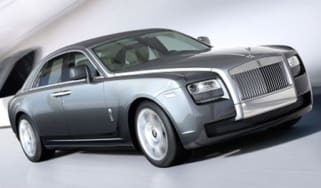
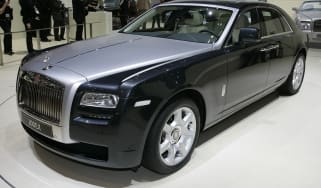
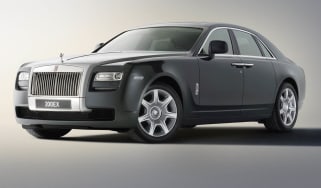
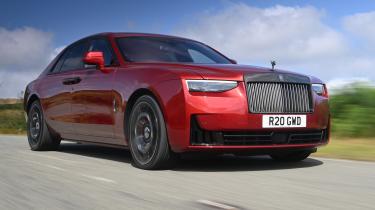
From bumper to bumper this Ghost is an all-new design next to its predecessor, the detailing less shouty, the shutline count reduced to an absolute minimum and none of them wider than a hair’s breadth. But it remains a vast car, with a heft to its body that from some angles gives the impression it’s sinking into the surface beneath. It lacks the timeless grandeur and unmatched confidence of the larger Phantom, and especially in Black Badge spec with its enlarged wheels and darkened trim, isn’t anywhere near as classy. Nevertheless, the finish and attention to detail is unmatched in any of its forms.

Engine, gearbox and technical highlights
- Modular aluminium underpinnings
- Pure combustion turbocharged V12 produces up to 591bhp
- Advanced chassis technology prioritises driver comfort
More reviews
The Ghost is built on a modular aluminium architecture that allows for the dimensions to be adapted to suit the vehicle that it’s underpinning, from Phantom to Cullinan. While the strands of BMW DNA are no longer so prevalent in what was Rolls-Royce’s best-selling car, the 6.75-litre V12, now stamped with a Rolls-Royce part number even though it isn’t cast in the Sussex countryside, still has a Munich twang to it.
It falls behind more recent hybridised rivals such as the Bentley Flying Spur (671bhp or 771bhp) in terms of output, but that pure-combustion V12 still has plenty to give. 563bhp and 627lb ft of torque to be precise, or 591bhp and 664lb ft in the Black Badge, which adds more standard kit and a handful of changes designed to elevate the driving experience. The Black Badge gets unique air springs designed to reduce body roll too, with the brakes recalibrated for reduced travel and more precision. The exhaust is a little louder too, throttle sharper and gearshift speed is improved by 50 per cent at above 90 per cent throttle.

Suspending the standard Ghost are air springs and adaptive dampers, the latter pre-set by Rolls-Royce with no options for further configuration by the driver. Not that you ever think twice about it, just as you also don’t think twice about not being able to manually select any of the eight forward gears. Four-wheel drive is joined by four-wheel steering, but it would be a stretch to suggest it sharpens the car’s agility; rather it makes it more manageable and manoeuvrable. There is also a 12V active anti-roll bar fitted to the multi-link rear axle that works with a front-mounted camera to react accordingly when a lump, bump or tiresome compression is detected.
Performance, ride and handling
- Exceptional road isolation despite huge mass
- Unmatched presence with effortless performance
- Excellent ride, but not magic carpet like the Phantom
All of this hardware, and the resulting kerb weight, is more than justified. The Ghost in any of its forms offers levels of effortless performance and isolation from the road that nothing other than Rolls-Royce’s own Phantom can match. It does feel ridiculously large for our roads (until you spend time in its even bigger brother), and in today’s world of cast-iron body control there’s more lean than you’d anticipate, but it doesn’t distract or leave you hanging on. It just feels right, the Ghost remaining consistent and predictable as you guide it with the lightest of touches in blissful isolation from those around you. A Bentley Flying Spur is sharper, more direct and arguably as well appointed, but the car from Crewe lacks the Ghost’s presence and sense of occasion. The Ghost provides an incredibly grand way to arrive, although the journey is unlikely to be filed among your greatest driving memories.
While its larger 22-inch wheels and ultra-low 30-profile tyres don’t suit the classy Rolls-Royce image to my eyes, or Britain’s pothole-strewn roads for that matter, the Black Badge does add a well-judged dose of dynamism to the package. This is no Ghost ‘R’, but instead reduces roll with tweaked air suspension and improves brake and throttle response. Marginal is the best way to describe these changes, as this still feels very much like the Rolls-Royce we’ve come to expect, and I suspect that’s precisely what buyers are looking for – the Black Badge is more about changes to spec and design.

On every Ghost, the fitment of a mass damper to the double-wishbone front suspension is intended to minimise shocks over poor surfaces, but it still can’t isolate you from all that mass being worked over beneath you. There’s also a degree more tyre noise than you’d expect when travelling across coarse surfaces, and while wind noise doesn’t penetrate the door and window seals you’re still aware that a car of these proportions will never be truly silent when cutting a hole through the air.
The Ghost feels just as refined and isolated as a Phantom under perfect conditions, but encounter a pothole, speed bump or any tricky imperfection and you’re soon reminded that you’re in a Ghost, especially in a car fitted with those larger 22-inch wheels – the suspension soon eliminates excess energy, but not before some of the initial impact makes its way into the cabin. The rear-wheel steering is also not as well calibrated as in a Phantom, with a sense of over-assistance occasionally making itself known in low speed corners.
As you’d expect of a machine calling upon 627lb ft of torque (or 664lb ft in Black Badge form) at just 700rpm above its twin-turbo V12’s 900rpm idle speed, it’s unexpectedly quick. And that V12 operates with an eerie silence, accompanied by an automatic transmission that delivers a shift seamless enough that even a non-enthusiast passenger referred to it as feeling electrified. It doesn’t need to shift much, though, with much of its pulling power delivered well before it feels the need – it’s an odd sensation, as the pace it’s piling on is at complete odds with the (lack of) sound and revs coming into the cabin. I’ve never been onboard a multi-engined 3000bhp Cigarette boat, but the way the Black Badge lifts its nose and gets on plane can’t be too far off…
> Rolls-Royce Phantom review – the epitome of excess and British engineering excellence
Interior and tech
- Luxurious interior is a match for the Phantom
- Unmatched fit, finish and material quality
- Tech showing its age
As you’d expect, the cabin is a spectacular place to be, with fit, finish and materials almost indistinguishable from the range-topping Phantom. Just about the only way the Ghost differentiates from the Phantom is the reduction in space, dropping occupants down from First to Business class.
The Ghost gets almost all of the same features as the Phantom, self-closing doors and starlight headliner included, and the integration of its tech feels a little more modern, with easily accessible USB C one of the key differences. The (admittedly ageing) BMW-derived central and rear infotainment displays remain though, as do the exceedingly satisfying cold-touch metal climate control pushers – even the seat runners are finished in chrome. Opt for the Black Badge and you can opt for a unique carbonfibre-esque ‘Technical Fibre’ trim, which looks good, but isn’t particularly well suited to a Rolls-Royce.

Its sheer size doesn’t diminish once you’re driving it. You sit high behind the wheel and might even find yourself raising the seat a little higher still, so you can at least see the outer edges of the aluminium real estate that makes up the bonnet. Yet despite the cleaner design you still feel as conspicuous as you would sitting in a Caterham, roof down in the rain, trying to blend in to a morning commute on London’s M25. Try a Phantom though, and you’ll find that the Ghost feels like a much more appropriate size should you decide to drive it yourself, and as a family runaround.
Price, specs and rivals
The Rolls-Royce Ghost starts from around £250,000 in its standard form, but virtually no buyer will ever pay that amount given its vast configurability. The Ghost Black Badge starts from a higher £285,000 price point, but Rolls-Royce says the average car is configured to the £350,000 mark…
Stacked up against its key rival from Bentley, the talented Flying Spur, the Ghost is a significantly more expensive offering – the more powerful Bentley starts from £190k, putting a £100k gap between the two should you opt for the Black Badge. The more powerful V12-powered Mercedes-Maybach S650 is another similarly-positioned option, but it too is much more affordable at around £200k.
Rolls-Royce Ghost specs
| Rolls-Royce Ghost | Rolls-Royce Ghost Black Badge | |
| Engine | V12, 6749cc, twin-turbo | V12, 6749cc, twin-turbo |
| Power | 563bhp @ 5000rpm | 591bhp @ 5250rpm |
| Torque | 627lb ft @ 1600rpm | 664lb ft @ 1700rpm |
| Weight | 2490kg (230bhp/ton) | 2507kg |
| 0-62mph | 4.8sec | 4.7sec |
| Top speed | 155mph (limited) | 55mph (limited) |
| Basic price | £249,600 | £285,000 |