Seat Ibiza review – Yes, you can still buy a new supermini
Small affordable(ish) cars aren't finished just yet, despite the likes of Ford and Vauxhall walking away from this vital sector, which is why Seat still makes the Ibiza.
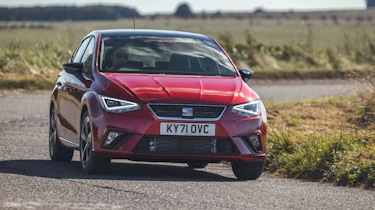
A couple of things you probably didn’t realise. One, the market for affordable compact cars is small and getting smaller, with every occupant very much at risk. Two, Seat, the Spanish brand under the Volkswagen Group umbrella that’s been somewhat outshone by its Cupra offshoot these last few years still exists. Three, even in a market that’s lost its cornerstone, the Ford Fiesta, Seat still offers the Ibiza, alongside its VW Polo and Skoda Fabia relations. Is Seat hanging on? Why hasn’t the Ibiza been snuffed out, and will it anytime soon? And is it worth buying? Some time in an Ibiza offered some answers.
First thing’s first and a definitive answer to one of those questions, around about the time we were cutting about in an Ibiza in the UK, Seat was launching a lightly updated model. Which probably tells you, this little car isn’t going anywhere, at least for the immediately foreseeable future and even with the imminent arrival of the Cupra Raval, a small EV sharing underpinnings with VW’s forthcoming ID.Polo. We’ll get some time in the updated car at some point, though by all accounts, very little bar a few visual tweaks and some lightly updated interior tech is among that which has changed about Seat’s small car. It’s certainly not an all-new sixth generation car, rather a lightly updated fifth-generation.
More reviews
Group tests
Reviews
It’s been around a while, mind, with the fifth-generation car launching all the way back in 2017, some nine years ago. It certainly brought a newfound sense of maturity to a name that’s been in service since 1984. Four years on, the marque gave it a mid-life facelift to help it stay up-to-speed with its arch rivals, including the class-leading Ford Fiesta. Very shortly afterward, in 2022, the Fiesta was snuffed out, Ford killing its beloved best-selling model and stalwart nameplate of 50 years to clear the way for a range of electric SUVs. Hindsight tells us now, that might have been something of an error… No such mistakes in the VW Group, which in spite of betting big on electric, closing margins and legislatory pressure, has let its small combustion hatches cling on.
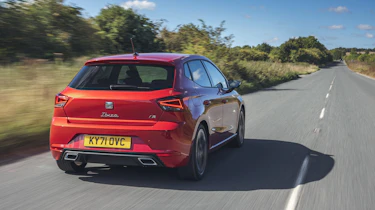
A total of two 1-litre, three-cylinder petrol engines are on the options list, starting with a turbocharged 1-litre TSI with 93bhp and rising to the 113bhp turbocharged range-topper. Thankfully the 79bhp MPI was given its marching orders. The latter of these has enough gusto to slide past 62mph in 9.9sec, while its 148lb ft maximum torque figure comes on strong at 2000rpm and lasts until 3500rpm.
The turbocharged units use either a six-speed manual or DSG transmission in the 113bhp range-topper. The manual is the usual VW Group fare: a light action, slightly notchy as each ratio engages, and not particularly tactile. The gearing feels well-matched to both engines though; second is a good B-road gear in the 1-litre, while tall upper ratios benefit refinement and economy at higher speeds. The DSG is slick-ish, with brisk upshifts and downshifts in both manual and automatic modes. The occasional jerky downshift at low speeds can be jarring and kickdown is slower than we’d like at times, but given the normal use case for these models it’s a fine transmission.
Seat often feels like the poor relation in the VW Group, stuck behind its parent company when it comes to new platforms and engines, but the fifth-generation Ibiza was actually the first car in the group to use the MQB A0 platform, now found under the skin of Volkswagen’s latest Polo and the Skoda Fabia. The fifth-generation Ibiza, grew over its predecessor with a body that’s 87mm wider, but actually 2mm shorter and 1mm lower, with a 60mm longer wheelbase for more interior space. The looks are therefore more mini-Leon than Ibiza.
The enlarged floating infotainment screen mimics the package available on other Seat and Cupra models. A full-width Digital Cockpit is available as an option, with softer materials, illuminated air vents and decent material quality present throughout the range. Better still, the Ibiza dodged the tedious inclusion of VAG’s new touch controls, with physical buttons for volume and A/C controls – these live on in the updated-for-2026 car too.
Bigger inside and Leon-lite it might be in appearance but it’s still a smaller model. Larger individuals might notice the door cards and centre console in slightly closer proximity than they would be in a car from the class above, but in terms of refinement, quality, and infotainment options, you aren’t losing much at all.
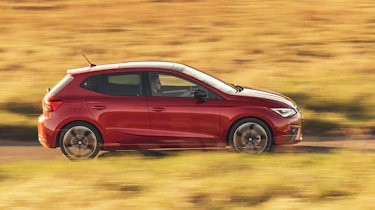
This maturity might imply dull driving dynamics. Actually, the Ibiza’s not too bad here either. In the past thrill-seekers would want to turn to the likes of Ford’s Fiesta, as even the range-topper isn’t quite quick or incisive enough to truly entertain. Now it’s Ibiza, Polo, Fabia or, still by some miracle, Clio. The Ibiza’s 1-litre unit is enthusiastic enough, but chassis and tyre technology in this class developed such that it’s an undramatic drive, whether the going is straight or twisty.
The Ibiza steers well, and although feedback from the front axle isn’t forthcoming, the rack is accurate and well-weighted and there are good levels of grip to lean on. Selecting Sport from the Seat Drive Profile settings has little discernible difference to any dynamic trait other than the steering, which is slightly more resistant to inputs. In theory, throttle response also improves, and DSG models feature different shift points too but it’s far from transformative.
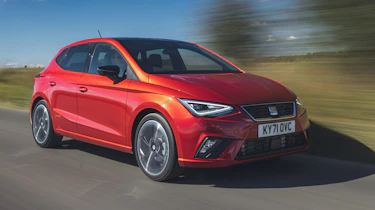
The Sports suspension doesn’t provide hot hatch levels of body control but there’s enough dynamism here to make light work of quick changes of direction, and there’s a sense - not always present in Volkswagen Group small cars - that the rear axle is assisting in those direction changes. Ride quality is good, with the Ibiza’s feathers largely unruffled even on scabbier surfaces.
So, is it still worth buying? Yes. It’s a car that goes to show, if you get the fundamental guts right with a solid, futureproof platform, cars can last. And needless to say, a market that’s lost the Ford Fiesta as its high watermark is thankful for any entrant it can cling onto. With the loss of the Seat Mii, VW Up! and Skoda Citigo, these are the smallest cars the ailing VW Group has to offer. You won’t be doing them any favours by buying one – there are no ZEV mandate good graces to be had here and no lifechanging profit margins. But it’s reassuring that something resembling affordable motoring still prevails and appeals in 2026.
Price and rivals
We say affordable, the Ibiza range as it stands before the updated model comes on line starts from £20,395 for the manual SE which counts ‘metallic paint’ among its notable features, rising all the way to £26,015 for a DSG Xcellence Lux with adaptive cruise, a digital cockpit and a rear-view camera. When this generation of Ibiza arrived all the way back in 2017, it started from under £17,000, though that was for the now discontinued weedy entry-level MPI engine.
In spite of just how little manufacturers make from these cars, they are cornerstones of many model ranges – the last cars a great many people can still afford to actually buy. Indeed Ford’s is now missing, but in the Fiesta’s absence, the Ibiza must still compete with the Hyundai i20, excellent Peugeot 208, new Renault Clio, Skoda Fabia, Toyota Yaris, Vauxhall Corsa and the Polo for your cash. Both the Ibiza and the Polo will get all-new electric equivalents in 2026, in the Cupra Raval and the VW ID.Polo. Appealing though those ought to be, we don't see the creaky petrol models being bumped off in an instant.