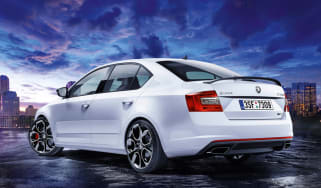
Skoda Octavia vRS review – family-friendly, affordable and subtle performance
The Octavia vRS has become a mainstay in the practical performance segment, and now the fourth generation car has received an update
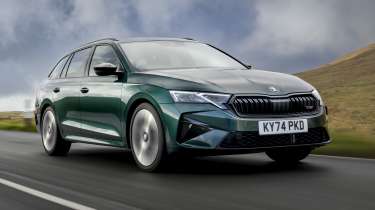
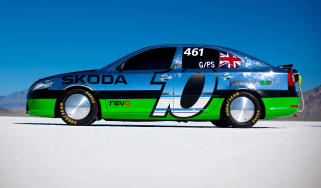
The Skoda Octavia vRS is one of the most unassuming performance cars on our roads, staying true to the original concept first established at the turn of the millennium. Despite its modesty, it became a key player in bolstering Skoda’s image, launching it into WRC in 1999 in its first generation and even achieving speed records in the hands of evo’s Dickie Meaden in 2011.
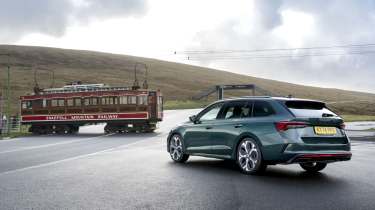
Launched in 2020, the fourth-generation car moulded the latest EA888 powertrain, chassis technology and interior HMI into the same practical performance package we’d come to love in its predecessors. A mid-life facelift a couple of years ago brought not only design tweaks to the model, but also chassis upgrades, the Mk8.5 Golf GTI’s uprated powertrain and interior tech to the table. We tested its real-world performance by heading to the Isle of Man.
> Volkswagen Golf R Mk8.5 review
Engine, gearbox and performance
It’s business as usual in the powertrain department, with the facelifted Mk4 Octavia vRS pairing the same 2-litre turbocharged EA888 four-cylinder with a seven speed DSG as standard – unlike the previous car, though, there’s no option of a manual, with it representing a fraction of total sales volume. What hasn’t stayed the same is power output, with a bump of 19bhp lifting output to 261bhp to match the Mk8.5 Golf GTI – torque is untouched at 273lb ft.
More reviews
While the changes might seem minor on paper, Skoda has also worked to make the powertrain more engaging than before through software tweaks. The DSG automatic is now sharper on upshifts and downshifts, with a rev flare on startup bringing a more purposeful sound to the Octavia range-topper. To improve sound further, it even now comes with a sports exhaust system as standard, with synthetic speaker sound now less prominent (more on that later).
As you might expect from such a mild power uplift, there hasn’t been a drastic change to the performance numbers. A two tenth improvement in the 0-62mph sprint brings the quoted timed down to 6.4 and 6.5sec for the saloon and estate respectively, with top speed at 155mph as before (unlike the Golf GTI it borrows its powertrain from, there’s no option to lift this limiter).
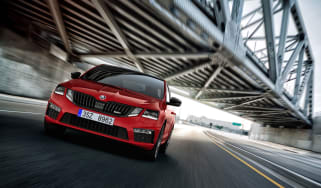
A vRS isn’t all about numbers though, with usable day-to-day performance the primary goal. You’ll be pleased to hear that the latest Octavia vRS meets this brief well, with plenty of performance on tap no matter the scenario. Even on the damp, undulating roads of the Isle of Man, the vRS treatment transforms a practical Octavia into an enjoyable driver’s car. It won’t keep up with the latest hot hatches, but it has just enough performance to give you the tools to enjoy a great road.
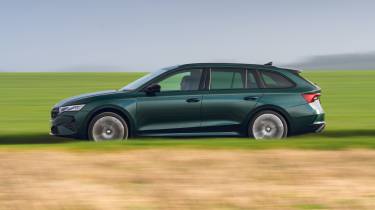
Apply throttle and the vRS picks up keenly in both estate and saloon guise, pulling you down the road and up to good pace without much thought – it’s not quite as quick as its lighter Golf GTI relative, but you don’t feel like you’re missing out on that extra performance. Those front tyres can scrabble for traction, and we experienced axle tramp on a few occasions, but thankfully, traction control provides some room for the electronic differential to work its magic before cutting in, unlike the Golf GTI. On the whole, performance is as solid as we’ve come to expect from a vRS.
The work Skoda has done to improve the gearbox has gone a long way to improving the sense of connection between the driver and powertrain, with downshifts now much swifter than before – the now-defunct manual undoubtedly did a better job at engaging the driver, but these tweaks make its departure less of a sad one. The gearbox is still far from as sharp as in the likes of the Golf R, and lacks some of the feedback kick you might experience in more potent machines, but it’s an effective tool for the task at hand.
The changes made to the sound have made it considerably more authentic too, reducing that tacky synthetic pumped-in exhaust sound and adding a more genuine soundtrack courtesy of a standard sports exhaust system. Not only does it improve exhaust note (which in-turn makes the powertrain feel more potent), it also provides subtle crackles on the overrun when you’re pushing on.
As with any EA888-powered performance model, economy isn’t particularly strong, with Skoda quoting 40.8mpg on the WLTP combined cycle – our mixed drive of fast b-roads, everyday traffic and 20mph village runs returned a 24.3mpg average.
Ride and handling
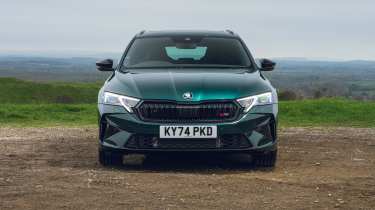
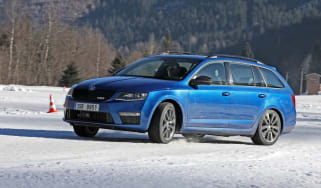
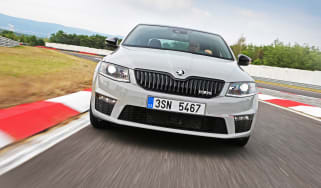
Heading out onto parts of the Isle of Man TT circuit and the facelifted Octavia vRS is immediately familiar. It has the same ability to flow down tricky roads at respectable pace as the last car, unflustered and inspiring great confidence. Body control is strong and despite a size (and weight) disadvantage over an equivalent hatchback, it doesn’t feel much bigger on the road. Steering is as linear as it was before, with the front end positive to provide the confidence you need on roads like this – its progressive rate steering rack lacks feel and off-centre bite, but then this is very rarely a strong point on any car at this price point.
Though the Octavia vRS manages its 1520kg (1535kg estate) mass well, low speed ride can be a little brittle, with the worst bumps sending a shock into the cabin when you wouldn’t usually expect it. Up the pace and knock the Dynamic Chassis Control (DCC) adaptive dampers (a £1185 option) to the softest setting and this is far less of an issue. Being a vRS, it comes fitted with almost every option as standard, but these dampers are something we’d recommend spending the extra cash on for that extra layer of adjustability (although admittedly, we’d drive with it on the softest setting the majority of the time).
The brakes inspire the same confidence as its chassis, with a linear pedal and plenty of power to match the performance on offer.
Interior and tech
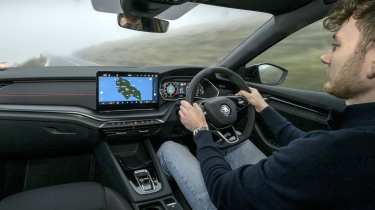
Step inside and the Octavia vRS is as functional as it always has been, with subtle touches made throughout to give it a sporting edge. Changes over the outgoing car are limited to tech for the most part, but there are few subtle material and design changes here and there – compare it side by side with the pre-facelift car and the matte door handles (as opposed to glossy chrome) are the most significant change at first glance.
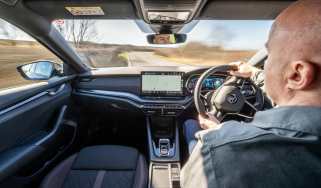
As before there’s a 10-inch digital dashboard for vital driver information, configurable depending on the drive mode and with multimedia information displayed in a window within. There’s a new and upgraded 13-inch central infotainment system in-line with that found in the Mk8.5 Volkswagen Golf, which is now snappier, sharper and much easier to use than before, thanks to a more intuitive UI and customisable shortcuts. A touch slider beneath the screen is also carried across from its Volkswagen counterparts, with handy physical buttons for vital controls set just below (something Volkswagens go without). The steering wheel features Skoda-specific physical controls of its own, with a pair of rotating dials and two sets of buttons making menu navigation and media playback much easier than in some of its Volkswagen Group relatives.
There’s plenty of red stitching to be found throughout, including on the steering wheel and Alcantara-clad dash. A pair of sports seats are equipped as standard in all Octavia vRS models, and while they’re more supportive than the kind in a standard car, their design is a little cheap in our eyes. This theme runs throughout the cabin, as while the red and black theme is consistent and sets it apart from a standard car, elements such as the hard plastic door grab handles and faux carbonfibre trim knock the sense of quality back a notch.
Regardless, you get an awful lot for your money, with virtually all kit coming as standard – only the Canton sound system (£660), head-up display (£700), winter packages (for the likes of a heated windscreen and steering wheel) and additional driver assistance system are an option.
Design
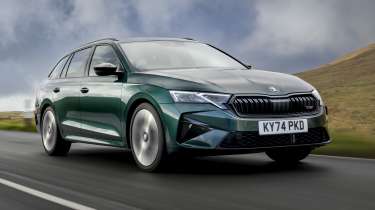
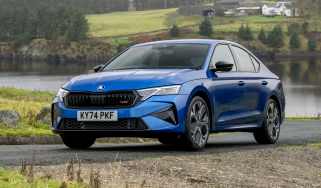
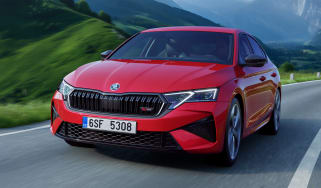
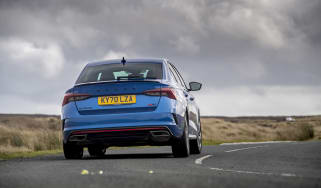
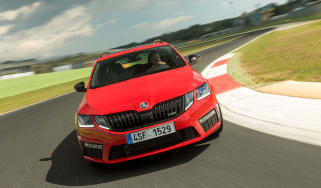
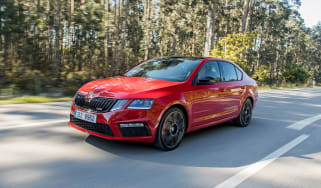
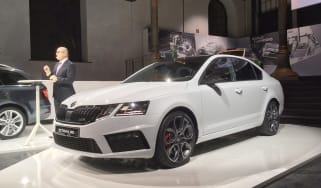
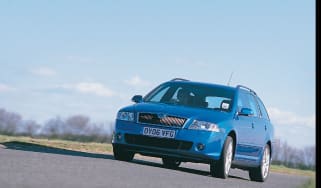
Changes to its design are very subtle, but look closely and you’ll spot revised bumpers at the front and rear, with the latter encompassing the same full-width reflector strip and twin tailpipes as before. Most notable are the newly designed head and taillights, now with sharper optics, and the redesigned 19-inch wheels (the sole wheel option for the UK market). Skoda has designed some great wheels over the years (including on the Mk1 Octavia vRS we also had the opportunity to sample), but the aero-centric aesthetic of these doesn’t quite match the Octavia vRS image.
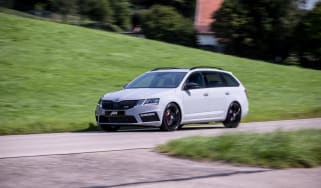
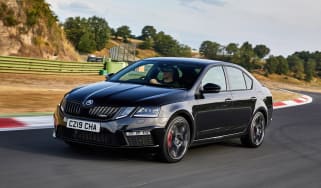
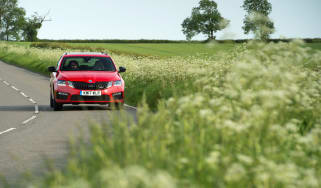
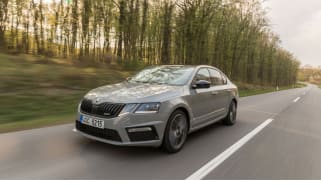
The Octavia vRS has always come with an understated Q-car-esque design, and this car is no exception. Its vRS status is immediately obvious for those in the know thanks to those unique bumpers and subtle lip spoiler, but otherwise, it blends into everyday traffic in a way that not many modern performance cars do.
Living with it

In the 1985 John Hughes film Weird Science, two teenage misfits use a supercomputer to create their ideal woman. Different times, ask your dad, etc. Fast-forward 40 years, and if you asked that same machine to spit out a car for where I am in life right now, I wouldn’t be surprised if the result looked a lot like the Skoda Octavia vRS.
Perhaps I should clarify that I’m saying this as a middle-aged man with two nearly grown-up kids and a modest household income. If money were no object, I’d be opting for a Porsche 911 S/T, thank you very much. But let me explain why the Skoda wins in the real world.
Size matters. Not too big, not too small. I need a car that’s practical enough to haul various family members around the country and one that can reliably ferry my youngest to swimming galas, training sessions, and day trips with his mates. So, five doors and a large boot, please.
Although I generally avoid talking boot sizes on these pages – this is evo after all – it’s impossible to ignore here. For a car of its size, the Octavia’s is enormous: well-shaped, deep, and genuinely useful. Meanwhile the cabin is properly spacious too, with generous legroom front and rear.
Back to the swimming child. Most of my weekends are spent battling Range Rovers for spaces in overcrowded car parks with tiny 1970s bays and narrow, kerbed multistorey ramps. It’s no secret that over the past few years cars have been getting bigger.
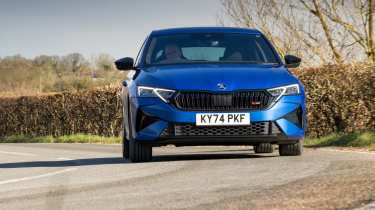
In fact, the average car is growing wider by about a centimetre every two years, according to research by the European Federation for Transport and Environment. Trouble is, most of the UK’s infrastructure didn’t get the memo. And yet somehow, KY74 PKF feels perfectly judged – just narrow enough to squeeze into tight spots, but roomy enough inside that no one’s arguing about who gets to sit where.
How is it to drive? Luckily our vRS has the optional (£1185) Dynamic Chassis Control, and after a bit of tinkering I’ve settled on the Comfort setting for this with a few tweaks elsewhere as my default configuration. But however you set it up, it’s a really responsive, quick, fun car to drive, as happy on a B-road as it is on a motorway or about town. And at around 33mpg average so far, it’s generous on the wallet without sacrificing performance (261bhp, 0-62mph in 6.4sec).
The only black mark in this supercomputer analogy? Looks. Being a designer (and a fussy one at that), aesthetics matter. Do I gaze at the Octavia wistfully each morning? Not really. In this department it’s not my dream car by any means. But do I look forward to spending time inside it and driving it? One hundred per cent. Absolutely. And for that reason, I’ll take it. Now, I wonder if Weird Science is on Netflix… – Richard Browne, evo issue 334
Price, specs and rivals
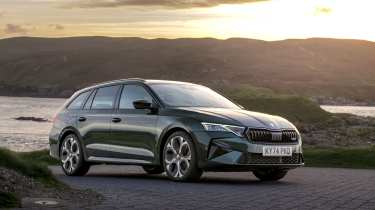
In 2026, the Octavia vRS costs from £40,660 (£41,765 for the estate). While this is over £11,000 more than the cheapest Octavia, it���s actually marginally less than the Mk8.5 Golf GTI, making it seem a reasonable prospect. With the option of a diesel and manual variant now stripped from the range, it’s now much simpler than before, with a single DSG variant of the saloon and estate to choose from.
There aren’t many close rivals outside of the Volkswagen Group in today’s market, but the £39,105 Ford Focus ST estate was perhaps the closest with 276bhp before it was discontinued. The Alfa Romeo Giulia Veloce offers similar on-paper performance at a near-£10,000 premium, and while it’s a much sharper driver’s car in the real world, whether it will prove to be as practical and usable day-to-day is another matter.
Both the Golf GTI and R are now available only as a hatchback, and while the latter is more capable and potent with all-wheel drive and a 328bhp output, its infuriating touch-based HMI and £46,850 price tag make it less attractive. The Cupra Leon estate is another option, but it’s a similar story here, with it priced from an even higher £50,625.
Skoda Octavia vRS specs
| Power | 261bhp @ 5250rpm - 6500rpm |
|---|---|
| Torque | 273lb ft @ 1600rpm - 4500rpm |
| 0-62mph | 6.4sec (6.5sec estate) |
| Top speed | 155mph |
| Weight (with driver) | 1520kg (1535kg estate) |
| Power-to-weight | 172bhp/ton |