Best small cars 2026 – new and used affordable fun runarounds
New small cars are dying out, so shortlisting the best of the breed means looking to the used market too
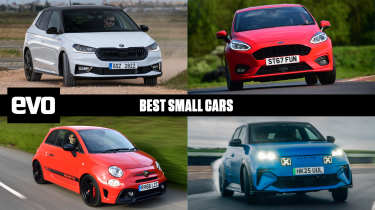
Small affordable cars have provided a platform for many a great performance car. For as long as the car has been around, small ones have been delivering some of the biggest smiles that it's possible to have on the road. And track, because small performance cars when done right hit hard regardless of the environment you drive them in. They’re the right size, lightweight, biddable and, most importantly, more often than not they are the cars so many of us cut our driving teeth in and honed our understanding of car control.
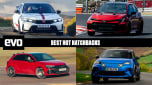
From those early exploits of experiencing and managing body control, to full-on lift-off oversteer, it’s all available in bite-sized chunks that teach the inexperienced and reward those with many more years under their driving shoes. Small sized performance cars offer something for everyone at every level. And regardless of where you are or who you park up with there is always an appreciation for the small and perfectly formed performance car.
Which makes it a crying shame that in a world where manufacturer profit margins continue to thin out, the herd of small, affordable, simple cars has never been thinner. So while this list features the very best new small performance cars, we’ve included some old favourites, too. With the passing of the Ford Fiesta, the genre has arguably lost its backbone an the loss of the Skoda Citigo/VW Up/Seat Mii triplets was a big blow for tiny lightweight runarounds. And we’re still very much in mourning for the demise of Renault Sport as we know it.
The options for a new small car are still excellent, mind, with a couple of electric contenders also sneaking into the mix as an option we can genuinely recommend. So without further delay, below are the best small cars to buy right now, from the new Renault 5, to the Skoda Fabia 130, with a mention in deference to the dearly departed Fiesta as a matter of course.
Alpine A290
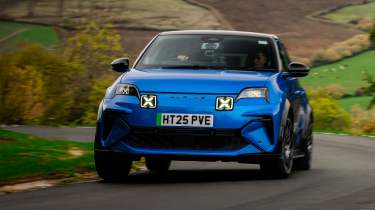
- Price from: £33,500 (GT)
- Pros - Bespoke chassis tune, performance
- Cons - lumpy ride, unruly when use all of its performance
You’ll find its Renault 5 cousin elsewhere on this list, but the Alpine A290 is the first bonafide new small performance car that’s been launched for nearly half a decade. Alpine didn’t need to rework a Renault 5 but we’re glad it did, even if it doesn’t reach the heady heights of a Renault Sport Clio.
Benchmarked against the brilliant A110, Alpine took the R5 and changed everything it felt necessary to produce a genuine supermini for the 21st Century that didn’t feel compromised by its powertrain. So while the multi-link rear suspension is retained, Alpine developed a new aluminium front subframe, fitted new springs and dampers, and hydraulic bumpstops. The front track is wider by 60mm too.
Its 52kWh battery is the same as that fitted to the R5, but outputs increase to 178bhp for the GT and 217bhp for the GTS model with revisions to the drive modes to make the most of the performance boost.
Sharper and more direct than the R5, the A290 is also firmer riding and is more raucous when you grab it by its scruff to the point that even with the electronic aids still switched on there’s torque steer and the requirement to keep a firm hand on the steering wheel. All very old school.
Some will find the ride too firm, but the payoff is a direct and bright supermini that enjoys being driven as hard as you’re willing to push. The rewards are less effervescent than an old Clio Trophy, but the short journeys can be turned into memorable trips. Although they will need to be short because the range is abysmal at circa 120-170 miles, depending on the ambient temperature.
Peugeot 208 GT Line
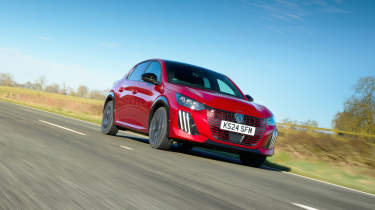
- Priced from £24,765
- Pros – lightweight, manual option, looks great
- Cons – Slightly rubbery shift, there's no petrol GTi
Built on the same PSA-built platform as the latest Vauxhall Corsa, the current Peugeot 208 was a marked step up from its predecessor. It’s endured too, as one of the best small car offerings on the market today. Buckets of technology, options of pure petrol, hybrid or an all-electric powertrains and a design that’s recently been refreshed help it stand out in today’s market.
> Peugeot 208 review – a fine alternative to the Ford Fiesta
Featuring the marque’s trademark ‘claw’ daytime running lights and bold, contrasting arches, the exterior design is something you’ll struggle to miss. A charming two-tone design and an aggressive front end make it one of the most attractive small cars on sale. Inside, its compact steering wheel and unique three-dimensional digital dashboard are a bit of an ergonomic car crash, with the former cutting of your line of sight to the latter, but there are reams of niceties such as USB-C charring ports front and rear, Apple CarPlay, heated seats and more should you opt for the GT Line.
Across the range as it stands, powertrain options are reasonable. We’d stick to the bottom of the range as the 1.2-litre, 100bhp petrol is the only engine available with a six-speed manual and delivers the purest small car-to fun vive. It’s also far lighter than the hybrid and electric versions. The mild-hybrid has an identical 100bhp, albeit only available with a six-speed automatic gearbox, as is the 134bhp model. The all-electric e208 lineup starts with an identical 134bhp, with a 154bhp version leading the e-208 range, albeit at a sturdy £32k, until the e-208 GTI later this year.
Mini Cooper
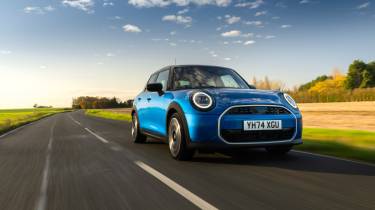
- Prices from £25,265
- Pros – Premium feel, fun drive, cutesy looks
- Cons – no more manual, Minis are now quite large
The regular Mini Cooper has always been a sweet spot in the Mini range and the current model is no exception, especially in this new generation where you can have a Mini Electric that’s almost a totally different (and worse) car underneath. It’s neither as fast nor as sharp as a Cooper S or John Cooper Works-badged model, but get the £25,265 Cooper on the right road and it still puts a grin on your face.
Part of this is down to the engine. While it hasn’t escaped the trend towards turbocharging, the 1.5-litre three-cylinder motor is smooth, reasonably punchy (154bhp, and 170lb ft) and willing to spin all the way to the red line.
And the softer set-up compared to hotter (and the heavier electric) Minis means it really flows down the road, aided by the same responsive steering as any other Mini and nice balance to the chassis. As a result it’s all the more exploitable and its lower levels of grip make it a more engaging car as you’re less isolated from what’s going on beneath you. You certainly shouldn’t rule out the three-pot Cooper if you’re after an uncomplicated, fun driving experience.
Skoda Fabia 130
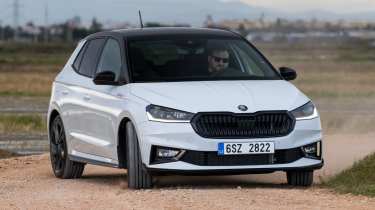
- Prices from: £29,995
- Pros - Quicker than you might expect, tight chassis
- Cons - DSG gearbox saps engagement
Don’t be foiled by its name, the Skoda Fabia 130 is actually a 175bhp supermini, the ‘130’ is part celebration of the Czech firm’s 130 year anniversary and part a nod to the 130 RS rally car. It’s as close as we’ll get in 2026 to a Fabia vRS.
While it’s easy to consider the Fabia 130 a rebadged Polo GTI, the Skoda shuns the VW’s EA888 2-litre engine, instead opting for the VW Group’s 1.5-litre TSI unit to produce its 175bhp and 184lb ft of torque. Drive is to the front wheels via VW’s seven-speed DSG gearbox.
Chassis upgrades include a lower ride height and bespoke spring and damper rates and they work hard to inject some enthusiasm to the Fabia’s chassis and how it drives. It’s not pin sharp like a Fiesta ST or Hyundai N model, or the very best Minis, but there’s some enthusiasm there to work with and it’s far from a flat performance. But there is an underlying feeling that Skoda’s engineers were held back in extracting the maximum from the Fabia, and left to their own devices a full blown vRS wouldn’t be far from the 130’s surface.
Renault Clio Esprit Alpine
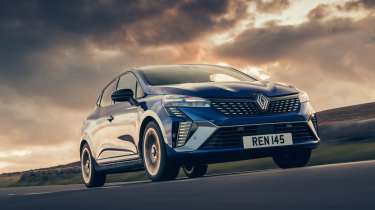
- From £20,995
- Pros – Stylish, good quality, ‘Esprit Alpine’ spec is cool
- Cons – The lack of a proper hot Clio still stings
The fifth-generation Renault Clio soldiers on as a stylish, surprisingly premium-feeling option in the small car space. Even though the Renault 5 is here and is the car of the moment the Clio remains a worthy option, that drives with fluency and balance. It’s even getting an ICE replacement in the near future.
For now, the facelifted model has a new snout, including crisp daytime-running LED lights, while there’s also the option of the intriguing Esprit Alpine trim line, giving it a sportier, almost Renault Sport-reminiscent look, Alpine badging and a sportier interior appointment.
Don’t get too excited, though. It is just a trim line, albeit one you can still have with a manual transmission, if you opt for the 89bhp three-cylinder engine. So-equipped, it’s no sprint champ, getting from 0-62mph in a fairly ponderous 12.2sec on the way to a 108mph top speed. The hybrid, while it dispenses with the manual transmission, is a bit more potent with 144bhp. It’s a bit heavier, but not so much that acceleration isn’t improved compared to the non-hybrid, with 62mph coming up in 9.3sec.
> Renault Sport Clio V6 (2001 - 2005) review: the mid-engined hatchback with a supercar spirit
The chassis is stronger than its powertrain, with the set-up in Esprit Alpine spec confidence inspiring. Predictably, steering is light and without much feel, but well-tuned damping provides some feedback and its spring rate is perfect for a car of this kind, being tight enough to lessen roll but with enough slack to make it comfortable on Britain’s rough roads – it’s certainly no full-fat Renault Sport model, but it’s still well suited for a B-road.
Inside, build quality is above what we used to expect of this segment and about on par with the Peugeot 208. Although the faux carbonfibre won’t be for some, the design is tasteful too. The seats blend artificial leather with fabric and offer a surprising level of bolstering, and although there’s some cheap plastic to be found throughout, all touchpoints feel solid. There’s an undeniable appeal in seeing those familiar ‘A’ badges every time you get in, too.
Renault 5
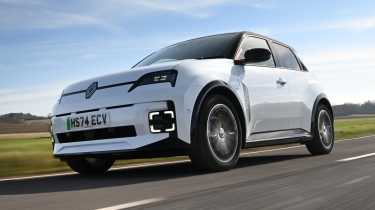
- Prices from £21,495
- Pros – affordable and desirable – alien concepts to most EVs
- Cons – Usual EV limitations – it has to fit your life
The Renault 5 has redefined what a small car can be in 2026 and what all electric cars should be. It taps into retro-chique design without being passe, it brings a level of material quality lacking in more premium brands and sectors, and it drives with such maturity and finesse it’s little wonder seemingly every driver and their dog wants one.
It has its limitations, the most significant being the poor range and how it’s impacted by cold weather (don’t expect more than 150 miles between October and March) and while it’s large for a Renault 5 in terms of footprint, there is a bit of a reverse Tardis going on with interior space.
Despite this, the R5 is everything you want from a ‘small’ electric car: it’s responsive, alert and alive and has that distinct agility that marks the very best small cars out as almost perfect for the task they are designed for. Away from the urban environment it’s primarily designed for, the Renault 5 is also a calm cruiser, whisper quiet bar for some rustling around the A-pillar that you only pick up on because there’s no drivetrain soundtrack.
A high quality interior and intuitive HMI system make day-to-day life in an R5 a step above your expectations, and if Renault can sort the range it’s almost perfect for those who need a small car regardless of the powertrain. It does, however, beg the question as to why you'd spend more on an A290.
Hyundai i20 N Line S
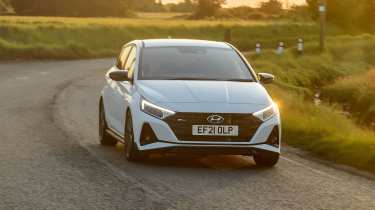
- Prices from £15,500
- Pros – Still a manual, lightweight, well-equipped
- Cons – Almost inexcusably slow
Hyundai’s i20 N is one of the all time greats, but is now only a used option until the Korean giant decides to develop a new internal combustion engined N model. Until then, there’s the i20 N-Line S, a 100bhp, petrol engined, six-speed manual supermini that’s little more trim and style than Nürburgring honed dynamics.
However, what made the i20 N such a cracking supermini was the strength of the foundations it was built on, the regular i20 being no damp squib. Granted 100hp and its 1-litre turbo motor isn’t going to fire your juices like a full-blooded N does, but it maintains a strong body control, neat ride and steering that allows you to build a flow and rhythm rather than a floating process of questionable directional control. If you’ve driven an i20 N you’ll spot what the N-Line models are missing within the first couple of hundred metres, but consider it an Ibiza FR type rival and you won’t be disappointed.
> Buy a used Hyundai i20 N-Line S here
Like all old-school superminis the 1-litre three-cylinder engine needs working to get the most from it (Hyundai did previously offer it with a mild-hybrid tech, but ditched that in 2024), but the six-speed manual provides a strong supporting role to help you on your way.
Interior quality isn’t perhaps what you’d expect from a Korean manufacturer and refinement at speed wouldn’t feel out of place a decade ago, but does today. If you can’t stretch to an i20N the N-Line S provides more driver focus than other sub-top tiered performance models.
Used Abarth 595
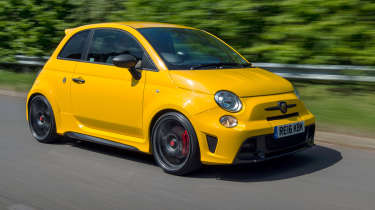
- Pros - Willing performance, individuality, retro design
- Cons - They forgot to fit any springs
- Prices from: £13,000
There’s no hiding from the fact that Abarth badged Fiat 500s were in production for over 15 years, but there’s also no hiding from its success and ubiquity. It only stayed in production for so long because people kept buying them, which means they must be good, right? Yes and no.
> Buy a used Abarth 595 here
In the Yes column is its modern-retro design, wheel at each corner handling and an unsuspecting turn of performance from its parpy powertrains. In the ‘No’ column is a less than fluid balance and a ride quality that those in polite society would call ‘bouncy’ while the rest of us will want to introduce the person responsible to a favoured instrument of torture. An Abarth 595’s ride quality, for example.
The 595’s 1.4-litre turbocharged motor is enthusiastic, the steering direct and the car’s responses therefore quick and spritely and always willing and able. Those who grew up on Leyland-era Minis and try to extract too much power from its A-Series engine and lower its chassis too much will feel at home in an Abarth.
A continuous stream of trims, specials and options means there’s an Abarth 595 out there for everyone, and while others are more sophisticated and polished the 595 has a character that’s sadly missing from so many modern era superminis.
Used Ford Fiesta ST-Line
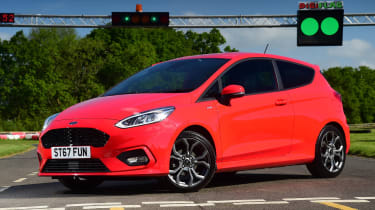
- Prices from £10k (2021- ST-Line with sub-40k miles)
- Pros – Looks nice, great to drive
- Cons – 1-litre engines don’t have the best reputation
The Mk8 Ford Fiesta in its final form was offered as a sporty ST-Line to bring sub-ST thrills with a surprisingly highly tuned three-cylinder engine and an agile chassis. If it had any faults, it was that the price wasn’t that far shy of the full ST’s at the time.
In its most potent form power came from a 1-litre turbocharged three-cylinder with hybrid assist, boasting 153bhp for a 9.2sec 0-62mph sprint. Just make sure on your hunt for a used Fiesta, that your chosen example has been diligently serviced. The wet-belt 1-litre mills don’t tolerate neglect when it comes to oil choice and change intervals.
Better than its straight-line performance is the chassis. It was the class of the field when new with the right balance, level of playfulness and just-so calibration to all its controls. Nothing since it departed has stepped up to take its place as the best small hatch money can buy in terms of driving fun.
Used Mazda 2
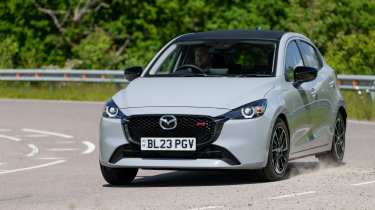
- Prices from £14k (for the last facelift)
- Pros – Good to drive, lovely manual shift
- Cons – It’s been feeling its age for a while
The latest casualty in the small car cull is the non-hybrid Mazda 2. It was getting on a bit, with this generation’s earliest iteration dating back to 2015, but it was a star offering in the class for driving fun. No, not fast. But beautifully calibrated in terms of how its controls feel and how the chassis responds to you. Nevermind in the small hatch class, its manual gear shift had a quality and weight to shame BMW M cars.
Mazda’s unique approach to powertrains was evident in the Mazda 2’s engine lineup, too. Relatively large 1.5-litre engines were actually the smallest you could get, albeit with 74bhp and 89bhp power figures to start. A 114bhp version sat atop the range in the end, with all of the last Mazda 2’s featuring mild hybrid tech. All the same, the little Mazda was a final holdout against automatic transmissions and was also a relative featherweight, at under 1200kg (including driver). It even featured mild brake torque vectoring for increased agility and stability at speed. That 1.5 has genuine sports car pedigree too, given a version of it powers the cooking MX-5.
Used Volkswagen Up GTI
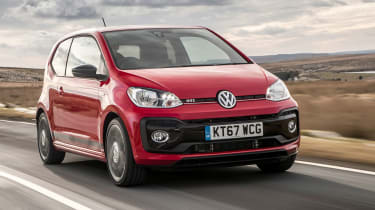
- Prices from £14k (2022 examples onwards)
- Pros – Peppy, great fun to drive, affordable
- Cons – Always left us wanting a little bit more
The 113bhp Volkswagen Up GTI was a rather charming machine. With its 8.8sec 0-62mph time it might not be mind-bendingly quick, but look beyond the six-stone weakling statistics and you’ll find a genuinely engaging pocket rocket.
Part of the VW's appeal is down to a couple of key features. The first is the Up GTI’s sub-ton kerb weight. Tipping the scales at just 995kg, the engine’s modest power suddenly looks more than sufficient, while its featherweight body also suggests the Up will be more than fun enough when presented with a corner or two. In reality, both are true; the Up GTI is brisk, even if it isn’t truly fast, and it’s eager, tenacious and eminently chuckable on a tight British B-road.
The other exciting number is the Up GTI’s price. Though it saw a substantial uplift over its years, the £16,390 it cost by the end still seemed good value. The prices you can get them for now make them very tempting. It doesn’t matter that it’s not the most agile car or that there are limitations to its suspension, because the torquey engine, quality interior, super-fast gear change, perfectly resolved looks and fun-loving driving experience mean that it feels like a true performance car bargain.