Volkswagen Group’s survival plan and how it got in such a mess
What was 2019’s largest carmaker is now cutting 100,000 jobs and 50 per cent of its models. How did it get here?

The timing is somewhat ironic. A decade after Dieselgate hit the headlines the VW Group is once again on the front pages, this time as it confirms its survival plan after what has been a tumultuous few years of unprecedented falling sales and tumbling profits.
Its plan will see a total of 100,000 jobs cut at every level, the number of different products the Group makes reduced by 50 per cent, the choice of trims of the remaining vehicles reduced by 75 per cent. The factories those cars are built in are also under the spotlight as VW deals with an over capacity issue of around 500,000 cars a year it builds but can’t sell. So too is Spanish brand Seat, which is most likely to disappear from showrooms by 2030. How, then, has 2019’s largest car manufacturer found itself in this position?
Volkswagen Group – what went wrong?
There is no one single area to point a finger at, certainly not what are considered recent challenges such as US tariffs, the slowdown of the Chinese car market coinciding with the rise of the home grown brands, and the war in the Middle East. They are undoubtedly factors but everyone is facing the same challenges and the VW Group’s struggles have been many years in the making.
Between 2015 and 2019 the Group generated annual revenues of around €350bn. It was selling between 9 and 10 million cars a year - in 2019 it sold 4.9 million in China alone generating between €4 and €5bn of profit - and traded the top spot for global car sales with Toyota. The pandemic, for obvious reasons, slowed things down but by 2023 VW Group was pretty much back to its previous position. Strong work considering there was also a global chip shortage to deal with during this time.
However, with success, continued growth and bulging bank balances can come complacency and assumptions that every idea discussed within the inner sanctum is a great one. It’s amplified further when there’s no longer an individual at the top who has experienced the lows, built everything back to the highs, faced every challenge along the way and is able to leverage this experience to find the next solution. For VW that was Ferdinand Piëch.
His departure in 2015 might have been followed by a golden patch of success for the Group, but this came with the benefit of his prior leadership and the legacy of his decision-making. Those global sales to rival Toyota and revenue and profits that had the money markets throwing cash at VW made those benefiting from their predecessor's strategy feel unstoppable. But this success came thanks to decisions made decades earlier. It was the decisions made in the post-Piëch era that has driven the VW Group into the obstacles it faces today.
Piëch left his role as Chairman of the Board of VW Group after he lost a power struggle with CEO Martin Winterkorn, the battle being down to Piëch being unhappy with falling margins in the US and a drop in efficiency across the Group, resulting in increased costs, a drop in quality and a fall in revenue. An engineer first he might have been, but few understood the financial DNA of a car company better than Piëch.
Winterkorn might have won his battle with the man who gave the world the Porsche 917, Audi Quattro and Bugatti Veyron, but four months after Piëch’s departure the former Audi boss also stepped down due to Dieselgate. VW’s been battling this demon and suffering the costs ever since.
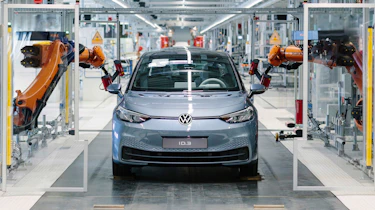
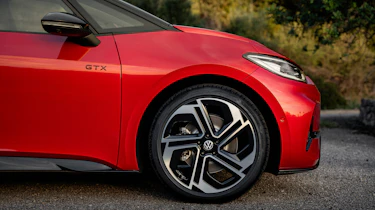
Volkswagen rushed to market its all-electric car programme - the ID models - in a bid to distance itself from Dieselgate. The only issue being the first car, the ID.3 simply wasn’t good enough when launched in 2019, striking another blow to the reputation of the mighty German brand that could seemingly do no wrong. This was after €6bn was spent on its platform, €1.2bn to convert the Group’s Zwickaau plant to built it and before the extra couple of hundred million euros required to fix the software, delaying the start of sales.
Initially, these costs were considered worthwhile as it was around 40 per cent cheaper to build an ID.3 than convert the then current Golf to a battery electric vehicle. There was also the scale offered by the MEB platform the ID.3 is built on, which to date underpins nearly 20 different models across the Group. The problem was - and still is - that not enough people bought them.
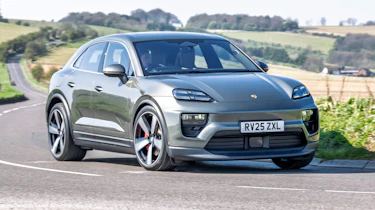
Another issue was the €10bn loss Herbert Diess, who took over the CEO role at VW Group in 2018, oversaw with his insistence that its CARIAD software was going to be the solution for the Group. This delay resulted in the electric Porsche Macan and Audi Q6 e-tron models arriving in showrooms 24 months late, the lost sales costing the former €2.5bn and the latter €3bn. Then VW had to pay Rivian $5.8bn for an alternative software stack once Diess threw in the CARIAD towel before he was eventually thrown out of the boardroom.
All the while sales were beginning to slip, profitability was stalling or in most cases falling. When the Group was required to make the big decision for its future it was too busy putting out fires many considered it had built and ignited by poorly thought out decisions and simple bad management.
The decision to allow Oliver Blume to run both Porsche and the VW Group was one the markets and unions never took to, eventually resulting in Blume handing the Porsche reigns to ex-McLaren, ex-Ferrari and ex-Porsche man Micheal Lieters, while he picked up the fire extinguisher and set to work rebuilding the Group’s finances.
2025 saw a 53 per cent drop in profits with Audi, Porsche, VW, Bentley and Seat all reporting declines. Only Skoda and Cupra returned positive increases and Lamborghini’s successes are wrapped into Audi’s overall financial performance. Sales in North America and China also fell by 10.4 and eight per cent respectively. The share price has also fallen 27 per cent year to date from January 2026 with the money markets rating its stock as BBB+, which is above junk status but still too close for comfort. Now the VW Group is hitting the reset button.
The plan to save VW
100,000 job losses have now been confirmed (an additional 50,000 have been added this month following the same figure announced in March 2026). 75 of the current 150 models available across the Group will be axed. Volkswagen alone makes seven SUVs (all with a name beginning with a ‘T’) of which only three being what you’d call ‘core’ product: the flagship Touareg, family favourite Tiguan, and strong-selling T-Roc. North American customers should also forget about buying their next Jetta or Taos.
On top of the cuts to VW’s model lines, the next Porsche Taycan is under consideration, so too the fitment of an internal combustion engine to the next Boxster. The likes of the Audi Q5 Sportback and Q6 e-tron Sportback are not expected to be replaced and may even enjoy an early retirement. Skoda’s Fabia is unlikely to survive because it’s essentially a Seat Ibiza and Seat is not expected to exist beyond 2030, a victim of the success of its performance offspring, Cupra. Oh, and the 100 different steering wheel options Audi offers? You’ll have five to pick from. Likewise, the 2000+ different configurations of seat across designs, types, materials and styles available from Audi, Bentley and Lamborghini will also go.
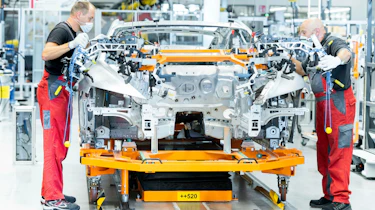
Then comes the painful issue of factories. Blume has identified four within the Group that he believes will help address its 500,000 unit oversupply issue. These are the Zwickaau plant, Emden that builds the ID.4 and the ID.7, Hanover which builds VW’s multivan and ID Buzz (another spectacular commercial failure) and Audi’s Neckarsulm plant that’s home to the A6, A8 and e-tron GT. Combined they produce in the region of 750,000 vehicles a year and employ over 40,000 people.
On top of the axe being wielded in Europe, VW is also addressing its issues in China. It has put in place an objective to produce cars at a cost parity with local manufacturers and cut development times between 30 and 50 per cent by bypassing the walking-through-treacle procedures of having to send every decision back to Germany for approval. This alone is expected to shorten product development times from 50 months to between 18 and 24. It is also implementing an additional 10 per cent cost saving process on top of the 40 per cent it has already promised in 2026.
This isn’t the last roll of the dice for VW Group, but it is a wake-up call to those inside whose attitude has been that they were too big to fail and they could do no wrong. For all the expertise in the room, VW Group has lacked a visionary leader during the last decade, for which it is is paying a heavy price that it can no longer afford.