Best sports cars 2026 – purpose-built driver’s cars from Mazda to Porsche
The sports car genre has lost key players in recent times, but there’s still a diverse selection to choose from – plus some tempting used options. We choose the best

The sports car class is a varied breed in 2026. It encapsulates everything from tiny sub-200bhp roadsters costing £30k to thumping £150k, 600bhp+ pseudo supercars. They feature any number of different engine types in different positions, with varied cylinder counts, natural aspiration or forced induction, manual or automatic gearboxes, two- or four-wheel drive…
But while they come in many forms, at many price points, all have one thing in common: a sports car’s raison d’être is to make you, the driver, the most integral part of the experience. This gives these cars intense focus – they need to be capable but above all else, entertaining.
In its rawest form a sports car can be incredibly sparse and uncompromising, but the best modern examples manage to be usable while still offering the purity and involvement to thrill on the right road. Here, we pick our favourite sports cars currently on sale, plus five used options to suit any budget.
Best sports cars 2026
- Aston Martin Vantage S
- Mazda MX-5
- Porsche 911 Carrera T
- Lotus Emira 420 Sport
- Ford Mustang GT
- Morgan Supersport 400
- Mercedes-AMG GT
- BMW M2 CS
- Corvette C8
Five used alternatives
Aston Martin Vantage S

- Pros: Ferociously quick but genuinely useable
- Cons: It’ll set you back £175k
- evo Rating: 5 stars
If the landscape of lower-end sports cars is looking a bit barren in 2026, the higher end, where sports car meets supercar, is booming. The Aston Martin Vantage is a case in point. Yes, it’s hugely more powerful than its predecessor, but it’s how the Vantage feels that earns it a place as one of the best (super) sports cars you can buy right now. Specifically the S version, which is a small but appreciable upgrade with detail changes to its chassis and a tune up to 671bhp.
With superb balance, a transparent dialogue through the steering and chassis, that potency is yours to wield to the extent you choose. Happily, the Vantage S also retains some Aston grand touring DNA. The ride can be a little choppy but the engine is effortless, and the current Vantage’s revamped cabin makes it a very habitable sports car. As a package it’s much more special than a 911 Turbo S – not as competent, but more theatrical and exciting. That’s a good place for a baby Aston to be.
‘You can’t edge up to the limit, you’ve just got to get stuck in. But load up the chassis, push the tyres and you’ll find that the Vantage S is remarkably friendly. You can really lean into the systems too, because both the slightly looser Track setting for the ESP and then the eight steps of traction control when you turn the ESP all the way off are hugely reassuring if you call on them. Combined with the e-diff, they make for a car that is surprisingly confidence-inspiring at the limit and easy to catch when it starts to slide, even when the surface is damp.’ – Henry Catchpole, evo contributor.
Alternatives to the Aston Martin Vantage
The Vantage S is a proper jack of all trades and a master of most. It can play sports car, supercar or everyday tourer and as such, you could count key rivals as everything from the Porsche 911, to the McLaren Artura, to the Maserati GranTurismo.
> Aston Martin Vantage S review
Mazda MX-5
- Pros – Lightweight and balanced; fab transmission; great fun at road speeds
- Cons – Engine a little dull; not for those wanting ultimate speed and grip
- evo Rating: 5 stars
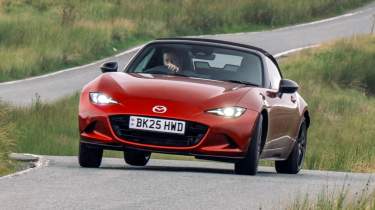
Believers will rejoice and skeptics will laugh, but there’s no doubting that the latest Mazda MX-5 offers some of the best bang for your buck as a driver’s car. The top-spec 2-litre four-cylinder engine is no more powerful, its dimensions and weight remain the same and its bodywork isn’t significantly different, but none of that matters.
What ties the latest model together as a great driver’s car is its revised limited-slip diff and tweaked steering, to join the Bilstein dampers and bigger brakes the MX-5 has had for a little while. The result is the MX-5 debugged, with just enough in its dynamic repertoire to be taken seriously, without corrupting the purist ethos.
Fundamentally, being a manual, two-seat, open-top, naturally-aspirated, rear-wheel drive car in 2026 is enough of a novelty. Add in that it’s not far off 1000kg makes it positively alien in today’s market. That it’s brilliant to drive means you should genuinely short-list it. We did, putting it on the podium during eCoty 2024, alongside a McLaren…
> Mazda MX-5 review – Japan’s evergreen roadster punches above its weight
There’s as much joy in wringing out a slow car as there is tapping into the massive power reserves of a really potent one: keeping the revs singing, opening the throttle to full before the apex, doing everything you can to conserve momentum. And working away at the gearbox to do so.’ – James Taylor, evo deputy editor.
Alternatives to the Mazda MX-5
So unique is the Mazda MX-5 in what it offers that it doesn’t really have any direct rivals, in terms of price point or concept. A used GR86 gets close, or a minty fresh Honda S2000. The Alpine A110 has a similar lightweight ethos trading on sensation over raw performance, but is no longer available new.
Porsche 911 Carrera T
- Pros – The purest and most interactive 911 this side of a GT3
- Cons – Tougher ride and noisier cabin won’t be for everyone
- evo Rating: 5 stars
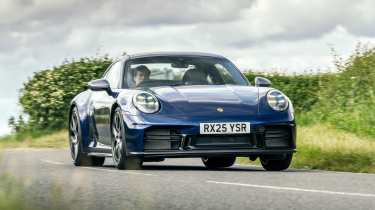
While it might seem predictable, the Porsche 911 is the universal sports car benchmark, still now in its latest 992.2 generation. What’s strange is that this is the first 911 where you’ll need one of the lesser-known editions in order to get a manual, if you can’t stretch to a GT3.
The Carrera T is the most focused 911 south of a GT3 happily, and is more tailored than ever to the job of being the ‘enthusiast’s 911’, wearing its analogue chops on its sleeve. But beyond the little window stickers and the walnut shift knob, the Carrera T is a real sweetheart of a car, with all the balance of a standard Carrera, with a bit more focus and interactivity, thanks to choice chassis upgrades such as rear-axle steering, lowered PASM suspension and retuned anti-roll bars.
If you want more power, there is of course the 911 GTS T-Hybrid, which we’d say is the other pick of the new 911 range alongside the Carrera T. It shows the potential of an electrified 911 with performance that’s only just Turbo-lite.
> Porsche 911 Carrera T review
‘The T’s added rawness is well judged and gives it a genuine sports car feel where the 992 has sometimes been accused of being too grown up. It’s purer and more exploitable than an AMG GT, more communicative and finely tuned than an M4 CS.’ – Yousuf Ashraf, evo senior staff writer.
Alternatives to the Porsche 911 Carrera T
The best alternative to a Porsche is often another Porsche, and we’d recommend any prospective Carrera T buyer take a look at how much used GT3 they could get for their money. Likewise there are sublime Cayman GT4s and Boxster Spyders out there for folding money less. In the current market? The Lotus Emira 420 Sport is a potential alternative.
Lotus Emira 420 Sport
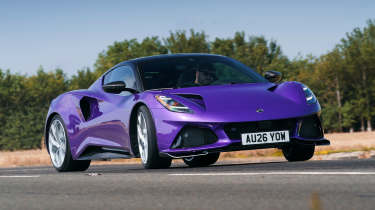
- Pros – Much of the Emira’s potential realised
- Cons – Gearbox not PDK-quality, slightly aloof nose, Handling Pack essential but expensive
- evo Rating: 4.5 stars
The first all-new Lotus in 15 years was always going to be a big thing, but since day one, the Emira hasn’t quite hit the spot. It’s a very solid and capable package, but the magic and fluidity we expected from a brand new sports car from Hethel. With the new 420 Sport, however, the Emira has been honed into something more purposeful and entertaining, turning it into a genuine Porsche 911 rival.
The 420 is based on the four-cylinder automatic version of the Emira, with a 416bhp state of tune. It’s not the most exotic-sounding engine but there’s plenty of old-school turbo character, and more important is that the chassis now has a level of precision and control to really make use of it. As standard the 420 Sport is stiffer than other Emiras, but you can go a step further and spec the Lightweight Handling Pack, which includes manually adjustable Multimatic dampers as well as lightweight components and a titanium exhaust.
The result is a biddable and highly entertaining sports car, composed and controlled but playful when you want it to be. The absolute precision and dialled in feel of a 911 is perhaps still missing, but the 420 Sport is the best Emira yet, and one of our favourite sports cars.
‘The hydraulic steering is silky and well-weighted in Track mode (my favourite over Sport and Tour) and while it does gently spasm as the tyres deflect across cambers and ruts, it gives a feeling of connection, rarely straying into distracting or disconcerting territory. What isn’t quite perfectly resolved here is that initial sense of aloofness. A current 911 GT3 clearly articulates whether your direction change request was ham-fisted or well-judged, allowing the car to load both its front and rear sidewalls with a neutral stance.’ – Ethan Jupp, evo Web Editor.
Alternatives to the Lotus Emira
At its £100k-plus price tag the 420 Sport has fierce rivals to contend with. The Porsche 911 is the obvious alternative, with the Carrera T offering a visceral, three-pedal driving experience for £3k more than a handling pack-equipped 420 Sport. You could also count a manual BMW M2 CS as a viable alternative, or the Mercedes-AMG GT for something more usable and refined.
> Lotus Emira 420 Sport review
Ford Mustang GT
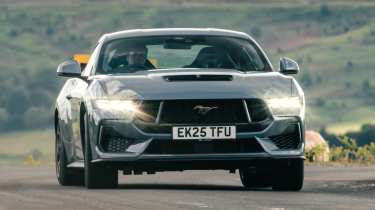
- Pros – An analogue, involving V8 coupe
- Cons – Still not a truly exciting sports car
- evo Rating: 4 stars
So broad is the definition of sports car that a pony car from across the pond counts itself as one. It’s right at the heavier, more crude end of the spectrum but it deserves enormous credit for keeping alive the kind of motoring stimuli that are by and large dying out, at least in the affordable echelons of enthusiast cars – a naturally-aspirated V8 engine, a proper six-speed manual transmission. Never before has the Mustang quite so effectively transcended the appeal of its own iconography with genuine talent.
Our money wouldn’t be on it getting anywhere near, let alone toppling, an A110 or a Cayman or Boxster for poise or control but it’s a car you can develop a flow with and stroke along at generous-enough pace, rowing at the steering and leaning on the chassis. Your mates in their Porsches might walk away across ground but you’ll be having just as much fun at a lower pace. The V8 and the looks are the Mustang things we know and celebrate. The fact it’s a 2+2 coupe with something of a boot, adds a less discussed dimension to its capability. You could grand tour in this car.
‘There’s a boat-like feel to the Mustang: it sits down at the rear under acceleration and the big bonnet lifts ahead of you. Climbing steep hills, you occasionally need to sit up in the seat to see past the nose, since there’s so much bonnet ahead of you. The MagneRide dampers’ firmest setting is a little harsh for these roads; Sport is the sweet spot. The Mustang is more a momentum car than point-and-squirt, and you can carry good speed. It’s fun alright.’ – James Taylor, evo deputy editor, who tested the M2 against rivals on the road in the UK.
Alternatives to the Ford Mustang GT
The BMW M2 is the chief rival to the Mustang, adding precision to an equally yobbish recipe, that’s perhaps a little shorter than the Mustang on character. There aren’t many other cars like it left, though there are a few left-hooker sixth-generation Chevrolet Camaros knocking around on the used market.
Morgan Supersport 400
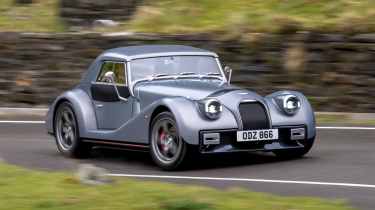
- Pros – Supersport finds its voice, and a dizzying turn of pace
- Cons – Costs an extra £30k, needs concentration at the limit
- evo Rating: 5 stars
Morgans are always the oddball of the sports car class and the new Supersport, in spite of it being the most versatile, contemporary we’ve yet seen, is no exception. It doesn’t have quite the same level of polish, poise and togetherness of something like a Cayman GTS 4.0, but it marries genuine leaps in all those areas with charm only a Morgan can muster. On our 2025 evo Car of the Year test, that heady cocktail catapulted the Supersport higher up the finishing order than the Mercedes-AMG GT Pro.
With the Supersport 400, more intensity has been added by virtue of a 67bhp power hike to 402bhp, a more vocal active exhaust system, forged wheels and standard-fit adjustable Nitron dampers (an option on the base car), with stiffer baseline settings. The result is a much more vivid driving experience with a more responsive feel, and an engine that’s still smooth but more frenetic when fully wound up, with a better soundtrack. The upgrades complement the charming way the Supersport goes down a road, feeling more like an older sports car in how it communicates, flows and moves around at modest speeds.
‘Together with the searing turn of pace it’s now capable of, and the sharpened chassis response, the 400 specification makes the Supersport a truly exciting experience. The regular model is already a very talented, covetable car and these latest developments lend it an extra dimension. Ride quality is a subjective thing but for me it’s still comfortable, even on the stiffer damper settings.’ – James Taylor, evo deputy editor.
Alternatives to the Morgan Supersport
At £138,883, the Supersport 400 moves up to the sports car big leagues, sitting near the likes of the Porsche 911 GTS and Lotus Emira 420 Sport in terms of price. Malvern’s boutique machine is a totally different proposition to both but as the most usable and refined Morgan yet, you could genuinely consider it over a more mainstream sports cars as a weekend toy.
> Morgan Supersport 400 review
Mercedes-AMG GT

- Pros – A secure, sure-footed and crushingly effective coupe
- Cons – Expensive; still more remote than a 911
- evo Rating: 4.5 stars
On face value, the new Mercedes-AMG GT is more compromised than the last one. It's no longer a two-seater sports car, but a larger four-seater based on the SL – a car that came stone dead last at evo Car of the Year in 2022. And yet the new GT is being pitched squarely at the Porsche 911 and aims to be faster, more engaging and more practical than before. The building blocks seem incompatible with this, but somehow, Mercedes-AMG has pulled it off.
It starts with the engine. Mercedes' 4-litre twin-turbocharged V8 has been muffled slightly in this application (thank emissions rules for that), but it still generates 577bhp and 590lb ft in the top-spec GT 63. Thanks to four-wheel drive, the latest GT makes better use of its power than before to sprint to 62mph in just 3.2sec, matching the previous Black Series model.
The engine is housed in a stiffer space frame chassis that uses a plethora of electronic systems – from rear-wheel steering to active anti-roll bars and hydraulically cross-linked dampers – to deliver precision and capability that is a match for the best in class. But there's breadth here too, as the GT can be dialled down to Comfort mode to deliver a cosseting, low-effort driving experience for every day use.
‘Where the GT ups the ante over its predecessor is when you dial the modes up. Sport+ locks everything down, but rather than turning the chassis into a bobsled it adds precision and alertness. There’s more weight to the steering – more an attempt to suggest feel than anything else – but it suits the GT when you begin to hustle it along.’ – Stuart Gallagher, evo editor-in-chief, who tested the new AMG GT on the road.
Alternatives to the Mercedes-AMG GT
The AMG GT is an easily placable sports GT within the marketplace, with alternatives including the Porsche 911 and the Aston Martin Vantage. You could also take a BMW M4 CS as a more practical yet more hardcore option, for less cash too.
BMW M2 CS
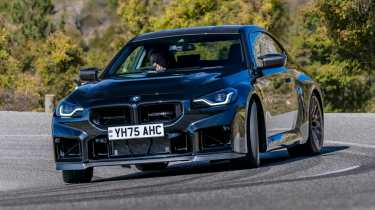
- Pros – A fun, expressive, stonkingly fast M car
- Cons – Steering lacks connection; expensive
- evo Rating: 4.5 stars
BMW may have opted for a Mini-derived platform for the latest 1-series, but the 2-series coupe remains a true BMW right through to its DNA. It borrows its CLAR architecture from the 4-series, and this forms a fantastic basis for the M2, which has 473bhp in base form and 523bhp as a CS.
The last M2 didn't quite hit the spot at launch by virtue of its unrefined, jumpy dynamics, but it evolved into an evo Car of the Year winner by the time the CS version landed in 2020. The latest G87 started off on the right foot, though, with an indulgent rear-drive chassis, a stellar powerplant and the option of a manual gearbox. It's shorter, stiffer and keener than the M3 and M4, and it feels every bit the junior M car we'd hoped for.
The M2 CS adds an extra level of precision to the mix in addition to that glob of power, especially when fitted with more aggressive Cup 2 rubber. Though it’s only offered with the eight-speed automatic transmission, the reworked suspension, steering and differential settings add up to a tighter M2 that makes the omission worth it.
‘It still finds impressive traction if you’re smooth, but slip is often just a toe-twitch away, particularly when loaded up through a corner with the engine primed in the lower gears. You can point the nose in and induce subtle slides that require barely any correction, neatly overdriving the rears until they regain traction again.’ – Yousuf Ashraf, evo senior staff writer.
Alternatives to the BMW M2
The Ford Mustang is probably the M2’s closest rival, though a used M4 offers an appealing, more grown-up alternative from within BMW’s own ranks. Look at a used Porsche 718 GTS for a more precise but less practical sports car with its own six-cylinder sweetheart of an engine and if you must have a manual, the base M2 isn’t so much of a downgrade, especially given the cash you save.
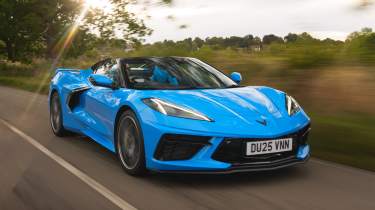
Chevrolet Corvette C8 Stingray
- Pros – Stonking V8 engine; great chassis; cheaper than a 911
- Cons – More expensive than it once was; Z06 is too busy on bumpy roads
- evo Rating: 4.5 stars
There are a few good reasons why the latest and best Corvette (now available in right-hand drive form) isn’t being celebrated as much as some might have expected. The first is price. Though it’s brilliant, it’s still not quite on the same level as a 911 on its best day and at £97,760, much of the price advantage the Corvette used to enjoy is eroded.
Nonetheless, it’s still less than a base Carrera and for that you do get an awful lot of car – 482bhp from a 6.2-litre V8, magnetic dampers, double wishbone suspension all round, an eight-speed dual-clutch transmission and genuine supercar aping (if polarising) looks. It’s also the closest a Corvette’s ever got to European standards in terms of interior quality.
Most important is how it drives and thankfully all those components coalesce into a properly talented sports car, one that’s sharp, responsive and rewarding but also friendly, with great flow on the road.
> Chevrolet Corvette C8 review
‘Where you’ll struggle to break the Porsche’s composure on the road, the Stingray feels bigger, less keyed in and more relaxed when pushing it hard. That’s not to say it isn’t a rewarding, cohesive car. Dial it back from the limit (where you’ll spend most of your time) and you can settle into the fluid ride, crisp gearbox and wonderful engine to make satisfying progress.’ – Yousuf Ashraf, evo senior staff writer.
Alternatives to the C8 Corvette
It’s strange to say that you can spend the same money on this mid-engined pseudo supercar as on a BMW M2, but with the CS, you very much can. It’s probably the premier front-engined option for the money. The real target? The 911, which of course is priced above the C8 even from the entry level, a basic 911 Carrera now being a £100k+ car. A used 911 Carrera GTS T-Hybrid for not much more than a new C8 would be awfully tempting.
Best used sports cars
Toyota MR2 (Mk3)
Prices from £5k
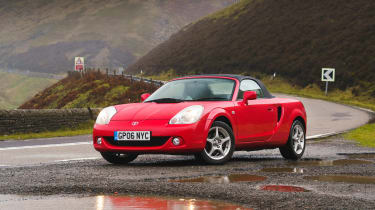
The Mazda MX-5 is always the answer when it comes to cheap, accessible open-top sports cars. Or is it? The third-generation Toyota MR2 has a similar performance level, is similar in size but has its engine in the middle, and a more focused edge to its driving experience. It’s a finely balanced sports car with a hint of Lotus in its character and sense of purity, and in our eyes, the affordable Japanese roadster of choice.
As standard the MR2 has 138bhp, but given it weighs an equally modest 975kg it has a wonderful delicacy and flow, and a decent turn of performance. On track you’ll quickly want for more – which is where the easily modified Mazda MX-5 holds an advantage – but there’s so much joy to be had in maintaining your momentum and stringing corners together. If you can’t stretch to the Lotus Elise next in this list, this is as close as you can get.
Lotus Elise
Prices from £16k
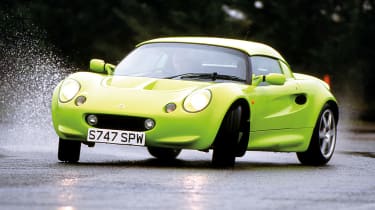
The Elise needs no introduction. You could call it the definitive Lotus, because it captures all the key tenets that make Hethel’s sports cars so unique and endearing. Low mass, ingenious engineering, superb feedback and a chassis tailored for the lumps and bumps of British roads. Few sports cars this side of a Caterham are as visceral and exciting.
The Series 1 Elise is the purest of them all, with a kerb weight not far north of 700kg and a compact, lightweight Rover K-series engine strapped to your back. Later S2 models were more habitable, and eventually introduced a more reliable (but less characterful) Toyota engine. The S3 is the most usable of the lot, and introduced track-focused variants like the Sport 240 and Cup 250. Whatever your chosen flavour of Elise, you’ll be in for a driving experience that rivals supercars in terms of the raw thrills it delivers.
Audi R8 V8
Prices from £35k
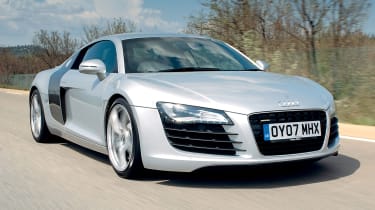
How often does a ‘911 beater’ actually live up to its title? You can probably count the number of cars that have taken on and beaten Porsche’s sports car on one hand, and in 2007 the original Audi R8 became a member of the club. It was an ambitious, forward-looking V8 coupe but Audi of the time weren’t known for stellar dynamics, so consider us shocked when the R8 proved to be more poised and rewarding than a 997 Carrera.
These days the R8 is under appreciated on the used market, with good examples costing from just £35k – the same as a new, top-spec Mazda MX-5. For that you get a sports car with real star quality, with a glorious naturally-aspirated V8, a balanced four-wheel drive chassis and styling that still looks fresh today. It’s one of the second-hand bargains of the moment – just make sure to get one with a manual, rather than the single-clutch R-tronic ‘box.
Porsche Cayman GT4
Prices from £55k

Any evo Car of the Year winner is deeply special by default, but the Porsche Cayman GT4 goes further by being one of the all-time great sports cars – a car we’d waited years for Porsche to build, and one that delivered on all its promises when it arrived. It was the first time Porsche’s GT department had lavished its attention on the Boxster/Cayman platform, and in 2015 it felt like a breath of fresh air – just the right size, enough performance without being overwhelming, and a standard-fit manual gearbox where other sports cars (including Porsche’s own 991 GT3) were moving towards paddles.
The GT4 is as adept on track as it is on the road, yet it can also happily be used as a daily driver without major compromises over a standard Cayman. Today, the original 981-generation car costs from £55k, with the updated 4-litre 718 model costing from £70k.
Porsche 911 (997) GT3
Prices from £75k

Porsche can be applauded for keeping the GT3’s formula true and intact across its 27-year tenure, but some generations capture what we love about hardened, track-focused 911s better than others. The 997-generation car arguably does it best; it’s the last version with hydraulically assisted steering, a Mezger flat-six and only available with a manual gearbox, no ifs or buts.
Later models are more capable and precise, certainly, but the 997 has a rawness that eludes them, and typical 911 traits are more evident in how it drives. It’s still quick by today’s standards too, with early cars producing 409bhp and facelifted Gen 2 models putting out 429bhp. Tidy Gen 1s cost from around £75k today, with the Gen 2 being around £15k more.