Best coupes – driver’s cars that major on speed and style
Two-door fixed-roof performance cars come in a variety of different flavours – these are evo’s favourites
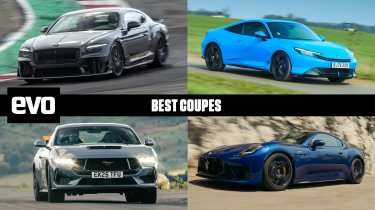
The market for fast, desirable coupes is as diverse as ever. GTs, purpose-built sports cars and supercars all fall within the church of coupe, each offering unique driving and ownership experiences.
The variety is such that it’s impossible to compare them all, so we've chosen our favourite coupes not only on their speed and ability to thrill, but on how well they execute their chosen brief. Any coupe is a choice, one that shows you value style and performance over practicality and have an interest in cars beyond mere transportation.
Our cross-section of the market represents a spread of different types of coupe. You’ll find cars with four-, six- and eight-cylinder engines, turbocharged and naturally aspirated, front-mounted, mid-mounted and rear-mounted, plus a myriad of different characters. Above all, these choices are great to drive, but in wonderfully different ways. And if none of these appeal, we’ve five five-star used options at the bottom too.
Best coupes 2026
- Bentley Supersports
- Ferrari Amalfi
- Maserati GranTurismo Trofeo
- Aston Martin DB12 S
- Chevrolet Corvette E-Ray
- McLaren Artura
- Honda Prelude
- Aston Martin Vantage
- Mercedes-AMG GT
- BMW M4 Competition xDrive
- BMW M2 CS
- Ford Mustang GT
Bentley Supersports
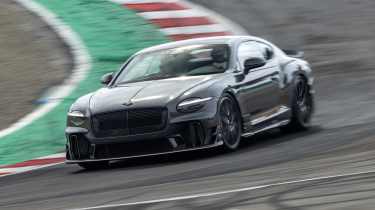
- Pros – More fun and track-capable than regular Conti without losing its GT character
- Cons – We’ll have to drive it on the road for a definitive verdict
- evo rating: 4.5 stars
Don’t call it a Continental, for this is just the Bentley Supersports. While it looks like a current Continental GT wearing some more aggressive visual and aerodynamic addenda, it’s a whole 500kg lighter than the GT Speed on which it’s based. To that end, it dispenses with the GT’s rear seats, front drive shafts and the entirety of its hybrid system. Those last two bits really do justify the Supersports being its own thing, as that transforms the character of the car.
It’s lighter-footed, sharper and more feelsome than any Continental GT that’s gone before, which is strong work given how much we like current car. With ‘just’ 657bhp and 590lb ft, it’s technically less powerful than any Continental GT currently on sale but then, that is all coming from the 4-litre twin-turbo V8 that now features larger turbos and the reintroduction of variable valve timing. And of course, it’s shifting so much less weight. It’s still not a flyweight, being only slightly under 2000kg but it’s still the lightest – and probably by our measure the best – Bentley ever made.
Ferrari Amalfi
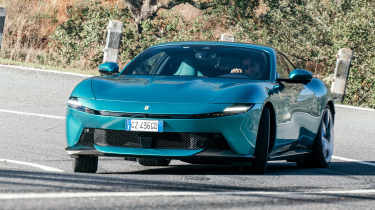
- Pros – A GT with huge performance and dynamic bandwidth
- Cons – Lacks a soulful voice
- evo rating: 4.5 stars
The Ferrari Amalfi is an expert take on the classical front-engined GT. In the way it drives it could only be a Ferrari, yet it offers a level of usability and cruising comfort that would make it a joy to use daily, all wrapped up in an elegant coupe body.
With a twin-turbo 631bhp V8 in the nose, the Amalfi has performance in reserve, but there are qualities beyond raw speed that make it a truly rounded coupe. The ride, for one, is supple and controlled, the carbon-ceramic brakes have excellent feel and power, and there’s real poise to the handling. With the electronic systems switched on it’s secure and exploitable, and with them off, you can lean on the Amalfi and indulge in its innate sharpness and balance. It’s a great Ferrari and a world-class GT.
Maserati GranTurismo Trofeo
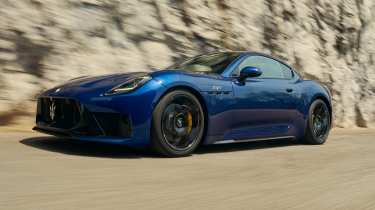
- Pros – A more rewarding, characterful GranTurismo. Good value
- Cons – Interior changes aren’t really improvements
- evo rating: 4.5 stars
The Maserati GranTurismo Trofeo gets an update from the end of 2026 to give it a more aggressive face, a tweaked interior, improved sound and a power bump to 583bhp. The result is that the MC20/MCPura side of the dual personality that the current generation Maserati GT has enjoyed since its introduction is just that little bit more intense. It’s hungrier for revs and pulls just a bit more enthusiastically. It’s not a dynamic superstar to bother the likes of Ferrari’s Amalfi or the Aston Martin DB12 S but it’s a silky steer, very nicely balanced and sweetly resolved in terms of its ride and body control. It knows it’s a sports grand tourer, with a supercar streak in its DNA. Least appreciated about the GranTurismo is that it offers this for over £50k less than rivals from Aston Martin and Bentley.
Aston Martin DB12 S
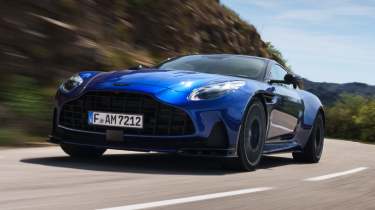
- Pros – Improved in all areas: the best current front-engined Aston
- Cons – Infotainment still a little lacking
- evo rating: 5 stars
Aston Martin’s DB12 over the last couple of years has taken the often-held place of its mid-range DB models in the range as the forgotten sibling. The outstanding Vantage plays GT as well as it does sports car, save for the lack of back seats. The Vanquish meanwhile has pantomime, panache, style and V12 majesty to render the DB12 a bit invisible. Now the DB12 S is here, featuring some significant upgrades and, wouldn’t you know it, it’s become the best Aston in the range, save perhaps for the Valhalla supercar.
The Bilstein DTX dampers have been overhauled to improve its vertical control at a cruise and its ability to breathe with a road when pressing on. The self-centring on the steering is dialled back too, for a more natural feel. A wider, thicker anti-roll bar increases roll stiffness and keeps more of the rear tyres in contact with the road, making the DB12 S’s tail more faithful. The diff was tweaked too, to feel more natural and be more reactive to your steering and throttle inputs. The result of it all is transformative – Aston’s best current front-engined car.
Chevrolet Corvette E-Ray
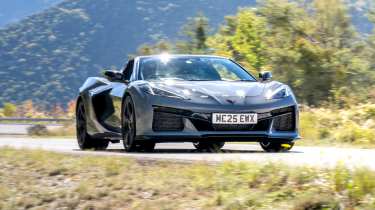
- Pros – Hugely potent powertrain, excellent balance, luxurious cabin
- Cons – Heavy, confusing drive modes, steering feel lacking
- evo rating: 4.5 stars
Few – if any – saw this coming. The Corvette has always been big on numbers, theatre and noise but a little short on finesse, and then the C8 arrived to shatter our preconceptions. Now mid-engined and in right-hand drive for the first time, the latest Corvette is well built, supremely capable and fantastically engaging – not to mention stunningly fast. The 6.2-litre pushrod V8 might be familiar on paper, but it's all new for the C8 with a dry sump, a 6700rpm redline and 495bhp.
Now it also gets a shot of electrical assistance from a motor mounted on the front axle and is mounted within the Z06’s wider body, to create the 635bhp E-Ray. Possibly the best Corvette compromise, it retains the traditional rumbling V8 but adds the ability to leave home silently and AWD capability – 0-62mph taking just 2.9sec. While it didn’t astound it stood comparison with last year’s best performance cars well on the evo Car of the Year 2025 test.
McLaren Artura
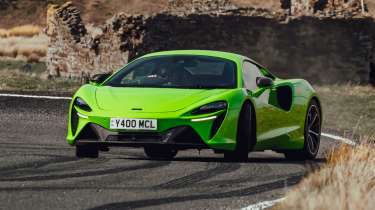
- Pros – Mesmerising performance; beautifully communicative, polished chassis
- Cons – V6’s soundtrack doesn’t match its performance
- evo rating: 5 stars
Where McLaren’s 750S is decidedly old-school (and brilliant for it), the Artura feels like a next-gen product. It packs the firm’s hybrid powertrain technology in a Maserati MC20-rivalling package, and in its newly updated form, a near-unbeatable combination of performance, tactility and polish. A 2024 facelift introduced a Spider version and a host of upgrades to the range as a whole, including a more powerful V6 hybrid powertrain (now up to 690bhp) and revised chassis tuning. The result is a bewitching driving experience that blends explosive performance with fluidity and communication in typical McLaren fashion. It’s at the apex of entry-level supercars, even if it does cost well over £200k…
Honda Prelude
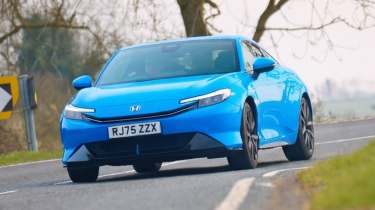
- Pros – Quality damping, sharp design, price
- Cons – Uninspiring powertrain
- evo rating: 4 stars
The FL5 Civic Type R has met its end, and while there’s no new Honda to directly replace it, the Prelude is an intriguing new offering. With Toyota’s GR86, Supra and the Audi TT all having been discontinued, the Prelude has been launched as one of the only affordable driver’s coupes on the market today. Producing 181bhp from a 2-litre hybrid four-cylinder makes it modest on-paper next to a Type R, and while a CVT gearbox wouldn’t have been our transmission of choice, its Type R-derived suspension hardware shines through.
Aston Martin Vantage
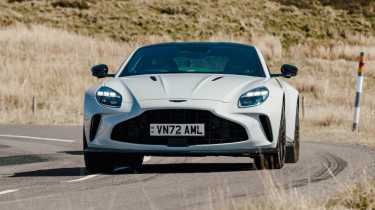
- Pros – Superb balance; communication; massive yet usable performance; greatly improved interior
- Cons – Ride quality can be tough; fiddly touchscreen; loud exhaust can be wearying
- evo rating: 5 stars
The latest Vantage takes the model's brutish sophistication to a new level. With a tweaked version of Mercedes-AMG’s 4-litre twin-turbo V8 that kicks out a colossal 656bhp (and a fabulous noise to boot), it's ballistic, absorbing and just a bit lairy. Aston Martin has engineered it to be more dynamic this time around with the Porsche 911 Turbo S firmly in its sights, and there's certainly a newfound sense of purpose to the driving experience. Yes, the ride is a little tough and it doesn’t have a GT3’s sense of purpose, but by-and-large, the Vantage fulfils its brief as an entertaining, aggressive yet sumptuous sports coupe very well. Its excellent new interior is the icing on the cake.
Mercedes-AMG GT
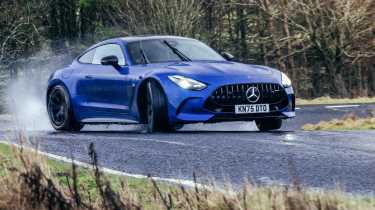
- Pros – A secure, sure-footed and crushingly effective coupe
- Cons – Expensive; still more remote than a 911
- evo rating: 4.5 stars
The new AMG GT is more practical, more complex and less bespoke than the car it replaces (now being based on the SL’s platform). Some might argue that it’s lost some of its predecessor's thuggish character, but there’s no denying that it’s crushingly effective, and more than ever, a true Porsche 911 rival. The best bit for owners is that the GT can now fit a pair of (small) passengers in the back. There’s a broad selection of models to choose from too, with GT43, GT55, GT63 and GT63 E-Performance versions available – the latter with some 805bhp to complement its 2380kg mass.
BMW M4 Competition xDrive
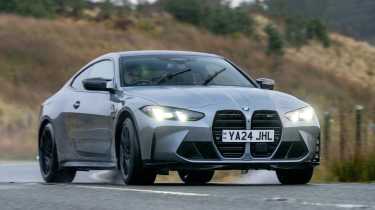
- Pros – Hugely capable and entertaining in all conditions
- Cons – Feels big and disconnected in the context of purpose-built sports cars
- evo rating: 4.5 stars
Look beyond its bold, almost aftermarket appearance and the BMW M4 Competition xDrive is one of the best performance coupes money can buy. Its 523bhp straight-six might be down on the now-discontinued M4 CS’s 542bhp and it might weigh a hefty 1775kg, but it’s still good for 0-62mph in a brisk 3.5sec.
That power is delivered in a manageable, linear fashion, making it a much more exploitable machine than the last-generation car. Even the eight-speed torque-converter automatic, while not quite as razor-sharp as a DCT, is more than quick enough for the job.
Despite its heft, the M4 Competition offers more precision and response than ever, with its impressive chassis stiffness immediately apparent. Grip is also monumental, making it a confidence-inspiring and devastatingly effective machine across ground. At almost £93,135, it’s far from cheap, but the performance for the money makes it one of the best in its class. Especially as even at that price, it’s still over £15,000 cheaper than the entry point for the Porsche 911 Carrera.
BMW M2 CS (G87)
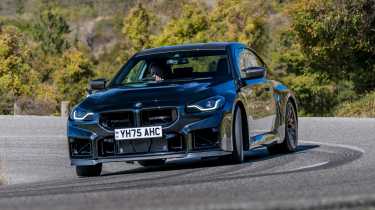
- Pros – A fun, expressive, stonkingly fast M car
- Cons – Steering lacks connection; price…
- evo rating: 4.5 stars
A follow-up to the first ever BMW to win evo Car of the Year, the G87 M2 CS had some big shoes to fill. More power, bolder looks and a price tag not far from £100,000 suggest it has a lot to give. Thankfully it does. This is an M car through-and-through, keen to oversteer and with an impressive ability to mask its 1700kg weight figure (despite its ‘CS’ weight savings). The steering might lack some of the connection of its predecessor, but there's no doubt this is one of the most thrilling coupes on sale.
Porsche 911 Carrera GTS
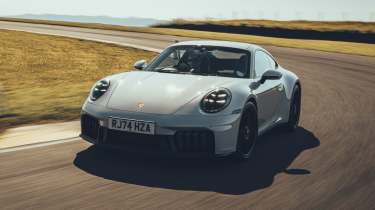
- Pros – A complete, charismatic and hugely capable 911
- Cons – Hybrid tech means no manual gearbox option
- evo rating: 5 stars
There has always been a 'goldilocks' Porsche 911. The model that ramps up response and engagement just enough while remaining more usable – and significantly more affordable – than a GT3. For a long time the GTS has occupied this sweet spot, and while the latest 992.2 version marks one of the most significant developments in the 911’s history – the introduction of a hybrid system – that remains the case today. The GTS is a lesson in how to use electrification to amplify and enhance the character of a sports car with next to no trade-offs. It uses a brand new 3.6-litre flat-six and an electric motor integrated into its eight-speed PDK transmission to deliver a 534bhp hit, plus a significant improvement in throttle response. It revs sweetly with a rich sound, and though it weighs 50kg more than the outgoing GTS, it has all the precision, response and polish a 911 should. The only snag is that the hybrid hardware means there's no three-pedal option.
Five-star used alternatives
Porsche 718 Cayman GTS 4.0
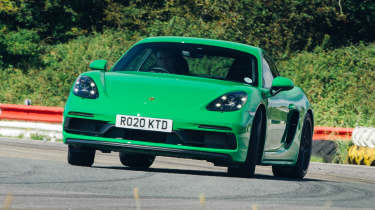
It’s tricky not to sound cynical when talking about the 718 Cayman GTS 4.0, as ostensibly, it’s the Cayman everyone asked for since the 718’s controversial introduction. Out goes the uninspiring flat-four found in lesser Caymans, replaced by a glorious 4-litre flat-six with a host of supporting chassis upgrades. The end result is, unsurprisingly, superb. The powertrain’s performance and character are magnificent, the chassis is beautifully poised and all the touchpoints are precise and intuitive in typical Porsche style. Drive a GTS and you’ll wonder how usable modern sports cars can possibly get any better and be utterly crestfallen when you realise it's now dead. Only just, though. Delivery miles cars still exist on dealer forecourts.
Toyota GR86
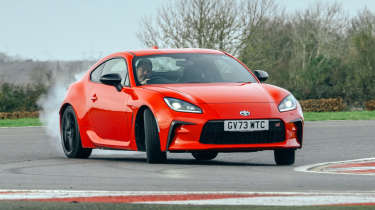
If there was an ultimate template for a sports coupe, it might look a little something like the GR86. This is a front-engined, rear-drive, two-door coupe with a six-speed manual transmission up front and a limited-slip differential out back. It’s a recipe that was defined by the previous GT86, but one refined and extrapolated for the ultimate debug. This isn’t a numbers car, with only 231bhp on tap to motivate itself. This is all about balance and involvement. Every element of the GT86’s dynamic repertoire was fettled, sharpened and refined, resulting in a fabulous driver's car that operates with a supreme quality.
Ferrari Roma
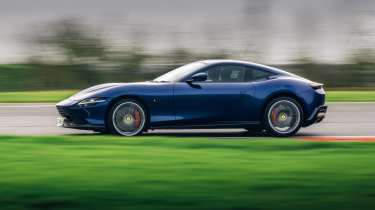
Previous entry-level front-engined Ferrari V8s never quite attained greatness. The California, California T, and Portofino were accomplished, even likeable in some cases, but it took the launch of the Roma to really refine the formula. For a start, it was more elegant than any of its predecessors, but Ferrari worked hard to get the driving characteristics right too – it had real GT-car refinement but also responsive and balanced handling, and an excellent ride. Combine this with a potent 611bhp take on Ferrari’s 3.9-litre twin-turbo V8, and a slick-shifting dual-clutch gearbox, and the drivetrain is engaging as well as powerful.
Nissan GT-R
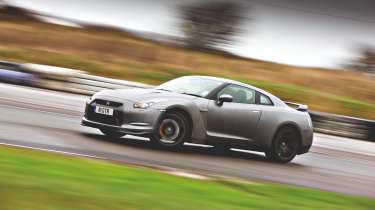
The R35 generation Nissan GT-R (no Skyline this time - the GT-R broke off and became its own model) is surely one of the most significant performance cars of all time, and certainly of the 21st century. The old Skyline GT-Rs had been great to drive, and were dominant in racing, but the R35 was a supercar in a chiselled, four-seat, 1700-odd kilo shell. Nissan shocked the establishment by sending one to the Nordschleife where it trampled all over the Porsche 911 Turbo (leading to several years of back-and-forth between the two brands), and GT-Rs only got faster from there. As we discovered though, and as its eCoty victory in 2008 demonstrated, the R35’s reputation of having a ‘video game’ driving experience couldn’t be further from the truth: like the earlier Skyline GT-Rs, it’s also genuinely interactive to drive.
BMW 1M Coupé
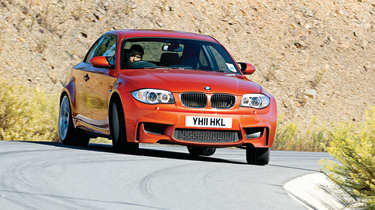
The 1-series M Coupe wasn’t the first turbocharged M car - that accolade rested with the dubious X5 and X6 M – but it still made enthusiasts a little nervous, not least as it didn’t use a ‘proper’ S-designated M engine. Instead, its N54 3-litre turbocharged straight six was a tuned version of that used in the 135i, though with 335bhp it wasn’t short of urge. And ultimately, we shouldn’t have worried: the pumped up bodywork and track hitting the right visual notes, while brawny performance and the ever-present option to steer on the throttle ensured it drove like a proper M car too.
Alpine A110
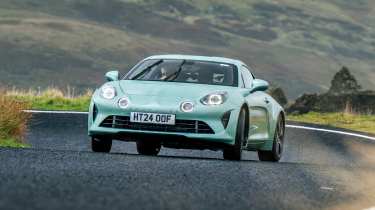
The Alpine A110 caused a storm of excitement in the lead up to its launch. The basics sounded too good to be true – a bespoke lightweight aluminium chassis, c1100kg kerb weight, zesty turbocharged engine and styling that’s nostalgic without being a retro pastiche. Could Alpine really produce a Porsche Cayman rival out of nowhere, or were we in for another Alfa Romeo 4C-style disappointment? In reality, things are even better than they appeared on paper. The A110 is an absolute peach to drive, involving and highly distinctive. In its purity, sense of purpose and suitability for UK roads, it feels like a car Lotus should be building.